Friday, December 15, 2023

Why Outsourcing B2B Influencer Marketing Leads to Success (New Data)

For B2B brands, it is no longer a question of whether or not influencer marketing works. In fact, a vast majority of respondents to our 2023 Influencer Marketing Report report that they have seen extensive benefits in the form of increased sales revenue and improved customer brand reputation.

But one thing that came through clearly in this research is that the most successful influencer marketers are not attempting to go it alone.

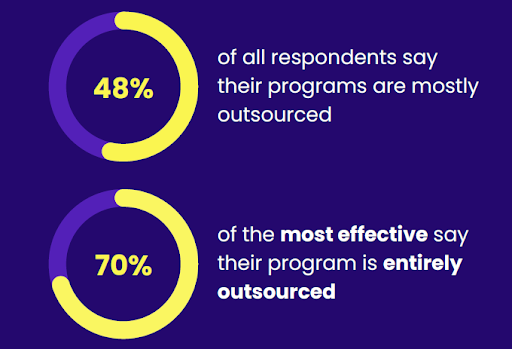
Our respondents also told us that, among the brands that had the most success with their B2B influencer marketing campaigns, 70% outsourced their entire program to a B2B influencer marketing agency. Eighty-three percent outsourced at least some activities.
2023 B2B Influencer Marketing Report chart 1 image

Want to learn more about what these marketers know? Let’s explore some of the advantages and efficiencies that B2B companies realize by outsourcing at least some of their influencer marketing program.

What happens when companies outsource B2B influencer marketing?

Greater influencer access and identification insights

B2B influencer marketing agencies have spent considerable time developing extensive networks of influence partners. These connections are not mere professional acquaintances, they are long-established relationships that are rooted in previous influencer marketing collaborations. When you partner with a B2B influencer marketing agency, you gain immediate access to this diverse network of influencers without having to forge any of the relationships from scratch.

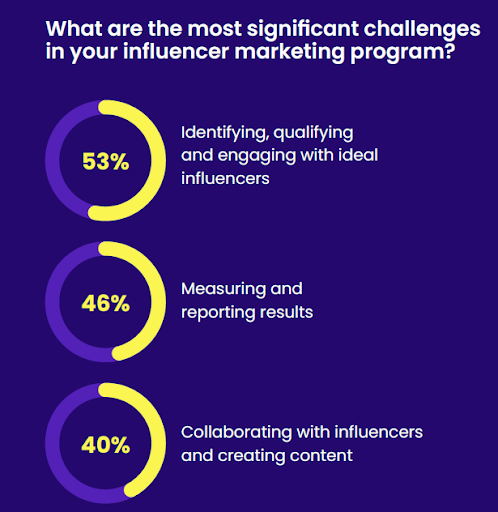
To complement this access to a diverse network of influencers, B2B influencer agencies are skilled at identifying and recruiting new influencers who perfectly align with your brand identity, campaign goals and target audience. This is key because, according to the Influencer Marketing Report, identifying and engaging with ideal influencers is the number one challenge faced by respondents.
2023 B2B Influencer Marketing Report chart 2 image

This dual track approach of accessing a well-developed network of partners along with identifying new influencers allows for greater flexibility and adaptability. When you’re presented with the exact right mix of influencers, you can tailor your campaigns to specific market segments or niche audiences.

Relationship-building and nurturing expertise

Once a slate of influencers has been identified, the work of rolling out your influencer marketing program has just begun. Experienced B2B influencer agencies will have a proven track record of working with B2B influencers and will be able to nurture each influencer relationship to deliver the best possible results for your campaign.

Nurturing influencers can be time-consuming. Handing this off to an agency makes the process more efficient, freeing you to focus on more strategic tasks. Agencies are also better equipped to scale their services to accommodate larger campaigns and more complex influencer networks.

But building and nurturing relationships with influencers requires more than time. It takes a specific skill set, and agencies that specialize in influencer relationship management understand the nuances of developing trust and fostering these long-term partnerships. A reputable influencer marketing agency will have the expertise to navigate the complexities of influencer relationship management, ensuring smooth and mutually beneficial partnership.

Build relationships, build relationships, build relationships. I think I have said this every year since influencer marketing was a mewling newborn tactic… but every year it’s worth repeating.”

– Ann Handley in the 2023 B2B Influencer Marketing Report

Influencer selection objectivity and customization

Partnering with an agency brings an objective perspective to the influencer selection process that prevents personal biases from influencing influencer choices. These agencies understand that the most effective influencers may not be readily apparent to individual marketers.

By bringing in this outsider’s perspective, an agency can unlock a much wider array of potential influencers that will lead you to fruitful partnerships you may never have considered. With an agency, your campaign partners are chosen based on their genuine fit with your brand and target audience rather than any one person’s subjective preferences.

B2B influencer marketing agencies can also help you find influencers who fit the right criteria to connect with your brand and buyers. In our report, the most effective influencer marketers cited audience trust and relevance of network as more important influencer qualities than size of network or professional credentials.

Powering content co-creation

An agency acts as a bridge between brands and influencers, facilitating open communication and collaboration throughout the content creation process.

In this role, the agency collaborates directly with the influencer to ensure they understand the objectives of the campaign and the type of content they are expected to produce. This fast-tracks the delivery of high-quality content that resonates with your target audience and aligns with your brand and campaign objectives.

Full service agencies will also offer in-house influencer content creation services. This generally includes writing multiple content pieces on behalf of your brand, saving you time and effort. As part of this process, agency partners can integrate influencer contributions into the content that will be published by your brand, while also setting up a plan and process for optimized promotion.

Tap into a suite of specialized services and expertise

Some B2B influencer marketing agencies offer a comprehensive suite of services beyond influencer identification and outreach. From pre-planning to reporting, B2B influencer marketing agencies handle a wide range of tasks that would require coordination with multiple departments to handle internally.

This depth of support can be essential to executing an always-on influencer strategy, which also proves to be a key success factor: 51% of very effective influencer marketers use an always-on program, compared to 14% of all others.

Just a few of the administrative and creative functions an agency will manage include:

  • Strategic planning. Agencies work closely with you to develop a data-driven strategy aligned with your brand objectives and target audience.
  • Competitive audits. They analyze how your competitors are leveraging influencer marketing, enabling you to identify best practices and differentiate your own approach.
  • Contract negotiation and management. Agencies handle the legal aspects of influencer contracts, ensuring compliance with industry regulations and protecting your interests.
  • Payment pass-through. Partnering with an agency helps streamline influencer payments, eliminating administrative burdens and ensuring timely compensation.
  • Reporting and analysis. B2B influencer agencies provide comprehensive reports and analytics, allowing you to track campaign performance and make informed decisions.

When outsourcing programs to a B2B influencer marketing agency, brands gain access to a team of experts who can handle every aspect of the campaign, from strategy and planning to execution and analysis. This frees marketers up to focus on core business activities while ensuring their influencer marketing efforts deliver the desired results.

The post Why Outsourcing B2B Influencer Marketing Leads to Success (New Data) appeared first on B2B Marketing Blog - TopRank®.

Wednesday, December 13, 2023

SEO vs. Google Ads: Where Should Marketers Invest?

There are two competing questions in search marketing that may not have obvious answers:

Why spend money on a Google Ads campaign if I can just rank organically? 

Why try to rank organically if I can just run a Google Ads campaign?

The answers to these questions are multifaceted, but they are not difficult to understand. Let’s explore the push and pull between SEO vs. Google Ads and where digital marketers should invest their time and resources.

What is the difference between Google Ads and SEO?

While both focus on the same channel, search engine optimization and paid search (i.e. Google Ads) are two distinct digital marketing strategies.

Search engine optimization (SEO) is a long-term approach aimed at improving your website’s visibility in search engine results with a focus on attracting organic traffic with high-quality content, on-page optimization, and link building. It offers sustainable, cost-efficient results but takes time to achieve.

Google Ads, on the other hand, is a paid advertising strategy that provides immediate visibility through paid placements above the search results. This approach emphasizes precise targeting, conversion-focused campaigns, and flexibility to accommodate short-term goals.

While SEO builds long-term credibility and is budget-friendly over time, Google Ads offers instant results and greater control for which search terms your content is shown, making them complementary strategies in an integrated marketing plan.

However, it’s important to understand the nuances of each approach to maximize the effectiveness of using these two search marketing strategies.

Advantages of SEO

Cumulative effects of success. SEO is a foundational strategy for long-term business growth. Over time, as your content ranks higher and you gain more topical authority, you can achieve a compounding effect, increasing your visibility and organic traffic without continually increasing your investment.

Targeted traffic: Optimizing your content for search is based on targeting specific keywords and phrases that align with search intent. In other words, when your website ranks for keywords and provides users with the information they’re actually looking for, you attract higher-quality traffic. This leads to higher user satisfaction and likelihood of conversions.

Credibility: When your content appears near the top of search engine results, it conveys to your audience that your website is a reputable source of information. This perception of authority can significantly enhance your brand’s reputation, encouraging users to trust and engage with your content. Credibility, once established through SEO, contributes to long-term customer trust and brand loyalty.

Cost-efficiency: While SEO requires an upfront investment in the form of writing high-quality content and having an optimized website, it often yields a higher return on investment (ROI) in the long run. Because you are publishing content on your own website, you don’t pay per click, making it a cost-effective strategy for businesses looking to reduce marketing expenses in the long term.

Sustainability. Organic SEO results, once achieved, tend to be relatively stable and enduring. By optimizing your website with high-quality content, tending to technical needs, and occasionally refreshing existing content to keep it relevant, you can establish a sustainable, always-on presence that produces with relatively little maintenance.


“Credibility, once established through SEO, contributes to long-term customer trust and brand loyalty.” — Art Allen @punsultant
Click To Tweet


Advantages of Google Ads

Immediate visibility: As soon as you create and launch a Google Ads campaign, your ads are eligible to appear at the top of search engine results pages (SERPs) for your chosen keywords. This near-instant placement is particularly valuable for marketers looking to make a quick impact, whether it’s for announcing a new product, promoting a seasonal offer, or capitalizing on timely trends.

Heightened targeting: Beyond simply targeting keywords, Google Ads allows you to hone in on specific demographics and locations. This means your ads will only be seen by the audience you define when they are searching for content that is directly related to your offering. This precise targeting minimizes wasted ad spend and maximizes the potential for conversions.

Conversion focus: Whether your goal is to generate sales, leads, phone calls, or website visits, Google Ads are designed for driving conversions. Ad creatives are crafted to encourage users to take a specific action. This conversion-centric approach is well suited for providing measurable results and driving maximizing return on investment.

Budget control: Google Ads give you complete control over your budget, allowing you to adjust spending as needed. You can set daily or monthly limits, ensuring that you don’t exceed your allocated budget. However, perhaps even more helpful than keeping budgets predictable, increasing your budget for highly effective campaigns means you can dial up your budget and conversions along with it.

Testing opportunities: Google Ads provides tools to conduct A/B tests, or experiments, on various ad elements. This testing enables you to determine what resonates most with your audience and which elements lead to higher click-through rates, conversions, and overall campaign success. By continually experimenting and refining your ad components, you can keep your target audience engaged and drive better results.


“By continually experimenting and refining your ad components, you can keep your target audience engaged and drive better results.” — Art Allen @punsultant
Click To Tweet


The outsized performance of using SEO and Google Ads together

Think of your content marketing program as a campfire. To build a campfire you need two things: kindling and firewood.

Google Ads is the kindling: It’s easy to light super quickly, but without firewood it’ll burn out before you can get your marshmallow onto your stick.

SEO is the firewood: It is built for a long, sustained burn, but if you try to light it on its own you may never get it to catch fire.

But when you add kindling and firewood together, you can start your fire quickly and enjoy its warming glow for hours.

In other words, using SEO and Google Ads together provides marketers with several advantages that they wouldn’t be able to achieve with either strategy on its own:

Immediate visibility and long-term authority. It takes time to see results from SEO, so while you’re waiting for your high-quality content to start ranking, Google Ads can help you to drive traffic to your website immediately. This can help you to generate conversions while you’re working on improving your website’s ranking.

Keyword insights. Google Ads provides valuable data on the performance of specific keywords in terms of clicks, conversions, and cost. This data can inform your SEO strategy by helping you identify high-converting keywords that are worth targeting organically. You can align your SEO efforts with the keywords that have proven to be effective in paid advertising campaigns.

The reverse of this is also true. When you conduct keyword research for your SEO strategy, you will uncover which keywords are driving the most traffic for you and your competitors. You can then use this information to create targeted Google Ads campaigns.

Remarketing and brand awareness. Google Ads supports remarketing campaigns, which target users who have previously visited your website. If your SEO efforts attract users to your site but don’t result in immediate conversions, Google Ads gives you a second chance to re-engage these users with targeted ads. This combination of SEO and remarketing helps boost brand awareness and conversions.


“Using SEO and Google Ads together provides marketers with several advantages that they wouldn’t be able to achieve with either strategy on its own.” — Art Allen @punsultant
Click To Tweet


Verdict: Invest in both but favor SEO

By integrating SEO and Google Ads into a comprehensive marketing strategy, marketers can address both short-term and long-term goals. This powerful combination of strategies ensures that budgets are allocated efficiently and take advantage of the strengths of each strategy to drive more traffic, conversions, and growth for your business.

Still, while both SEO and Google Ads are valuable components of a digital marketing strategy, well executed SEO optimizes your content for long term, sustainable visibility, its total lifetime value will generally be much higher. Because of this, SEO should receive more attention and budget allocation.

Learn more about how to optimize your content for search with our B2B Search Engine Optimization resource hub.

The post SEO vs. Google Ads: Where Should Marketers Invest? appeared first on B2B Marketing Blog - TopRank®.

Monday, December 11, 2023

Elevate B2B Marketing News Weekly Roundup: B2B Content Value Study, Google’s New Gemini AI, & LinkedIn Expands Newsletters

How Do B2B SaaS Companies Determine Pricing? [Report]
43 percent of software as a service (SaaS) leaders have said that they use competitive analysis for pricing research, with 34 percent turning to feedback from existing customers, while 14 percent utilize previous market research, according to newly-published B2B survey data. MarketingCharts

What Makes Vendor Content ‘High Value’ for B2B Buyers? [Survey]
When it comes to finding content of value, B2B buyers have said that brand websites were the top choice, followed by professional communities, search engines, social media, and peer recommendations, while those in executive roles were 27 percent more likely than others to point to original research and data for increasing brand trust — two of several findings of interest to B2B marketers contained in recently-released survey findings. MarketingProfs

Google Gemini, Next Level AI, Comes To Bard & Coming To SGE
Search giant Google’s newest top-tier Gemini AI technology has begun being tested as part of the firm’s Search Generative Experience, with Gemini AI already playing a role in its Bard generative AI chatbot product, while plans include rolling the new AI technology out for traditional search within months, Google recently announced. Search Engine Roundtable

LinkedIn Rolls Out New Updates for Newsletters, Including Improved Creation and Customization Tools
Microsoft-owned LinkedIn has given users of its growing newsletter product the ability to easily duplicate previous editions as templates for new newsletters, along with updated previewing functionality, plus an array of new subscriber analytic data, LinkedIn recently announced. Social Media Today

Is Video Content Being Created for All Stages of the Buyer’s Journey? [Report]
48 percent of marketing video content has been dedicated to the brand awareness stage of buying, with 15 percent focused on the buying stage and the same percentage to the post-purchase stage, while 43 percent of B2B marketers pointed to creating human connections as the most important result sought through the use of video, according to newly-published survey data. MarketingCharts

Two hours of daily meetings is the limit, Slack survey shows
Over half of executives have said they have too many meetings, with more than two hours of daily meetings representing the tipping point for decreasing productivity, while 27 percent of non-executive workers noted having too many meetings, according to recently-released survey findings of interest to B2B marketers. Bloomberg

2023 December 8 statistics image

Shy AI: Over Half Of Marketers Are Reluctant To Admit They’re Using It
51 percent of marketers have said they are using AI often, with 29 percent noted applying AI sometimes, and 16 percent having said they always use AI, while 52 percent expressed having concerns about revealing any level of their AI usage to customers, according to new report results. MediaPost

Optimism for 2024 With 61% of Marketers Expecting Business to be Better [WARC Report]
2024 is set to see global marketing investments top the $1 trillion mark for the first time, with that investment growing by some 8.2 percent, while 61 percent of marketers expect business to improve during 2024, with 41 percent having said they believe marketing budgets will increase — some of the many findings included in recently-published WARC report data. Branding in Asia


“While marketers are concerned about the impact of an economic recession, there is also a sense of optimism regarding the business climate and marketing budgets for 2024.” — Isabel Cleaver of @WARCEditors
Click To Tweet


Social stands out in Magna 2023 global adspend forecast
Social media advertising spending for 2023 was expected to hit $182 billion by the end of the year, up 15.2 percent from 2022, with 11.6 percent growth predicted for 2024, while keyword search was expected to remain as the most popular advertising format, according to newly-released forecast findings. The Media Leader

Publishers Disguising Gen AI Content Risk Commercial and Reputational Blowback
While trust and brand equity have long been staples among advertising, an increasing number of marketers are confronting a new form of reputation and commercial risk in the form of generative AI content and faux AI-created authors masquerading as human, and Adweek recently took a close look. Adweek

ON THE LIGHTER SIDE:

2023 December 8 Marketoonist Comic Image

A lighthearted look at the “Many Hats of the CMO” by Marketoonist Tom Fishburne — Marketoonist

The people creating digital clones of themselves — BBC

Spotify Says Laid-Off Employees Can Keep Jobs if They Switch to No-Compensation-With-Ads Plan [Parody] — The Hard Times

TOPRANK MARKETING & CLIENTS IN THE NEWS:

  • Donna Robinson / TopRank Marketing — Using LinkedIn to Elevate B2B Influencer Marketing — LinkedIn (client)
  • TopRank Marketing — B2B Influencer Marketing Is on the Rise — MarketingCharts
  • Lane R. Ellis / TopRank Marketing — This Week in Marketing: Feed Your Ambition — LinkedIn (client)
  • Lee Odden / TopRank Marketing — Our Global Industry Advisory Council — Digital Marketing Institute
  • Lee Odden / TopRank Marketing — Generative AI: What Keeps Me Up at Night — MarketingProfs
  • TopRank Marketing — The 45 Best Marketing Blogs Any Marketer Should Follow — LinkedIn (client)

FRIDAY FIVE B2B MARKETING FAVORITES TO FOLLOW:

Jenn VandeZande @jennvzande
Tiffany Grinstead @tiffgrinstead
David Fortino @David__Fortino
A. Lee Judge @ALeeJudge
Nancy Harhut @nharhut

Learn more about TopRank Marketing‘s mission to help elevate the B2B marketing industry.

Do you have a key B2B marketing news item we haven’t yet covered? If so, please don’t hesitate to drop us a line in the comments below.

Thank you for taking the time to be with us for this week’s Elevate B2B Marketing News, and please return again next Friday for another array of the most up-to-date and relevant B2B and digital marketing industry news. In the meantime, you can follow us on our LinkedIn page, or at @TopRank on Twitter/X for even more timely daily news.

The post Elevate B2B Marketing News Weekly Roundup: B2B Content Value Study, Google’s New Gemini AI, & LinkedIn Expands Newsletters appeared first on B2B Marketing Blog - TopRank®.

Friday, December 8, 2023

Focus on Talent: 25 B2B Influencer Marketing Experts To Follow In 2024

Who are some of the top B2B influencer marketing experts to learn from and follow as we head into 2024?

Hot on the heels of the publication of our comprehensive 2023 B2B Influencer Marketing Report, plenty of questions that go beyond the scope of what can fit even into a robust 39-page report remain, especially when B2B influencer marketing has seen continuing record growth, such as:

  • 85% of B2B marketers are working with influencers, up 34% from 2020 and 46% from 2022
  • 93%  of B2B marketers say the pressure to prove marketing return on investment (ROI) has increased in the past year
  • 70% of the most effective B2B marketers say their influencer program is entirely outsourced
  • 94% of marketers believe influencer marketing is a successful strategy for B2B
  • 53% of B2B marketers say identifying, qualifying and engaging with ideal influencers is their top influencer marketing program challenge

We’re always happy to answer any and all questions about influencer marketing here at TopRank Marketing, and we’re also thrilled to be able to help highlight some of those in the larger B2B influencer marketing community who have unique insight, experience, and perspectives to share.

For over 22 years, we’ve had the honor of helping a diverse array of the world’s top B2B marketers and major global brands elevate beyond merely being competitive, to truly standing out from the crowd with creative and award-winning successes.

When it comes to the growing power of influence the B2B marketing world is expected to see in 2024 and well into the future, there’s much to learn, and luckily we’ve had the honor of featuring many key B2B marketing innovators in our newest B2B influencer marketing report.

Let’s jump right in and take a look at 25 top B2B influencer marketing professionals to follow and learn from in the year ahead.

Focus on Talent: 25 B2B Influencer Marketing Experts To Follow In 2024


Victoria Tokarz
Head of Influencer Marketing,
Scribe

Anton Shulke
Head of Influencer Marketing,
Duda
@anton_shulke

Tequia Burt
Editor in Chief, LinkedIn Collective
& LinkedIn Ads Blog, Senior Content
Marketing Manager,
LinkedIn
@TequiaBurt

Meg Crawford
Senior Digital Media & Influencer
Marketing Manager,
Splunk
@Postgrad

Jon Leiberman
Vice President of Corporate Communications,
Infor
@reporterjon

Lina Forrestal
Program Manager, Influencer Marketing
and Social Media Content Strategy,
Cisco
@linaforrestal

Renee Roth
Head of Influencer Marketing
Dropbox

Drew Tambling
Senior Director, Analyst & Influencer Relations
Sprinklr
@Drew_Tambling

Lucinda R. Henry
Brand Content & Global Influencer
Program Strategist,
Hewlett Packard Enterprise
@lucindarhenry1

Patrick Jones
Social Business Team,
Influencer Relations,
Dell Technologies
@WhoPJones

Srijana Angdembey
Director, Digital Marketing,
Ellucian
@srijanaa

Nic Michael
Manager, Influencer Partnerships
and Social Media,
Alteryx

Gale Daikoku
Director, Global Influencer Marketing Lead,
SAP
@galedb

Karin Apjarova
GLobal Marketing Director –
Communication Industry
Oracle
@karinapjar

Pamela Stephens
Digital Media Manager | Media
Partnerships & Influencer Marketing,
3M
@PBJstories

Angela Lipscomb
Influencer Relations Manager
SAS

Ryan Lytle
Director, Social Media,
Adobe
@rlytle

Joe Pulizzi
Founder
The Tilt
@JoePulizzi

Carla Meyer
Director of Social Media,
Content and Influencer Marketing,
Gen

Leah Marshall
Senior Director, Influencer Marketing,
Association of National Advertisers
@LeapCast

Neal Schaffer
Digital & Social Media
Marketing Consultant
@NealSchaffer

Lee Odden
Founder & Board Advisor
TopRank Marketing
@LeeOdden

Pam Moore
CEO and Founder,
Marketing Nutz
@PamMktgNut

Jay Baer
Founder,
Convince & Convert
@JayBaer

Debbie Friez
Associate Director, Influence & Social Media
TopRank Marketing
@dfriez

Thanks To Each B2B Influencer Marketing Innovator

We extend many thanks to each of the inspiring 25 B2B influencer marketing subject matter experts we’ve shared both in our latest report and here, and encourage you to follow and learn from each. While no such list can ever be completely thorough, we hope that these leading experts on the power of influencer will help to elevate your own B2B marketing efforts.

Be sure to also check out the additional lists of leading B2B marketers we’ve recently published, including:

Since we first began providing professional influencer marketing services to B2B companies all the way back in 2012,  the number of influencer marketing roles at B2B brands has steadily increased yearly — a trend that is expected to continue into 2024.

You’ll find much more about the future of B2B influencer marketing and its power to build relationships and create influencer communities in our all-new 2023 B2B Influencer Marketing Report. It’s data-packed 39 pages are rich with survey insights, case studies from B2B brands, top influencer marketing predictions, and much more.

The post Focus on Talent: 25 B2B Influencer Marketing Experts To Follow In 2024 appeared first on B2B Marketing Blog - TopRank®.

Wednesday, December 6, 2023

Top 10 Trends for Content Marketing in 2024: For B2B Brands and Beyond

As we approach 2024, content marketing is rapidly evolving. Shaped by a blend of technological advancements, changing consumer behaviors, and a greater emphasis on authentic engagement. These shifts are particularly relevant for B2B marketers, who must stay ahead of the curve to remain competitive in a dynamic digital world. Incorporating the latest trends into your marketing strategy is not just about staying relevant; it’s about enhancing the effectiveness of your marketing efforts, connecting with your audience in more meaningful ways, and driving measurable business impact from marketing efforts.

With an eye on the future, let’s delve into the top 10 content marketing trends for 2024 that are reshaping the B2B sphere and beyond, offering a roadmap for innovative and effective marketing strategies for you to plan for your best year yet.

1 — Data-Driven Content Strategy

The integration of data analytics into content strategy is a top trend for marketers in 2024. Gartner’s insight that “Data-driven marketing strategies can help to target and re-target the ideal customer” is particularly relevant in crafting content that resonates with specific business audiences. By leveraging data, marketers can fine-tune their SEO strategies to align with search intent, ensuring brand content not only reaches but engages their target audience effectively.

This approach moves beyond traditional keyword optimization, focusing on creating content that meets the nuanced informational needs of B2B clients, thus enhancing engagement and conversion rates in a time where all of us are under more pressure to show results.

2 — Authenticity

Authenticity is a long-time commitment for TopRank Marketing, and now has been identified by SEMrush as the top trend in social media for 2024, especially crucial in the B2B domain. This trend goes beyond social content and underscores the growing importance of creating genuine, transparent content that aligns with a brand’s core values and mission. In an environment where trust and credibility are paramount, B2B clients gravitate towards businesses that demonstrate authenticity and ethical practices in their communication.

Authentic content, which includes honest narratives, real-life case studies, and customer testimonials, is key to building strong, trust-based relationships with clients. It allows brands to differentiate themselves in a competitive digital landscape and establishes a unique voice that resonates deeply with their target audience. For B2B marketers, prioritizing authenticity in their content strategy is essential for forging lasting, meaningful connections with their clients.

3 — Video and Audio Content

Video and audio content are rapidly converging as the dominant forces in content marketing, a trend that is especially impactful in the B2B sphere. Cisco’s Annual Internet Report’s prediction that “By 2022, 82% of all internet traffic will be video” has proven accurate, signaling a continued surge in video content into 2024. This growth encompasses a range of formats, from short-form videos on platforms like TikTok and Instagram to social videos on Facebook and YouTube Shorts, each offering unique ways to capture and engage audiences.

LinkedIn Live has also emerged as a powerful tool for B2B marketers, providing a platform for live discussions, product demonstrations, and thought leadership content. Meanwhile, the rise of podcasts and other audio content continues to offer intimate and engaging channels for discussing complex topics, catering to the preferences of business audiences who often seek depth and insight in content consumption. These trends underscore the need for a versatile, multimedia approach in modern content marketing strategies.

4 — AI-Powered Personalization and Efficiencies 

Artificial intelligence (AI) is revolutionizing content marketing by enabling hyper-personalized experiences and operational efficiencies. Forbes highlights the transformative power of AI, stating, “AI can help create a unique experience for each user.” This capability is invaluable for B2B marketers, as it allows for the creation of content that is highly tailored to the specific needs, preferences, and pain points of distinct business clients.

AI’s role extends beyond personalization; it also streamlines content creation and distribution processes, making marketing efforts more efficient and data-driven. By leveraging AI technologies, B2B marketers can not only deliver more relevant and engaging content but also optimize their workflows, saving time and resources while maximizing the impact of their content strategies. Check out the top 30+ AI tools for marketers now.

5 — Interactive and Ephemeral Content

Interactive content, including quizzes, polls, and social media live events, is redefining engagement in content marketing. This type of content, combined with media that’s only available for a limited time like Instagram Stories, is emerging as a powerful tool for capturing attention and fostering interaction. Social media live events, such as LinkedIn Live sessions, provide a platform for real-time engagement, offering opportunities for Q&A sessions, live product demonstrations, and in-depth discussions.

These formats are highly effective in creating a sense of urgency and immediacy, which is crucial in B2B environments where decision-making timelines and staying ahead of industry trends are key. By incorporating these interactive and ephemeral elements into their content strategies, B2B marketers can encourage immediate engagement, leading to stronger connections and accelerated decision-making processes with their business clients.

6 —Content Communities and Creator Collaborations

The rapid growth of influencer marketing, as highlighted in the 2023 B2B Influencer Marketing Report, is reshaping the landscape of content communities and creator collaborations across B2C and B2B. The report shows a dramatic increase from 34% in 2020 to 85% in the current year of B2B marketers incorporating influencer marketing into their strategies. This surge emphasizes the substantial impact of influencer collaborations in building content communities, enhancing brand awareness, and bolstering credibility.

By partnering with industry influencers and thought leaders, B2B marketers are not only extending their reach but are also fostering deeper connections with their audience. These collaborations, integral to successful content strategies, are proving pivotal in driving customer engagement, effective lead generation, and establishing a strong brand presence. The trend signifies the evolving nature of B2B marketing, where influencer partnerships are key in creating dynamic, engaging, and influential content communities. Check out the top influencer marketing predictions for 2024.

7 — Social-First Content 

The content marketing landscape is experiencing a pivotal shift, moving from a traditional site and blog-centric focus to a social-first strategy that integrates seamlessly across all content channels. This change reflects the evolving digital consumption habits, especially in the B2B sector, where social media platforms have become primary sources for industry insights, networking, and brand engagement. In this social-first approach, content is specifically designed to be engaging, shareable, and optimized for social media, yet it also maintains a cohesive presence across all channels, including traditional websites and blogs.

This strategy not only involves tailoring content to fit the unique format and audience of each social platform – from LinkedIn’s professional network to X’s real-time interaction landscape – but also ensures that this content aligns with and supports the broader brand narrative found on more conventional channels. By focusing on social media as a primary avenue for content delivery and interaction, brands can leverage real-time engagement, build a relatable and dynamic presence, and foster a strong community across their digital ecosystem.

This integrated, social-first approach marks a significant transition in content marketing, emphasizing the importance of meeting the audience where they are most active while maintaining a consistent and holistic brand story across all platforms.

8 — Sustainability and Social Responsibility

Sustainability and social responsibility are rapidly ascending as pivotal elements in content marketing, mirroring a broader societal shift towards environmental consciousness and ethical practices. This trend is significantly driven by consumer preferences, as underscored by a Nielsen study which found that “73% of global consumers would definitely change their consumption habits to reduce environmental impact.” In the realm of B2B marketing, this shift translates into a growing need to develop content that not only showcases a brand’s commitment to sustainable practices but also resonates with the corporate social responsibility (CSR) goals of its client base.

By integrating sustainability narratives and socially responsible themes into their content, B2B marketers can align more closely with the values and priorities of their clients, thereby fostering deeper connections and trust. This involves highlighting initiatives like eco-friendly operations, community involvement, ethical sourcing, and other CSR efforts. Such content not only appeals to the increasing number of environmentally and socially conscious clients but also positions the brand as a forward-thinking, responsible leader in its industry. As sustainability and social responsibility continue to gain prominence, they are becoming less of an optional marketing tactic and more of a crucial component in building a strong, respected brand identity.

9 — Voice Search Optimization and the Crucial Role of SEO 

The rise of voice search is significantly reshaping SEO strategies, necessitating a more conversational and intent-driven approach, especially crucial for B2B marketers. As voice-activated devices become ubiquitous, Search Engine Journal aptly notes that “Optimizing for voice search is optimizing for the way people speak naturally,” highlighting the shift from traditional keyword-focused SEO to a more natural, question-and-answer style. This evolution in search behavior and the rising use of ChatGPT for digital content creation requires marketers to adapt by focusing on long-tail, conversational keywords and creating content that directly addresses specific, often complex queries. Additionally, this trend underscores the importance of digital accessibility.

Voice search optimization aligns with making content more inclusive, as it caters to users who rely on voice navigation due to various impairments or preferences. This involves not only optimizing content for natural language queries but also ensuring websites and digital platforms are navigable and comprehensible via voice commands. Integrating voice search optimization thus serves a dual purpose: enhancing visibility in voice-driven search results and making B2B content more accessible to a broader audience, including those with disabilities. This dual focus on visibility and accessibility is becoming a pivotal aspect of modern SEO practices, marking a significant stride toward inclusive and effective digital marketing strategies.

10 — Localized and Niche Content

Localized and niche content is a critical strategy for enhancing relevance and engagement. This approach involves crafting content that specifically caters to the unique needs and characteristics of different industries, market segments, or regional audiences. Recognizing that each market has its distinct challenges, cultural nuances, and regulatory environments, localized content allows B2B marketers to demonstrate an in-depth understanding and address these specificities effectively. Niche content, on the other hand, delves deeper into particular sectors within an industry, offering specialized insights and establishing the brand as a thought leader in that area.

This targeted approach is not only pivotal for building stronger connections with a more relevant audience but also enhances SEO effectiveness, as it aligns with the specific search queries of users. Utilizing various content formats, from region-specific infographics and videos to in-depth sector-specific whitepapers and case studies, and leveraging social media for distribution, localized and niche content strategies are increasingly vital in the diverse and specialized landscape of B2B marketing. They improve engagement and position brands as authoritative voices in their respective fields or regions.

Conclusion

2024 is a year of opportunity to leverage these trends for more effective and engaging content marketing strategies. From the dual power of video and audio content to the strategic use of AI and data analytics, this list underscores the importance of being adaptive, innovative, and always focused on delivering value to the business audience. By embracing these trends, B2B businesses can not only enhance their content marketing efforts but also deepen their engagement with their clients and prospects in meaningful ways.

Ready to elevate your marketing in 2024? Connect with the TopRank Marketing team to see how our data-driven approach to content marketing strategy can help lift your brand (and your results) higher!

The post Top 10 Trends for Content Marketing in 2024: For B2B Brands and Beyond appeared first on B2B Marketing Blog - TopRank®.

Monday, December 4, 2023

Elevate B2B Marketing News Weekly Roundup: Top Multichannel B2B Challenges, Google Completes Search Update, & How Jargon Harms B2B

B2B Multichannel Marketing: Top Channels, Trends, and Challenges
57 percent of B2B marketers have said that creating an effective strategy is their top obstacle when it comes to multi-channel marketing, while 46 percent pointed to inadequate budgets and resources, with 44 percent noting data quality as a leading challenge — three of numerous findings of interest to B2B marketers contained in newly-published multi-channel marketing report data. MarketingProfs

Google November 2023 Core Update Finished Rolling Out
Search giant Google’s most recent core search algorithm update launch has concluded its implementation phase, some 25 days after the firm’s November 2023 core update first rolled out, making it one of the lengthiest update releases, Google recently announced. Search Engine Roundtable

How Are CMOs Chasing Consumers’ Attention?
31 percent of chief marketing officers have indicated that they plan to increase investment in influencer marketing over the next 12 months in order to boost customer attention, with 35 percent pointing to sponsoring or organizing live events, and the same amount looking to spend more in social commerce — some of the findings included in newly-published consumer attention tactical data. MarketingCharts

LinkedIn Announces New Ad Performance Measurement Updates
Microsoft-owned LinekdIn has announced a variety of new advertising tool additions, including a new Conversions application programming interface (API) that forgoes traditional tracking cookies, along with new measurement platform features including a Website Actions function for streamlining conversion tracking and re-targeting campaigns, LinkedIn recently announced. Social Media Today

Industry Jargon Is the Silent Killer of B2B Marketing
88 percent of B2B decision-makers have said that jargon, marketing clichés, and tired buzzwords such as “disruptive” harm the credibility of brands, and Adweek recently took a look at how using the wrong words can have negative consequences in B2B marketing. Adweek


“Language can be complex or incredibly simple. Whatever language we choose, it wields immense power, shaping not only our brand’s perception but also its relationships and customer engagement.” — Jessica Marie @jessicamariemba
Click To Tweet


New Report Highlights Key Social Media Marketing Trends for 2024 [Hootsuite Report]
LinkedIn was the social platform that brands were the most confident in, at 70 percent, with only 30 percent having reported confidence in Twitter/X, 50 percent having confidence in TikTok, and just 16 percent expressing confidence in Meta’s Threads social platform — four of numerous findings of interest to B2B marketers contained in newly-published Hootsuite survey data. Social Media Today

2023 December 1 statistics image

Ad Market Expands For Fourth Consecutive, October Climbs 3.2%
October marked the fourth consecutive month that the U.S. advertising market recorded a rise in year-over-year ad spending, with a 3.2 percent rise, continuing a rebound that began in June after a lengthy period of declining ad revenue, with the digital ad sector faring better than traditional formats, according to newly-released report data.. MediaPost

The Top Goals of Marketing Leaders in 2023 [New Data + Expert Insights from Uber, Dropbox, and ClickUp]
When it came to the most important goals among marketing leaders, 2023 saw boosting revenue and sales at the top spot, followed by better alignment between marketing and sales, and raising brand loyalty through customer relationships — three of numerous statistics of interest to B2B marketers contained in recently-published HubSpot survey data. HubSpot

YouTube Adds New Analytics Cards, Simplifies Its ‘Product Drops’ Feature
Google’s YouTube has made its live-stream product promotion feature available to more creators and influencers using its Product Drops feature, along with an array of new analytics measurement features surrounding brand YouTube channel subscription data, the video platform recently announced. Social Media Today

The Data-Related Activities Marketers Spend the Most Time On [Report]
51 percent of marketers have said that investment in technology and software was their top data priority, with 47 percent having pointed to achieving quality data sources, 45 percent who noted data availability, while 44 percent said the creation of a data-driven culture was their most important data goal, according to newly-published survey data. MarketingProfs

ON THE LIGHTER SIDE:

2023 December 1 Marketoonist Comic Image

A lighthearted look at “Word-of-Mouth Marketing” by Marketoonist Tom Fishburne — Marketoonist

Why Are We Still Doing What Simon Says? — IEEE Spectrum

TOPRANK MARKETING & CLIENTS IN THE NEWS:

  • Joshua Nite / TopRank Marketing — This Week in Marketing: Get Ready to Grow Again — LinkedIn (client)
  • Lee Odden / NetLine / TopRank Marketing — 3 Key Takeaways From Content Marketing World 2023 — Convince and Convert
  • Lee Odden — Numbers and Niches: 10 Ways Data Can Help Optimize Consumer Outreach — iTechPost

FRIDAY FIVE B2B MARKETING FAVORITES TO FOLLOW:

Dennis Shiao @dshiao
Joanne Sweeney @JSTweetsDigital
Christopher S. Penn @cspenn
Alli Berry @AlliBerry3
Dusty DiMercurio @dustycd

Learn more about TopRank Marketing‘s mission to help elevate the B2B marketing industry.

Have you seen an important B2B marketing news item we haven’t yet covered? If so, please don’t hesitate to drop us a line in the comments below.

Thanks for being with us for this week’s Elevate B2B Marketing News, and we hope that you’ll return again next Friday for another selection of the most up-to-date and relevant B2B and digital marketing industry news. In the meantime, you can follow us on our LinkedIn page, or at @TopRank on Twitter/X for even more timely daily news.

The post Elevate B2B Marketing News Weekly Roundup: Top Multichannel B2B Challenges, Google Completes Search Update, & How Jargon Harms B2B appeared first on B2B Marketing Blog - TopRank®.

Friday, December 1, 2023

Top B2B Expert SEO Trends & Predictions for 2024

What will search marketing and search engine optimization (SEO) look like in 2024 — as generative AI and other factors continue changing the landscape of one of the primary technologies B2B brands use to be found and to help answer key questions?

We’ve gathered B2B search marketing insights from both industry experts and our own team, and are happy to present our annual look at SEO predictions and search trends for 2024.

When I first went online nearly 40 years ago in 1984 operating a 300-baud bulletin board system, it would be six years before Archie’s FTP site search arrived in 1990, followed three years later by Excite and the other early web search engine innovators, and if there’s one aspect of search that has remained constant throughout the ensuing four decades, it’s been never-ending change.

The search marketing landscape has always been one of rapid changes, and keeping up-to-date with ever-shifting SEO machinations and technical search intricacies can be more than a full-time job for top B2B SEO professionals. Luckily, for 2024 we’ve got a wealth of SEO insight from some of the world’s leading search subject matter experts that you can use to hit the ground running as a new year of search unfolds.

Let’s jump right in and see how top search marketing practitioners expect 2024 to change the way brands do business, and why it’s shaping up to be a year unlike any other for search.

1 — Clear Signals of Real Human Authorship

Aleyda Solis
Aleyda Solís
Founder& International SEO Consultant, Orainti

In 2024 I expect that:

  • Showing clear signals of real human authorship, experience and authority becomes a must for content to rank well across any vertical
  • With the release of search generative experience (SGE), most sites that actually offer products or services directly —rather than being just informational middlemen — retain their traffic, although this will shift from mid-of-the-funnel pages (PLPs) to bottom-of-the-funnel ones (PDPs).
  • Google will continue to release more features in two lines:
  1.  A more visible e-commerce layer to become a stronger and more complete contender to Amazon, offering many more functionalities and insights within their results to become the destination and avoid referring traffic to other marketplace platforms, and:
  2. Community and socialization features to compete with the popularity of TikTok as a search platform by Gen-Z. This has already started with “human first” perspectives, seeing other people’s notes (comments) now in test, and the ability to follow topics.

“In 2024 I expect that showing clear signals of real human authorship, experience and authority becomes a must for content to rank well across any vertical.” — Aleyda Solís @aleyda
Click To Tweet


2 — Google Search & How AI Changes Content Generation

Barry Schwartz
Barry Schwartz
CEO, RustyBrick
Founder, Search Engine Roundtable

AI is all the craze and it will continue to evolve and big a very big deal in 2024, as it was in 2023.  It will be interesting to see how content generation using AI will adapt in 2024 and if Google Search will deal with it next year.  No real big shocking prediction from me, I think everyone will agree, it is all about AI.


“It will be interesting to see how content generation using AI will adapt in 2024 and if Google Search will deal with it next year.” — Barry Schwartz @rustybrick
Click To Tweet


3 — User Experience Creates Sustainable, Long-Term Success

Krista Neher

Krista Neher
CEO, Boot Camp Digital

It is called search engine optimization, not search engine creation. Too many SEOs focus on search engines while every other aspect of user experience or strategy takes a back seat. The idea should be to create content, website experiences, etc., for users and optimize them for search engines. We don’t create for search engines and optimize for humans. SEOs tend to be very technical and tactical based on the guidance from Google.

As search engines get smarter and look at more robust signals, user experience is playing a greater role. Updates and guidance from Google for years have shown a strong focus on user experience and signals. Focus more on optimizing for users and their experiences while optimizing for search engines, and you’ll have a long-term strategy.


“As search engines get smarter and look at more robust signals, user experience is playing a greater role.” — Krista Neher of @BootCampDigita
Click To Tweet


4 — Finer (and More) Work on the Vertical Channels

Ralf Schwoebel

Ralf Schwoebel
Founder, metadist.de

Traffic generation as the headline of the industry (to which SEO is also assigned) is getting more finely divided by the years. Additional devices — from smartphones to smart-TVs and maybe voice-activated AI gadgets — change our way of content consumption. The coming year will add more channels and more potential traffic in various corners of the web and our industry will follow these traffic sources.

We will see more emphasis on vertical channels like TikTok, YouTube or Snapchat, which run their own algorithm that can be worked — just like many do on Amazon. More clients will come with applications to us — the SEOs — to make those accessible to “search” or to be better presented in those channels. From AI-plugins to 3D VR apps for various headsets, the coming year will only broaden the potential touchpoint to the searcher, and “user engagement” will one of the most-used buzzwords.


“2024 will add more channels and more potential traffic in various corners of the web and our industry will follow these traffic sources.” — Ralf Schwoebel @orgaralf
Click To Tweet


5 — More Personalized & Useful Search Experiences

Seth Epstein
Seth Epstein
Analytics Director, TopRank Marketing

Search engines will continue to take steps towards providing a more personalized and useful search experience with search generative experience (SGE), while navigating the pressure to balance user experience (UX) with monetization and properly giving credit to the content contributing to search results. New specialties in paid search and SEO will develop as SGE results gain a larger share of search results. Analytics teams will be tasked with providing more context to paid and organic search channel performance, as it’s yet to be seen how SGE will impact the steady traffic that many sites currently rely on. Agencies should be prepared for flexibility in their scope of work, ensuring clients have clarity and confidence about the possibility of a strategic shift if necessary.


“Agencies should be prepared for flexibility in their scope of work, ensuring clients have clarity and confidence about the possibility of a strategic shift if necessary.” — Seth Epstein @SrirachaForAll
Click To Tweet


Putting 2024 B2B Search Marketing & SEO Trends to the Test

2024 will see B2B marketers taking SEO and search marketing into a new year filled with more AI challenges and opportunities than ever — especially for B2B brands — and although the insightful predictions we’ve examined here from Aleyda, Barry, Krista, Ralf, and Seth are sure to play out in altogether new and sometimes unpredictable ways, they can also help shape your organization’s own SEO efforts in 2024 and beyond.

Thanks to all of the top search industry professionals who contributed trends and predictions to our annual look at the year ahead in SEO.

To learn more about B2B search marketing, check out these addition recent resources we have published:

Search is only one facet of a well-rounded B2B marketing strategy, yet one that plays an important role in campaigns that attract, engage, and convert. Find out why firms including Adobe, LinkedIn, SAP, Dell, 3M and others have chosen to work with TopRank Marketing — drop us a line.

The post Top B2B Expert SEO Trends & Predictions for 2024 appeared first on B2B Marketing Blog - TopRank®.