Targeting and personalization driven by data are cornerstones of today’s marketing. That isn’t going to change anytime soon. What will be changing, however, is how we make that targeting and personalization happen. It’s getting a lot more complicated to find the data marketers traditionally use for their targeting and personalization campaigns. Google keeps threatening to finally pull the plug on third-party cookies. Consumers everywhere are growing more protective of their data. A recent Prosper Analytics survey reported that 64.5% of respondents would like to see legislation enacted that prevents social media sites and search engines from selling their data. Many nations are implementing new, stronger data protection laws which will set a precedent for data regulation moving forward. The rising demand for data privacy presents marketers with a unique challenge: how do we continue to target our audiences without the data we use to find them? Marketers aren’t waiting to have this question answered for them. The industry has been hard at work developing alternative means of targeting and personalization. The opportunities they’ve discovered have proven to be more than a simple means of preserving a status quo. These four new keys to modern targeting and personalization represent a chance to gain even better data and use it to target and personalize even more effectively. Here’s how:
Getting the data we need
First-party data
You’ve probably read plenty about “the end of cookies.” That frame is actually a bit of a misnomer. Google isn’t doing away with all tracking cookies at all — just “third-party” cookies. Third-party cookies are browser extensions that are designed to follow the user from site-to-site. Meanwhile, first-party cookies only follow and store information on certain actions the user takes on a single site. First-party cookies also require the explicit consent of the user to activate. First-party allows organizations to collect the same kind of information third-party cookies did without privacy concerns. Even more importantly, however, they also offer more valuable intent-based data. After all, everyone who you collect data on using first-party cookies opted into giving you that information.Zero-party data
Zero-party data is data your audience gives you explicitly. Form fills are an example of zero-party data. Your audience actually writes in this information, usually in exchange for some gated content. First-party data is more valuable than third-party data because the users that provide it are more intentional. Zero-party data is the next step up. Users who take the time to give you information about themselves are obviously very interested in your content. That makes them highly-qualified potential leads. The key to gaining zero-party data is providing the kind of content your audience highly values. The more they want what you’re providing, the more they’ll give you in exchange. Ask them for the right information, and you’ll get customer information more valuable than anything third-party cookies could provide. [bctt tweet="“The key to gaining zero-party data is providing the kind of content your audience highly values. The more they want what you’re providing, the more they’ll give you in exchange.” — Harry Mackin @Shiitakeharry" username="toprank"]How to use the data we find
Buyer-intent data and hyper-personalized outreach
First and zero-party data tracks the intentions of interested parties more specifically and closely. The key to better targeting and personalization is to lean into this value. “Account-level” data is information about whole organizations. B2B companies use it to identify whole organizations that may benefit from their products and services. Buyer-level data is information about single, specific buyers — ie: decision makers within the organization you’d find with account-level data. First-party data and especially zero-party data each provide more information about specific buyers. Depending on what you ask them for, therefore, you can use that data for more incisive and effective personalization than ever. For example, if a potential lead tells you who they are and why they’re interested in downloading a guide on your site, you can use that information to reach out to them with hyper-personalized content from the first time you contact them. [bctt tweet="“First and zero-party data tracks the intentions of interested parties more specifically and closely. The key to better targeting and personalization is to lean into this value.” — Harry Mackin @Shiitakeharry" username="toprank"]Intent-based marketing
When audience members visit your site or find your content in search engines, they have a certain intent for doing so. First and zero-party data is, at least in large part, as valuable as it is because it allows you to understand this intent better. The better you understand why your audience is interested in your marketing, the better you can speak to their interest going forward. Intent-based marketing maximizes the value of first and zero-party content by making personalization more effective than ever before. Instead of just marketing toward demographics or what you think your audience is looking for, you’ll be able to respond to specific queries your audience supplied you with themselves. The result is true marketing-as-a-service: you can find the audience who needs your products and services and explain how you can help them on their terms. And all with their help. To learn more about the exciting possibilities intent marketing represents, check out our new guide: Marketing with Intent: The Future of SEO and Qualified B2B Traffic.The post 4 Keys to Targeting and Personalization as Data Privacy Evolves appeared first on B2B Marketing Blog - TopRank®.

 To help you find the right B2B marketing tools, we've published lists such as "
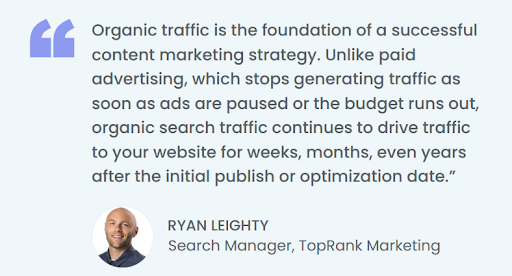 With that said, organic traffic is not universally all that valuable. To make a business impact, it needs to be qualified for relevance to your brand, and the simplest method is by orchestrating your SEO strategy around intent. This way, marketers can ensure that each piece of content they’re creating serves a distinct audience-focused purpose and will generally attract a specific type of individual: folks who are interested in your industry or specialization, educating themselves on key topics and concepts, or keeping up on the news and trends. Sometimes search intent will drive a person directly toward product evaluation and making a purchase. Obviously those opportunities are extremely valuable, which is why lower-funnel and demand-based content are key components of any B2B SEO strategy, but it’s critical to keep in mind that at any time, a vast majority of your potential buyer audience is not in-market. That doesn’t mean they aren’t carrying out their job duties everyday, solving problems and answering questions that relate to their role and your solution category. An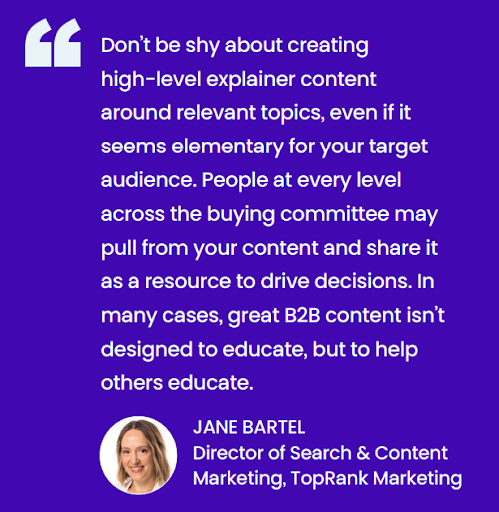
 New Study Highlights Key Tips for LinkedIn Video Campaigns, Based on Analysis of 16k Campaigns When it comes to what works in LinkedIn video efforts, the inclusion of relevant statistics, data-rich notes, and highlighting key campaign points early on were all seen as helping to increase video engagement rates, according to recently-released joint LinkedIn and VidMob study data.
 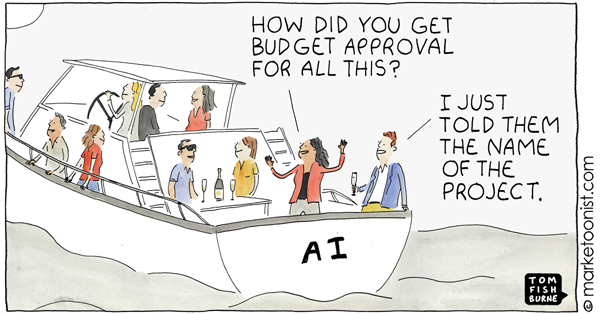 A lighthearted look at “Navigating AI Hype” by Marketoonist Tom Fishburne —





























 Pictured: a beautiful spring day But despite (or perhaps because) of the fact that my own spring is taking its time outside, within my closed-up, heated apartment, at least one spring is springing: Content marketing in 2023. It’s going to be a very big year for content marketing, with marketers everywhere responding to big and often surprising shifts in our discipline by going back to basics and rethinking their content strategies from the ground up. And it’s the perfect time to do so: to stick to the metaphor, the seeds we sow right now as content marketers will make or break our success in the season to come. So, in the spirit of spring (wherever it may be), let’s discuss a few ways we can all start growing our content gardens right now to ensure a beautiful bloom in 2023 and beyond:
 Is AI the Future of Video Creation? We Asked Wistia's Head of Production AI has seen growing use within video creation, as content creators look to increase efficiency and tap into a new realm of creativity made possible by the nascent technology, and HubSpot recently explored how Wistia's head of production has implemented an AI workflow in the video creation process.
 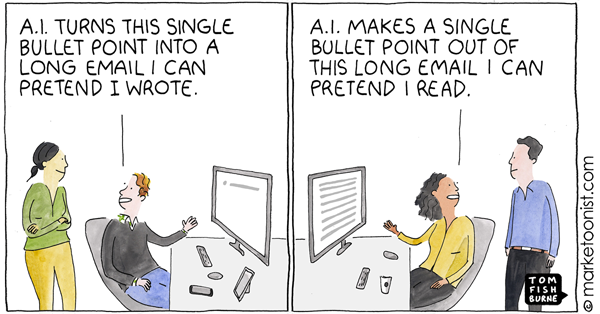 A lighthearted look at “AI Written, AI Read” by Marketoonist Tom Fishburne —