Tuesday, March 17, 2020

Smooth Sailing: Our Guide to Effective Project Management for B2B Marketers

Man standing in front of blackboard with a grid of choices image.

Man standing in front of blackboard with a grid of choices image. What does the word “work” mean to you? A dictionary would tell you that work is, “activity involving mental or physical effort done in order to achieve a purpose or result,” or maybe, “a task or tasks to be undertaken; something a person or thing has to do.” But how do we know which tasks to tackle first? Or what specifically needs to happen in order to achieve our purpose? That’s where project management comes in. And for B2B marketing agencies or teams, there are a lot of nuances when it comes to project management. Launching several campaigns at once. Racing to meet tight deadlines. Ensuring important milestones are met and in the right order. These are not your typical projects. And the typical approach to project management just won’t cut it. What are our secrets to project management for B2B marketers? I share our top project management tips that boost marketing productivity with you below.

Tip #1: Adopt Big-Picture Thinking

Project management can either be granular or broad. Small picture, or big picture. With a granular approach, you’re at the front lines of work on a daily basis. You’re communicating with the team several times a day to ensure due dates are being met, roadblocks are cleared, and information is shared. However, this approach eats up a lot of time. Especially when you’re juggling several projects at once — a common occurrence for B2B marketing teams. Looking at the big picture is a much more efficient approach. Instead of digging into the details and micro-managing every task or piece of work, this approach takes a step back and instead takes a look at your projects as a whole. You’re reviewing projects for common pain points like overlapping timelines, double-booked resources, and client approvals to see where you can proactively remove obstacles and schedule work. With a big-picture approach to project management, you’ll spend less time reacting to team needs and more time proactively mitigating bumps in the road. It’s more planning and less managing. [bctt tweet="“With a big-picture approach to project management, you’ll spend less time reacting to team needs and more time proactively mitigating bumps in the road. It’s more planning and less managing.” @annieleuman" username="toprank"]

Tip #2: Implement the Right Tools

As a project manager myself, it seems as though the words “project management” and “software” are almost always mentioned in the same breath. They’re conjoined at the hip. And there’s a good reason for that. Project management software has immeasurably helped organizations improve the way they work. Take Google Drive or Dropbox for instance. Every document your marketing team needs can be uploaded, shared, edited, and collaborated upon in a single, easy-to-access place. That is an incredible benefit to B2B marketing teams where you can work on anything from a calendar to a spreadsheet to an interactive asset at any given time. Some of our favorite work-accelerating tools are:
  • Google Drive: file sharing and collaboration.
  • Dropbox: design file sharing and proofing.
  • Slack*: quick communication that’s organized by project, subject, or team.
  • Mavenlink: structuring projects, assigning tasks, and tracking efficiency.
  • Zoom: hosting team and client meetings.
  • LastPass: sharing access to important tools.
But before you go and install all of them, there’s an important consideration you need to make: process. Every tool needs its own set of processes to go with it telling your team when to use it, why you need it, and how to best utilize the tool. With processes in place, there is no confusion among your team as to where critical information lives. And speaking of processes... [bctt tweet="“Every tool needs its own set of processes to go with it telling your team when to use it, why you need it, and how to best utilize the tool.” @annieleuman" username="toprank"]

Tip #3: Prioritize Process

Process is a love/hate relationship for many B2B marketing teams. Too much process, and creativity is stifled. Not enough process, and progress is halted. Process is a balance. Take a look at your own documented processes and ask yourself:
  • Which processes are necessary to complete the work?
  • Are there any processes that are no longer followed?
  • How many processes do you have for the same task?
Based on your answers, you should consolidate your processes where able, kill and reimagine the processes that are already dead, and promote the processes that are essential to survival. Good project managers will create processes with ease, but only the great ones are able to remove and improve the processes that are more of a hindrance than a help. [bctt tweet="“Good project managers will create processes with ease, but only the great ones are able to remove and improve the processes that are more of a hindrance than a help.” @annieleuman" username="toprank"]

Tip #4: Be Flexible

We live in a world of constant change. Recent events have highlighted this even more so. It’s the nature of life, and it is certainly the nature of marketing. Adapting to change requires flexibility. Project management for B2B marketing needs to be able to handle an accelerated — or decelerated — timeline, a drop in resources, or a sudden, unexpected ask from a client. While project managers will do their best to try and predict the future with grade-A planning — it is impossible to do so with 100% accuracy. How do we handle the constant change in B2B marketing? We prioritize one week at a time. By prioritizing one week — or even one day — at a time we’re able to be much more agile and fit in the urgent requests as they come in. If we prioritized further out, we would lose the ability to change course quickly. We also have a large, varied pool of resources to ensure nothing is siloed or breaks if someone needs to take unexpected time off or is over capacity.

Let’s Get Down to Business

To focus your B2B marketing team on the work that matters, project management needs to be a priority. But in our experience, the most effective project management follows the above guidelines. It’s flexible, rooted in process, sees the big picture, and is assisted by the right tools. That’s not to say that your B2B marketing team won’t need to be managed a little bit differently, but the above tips should get you started on the right path. Want to further optimize how your team works? View these tips for managing content marketing teams. * Disclosure: Slack is a TopRank Marketing client.

The post Smooth Sailing: Our Guide to Effective Project Management for B2B Marketers appeared first on Online Marketing Blog - TopRank®.

Monday, March 16, 2020

Should COVID-19 Stop B2B Marketers From Marketing?

COVID-19 B2B Marketing

COVID-19 B2B Marketing You've read the news, seen the reports, remarkable real-time graphs and updates from the CDC. Virtually all industry conferences are cancelled or postponed, major sporting events are postponed, most schools and many stores are closed and just about any venue for large crowds from malls to theatres are as empty as the toilet paper aisle at Target. COVID-19 is serious business and is undoubtedly having an impact on business. Should it stop companies from marketing to other businesses? We all have an obligation to make the changes necessary to minimize COVID-19 transmission through closures, postponements and having employees work from home like we just implemented at TopRank Marketing this week along with many other companies. While there will be a period of adjustment, these changes do not mean the work stops. It doesn't mean companies don't need information, solutions, support, products and services. The evolving environment we find ourselves in presents new challenges and opportunities to be even more relevant and useful for clients. While some companies may be distracted or paused in some of their efforts to find solutions, that only means marketing needs to do a better job of providing best answer content in formats that are relevant in the new environment: virtual events, video conferencing, podcasts, webinars, interactive content, recorded video, live streaming and other forms of online engagement. Virtual reality or direct mail are considerations as well. During this time of transition, it's also important that marketers review their planned advertising, social and marketing messages to be appropriate to what customers are dealing with right now. Publishing marketing messages as if everything is normal will not resonate or be useful. Additionally, opportunities may reveal themselves either through data or consumer behavior, like the efforts to encourage gift card purchases from local businesses that will lose foot traffic. A few additional tips for B2B marketers include:
  • Stay in close contact with your customers. Learn what you can do to better support them, anticipate changes and offer resources.
  • Make sure your brand digital channels are up to date including website, blog, social network profiles, and Google My Business listings.
  • Commit to video - convert marketing message activities to video and if you have live video access on LinkedIn for execs or your brand - start using it now.
  • Optimize your digital channels: Refresh SEO, social, online advertising and influencer efforts. Identify what is working and reallocate resources and budget as appropriate.
  • Reinforce efforts and communications to support community, employees and customers affected through supply of resources, technology or expertise.
Marketers focused on being the best answer for their customers are agile and understand the importance of being responsive to changes, even as large as the Coronavirus pandemic. Being responsible to the health and safety of employees, customers and community should be the top priority while also understanding that the need for information and solutions might slow or change but not stop. We still need to do our jobs and provide useful information, we just need to do it differently.  

The post Should COVID-19 Stop B2B Marketers From Marketing? appeared first on Online Marketing Blog - TopRank®.

Friday, March 13, 2020

Digital Marketing News: B2B Purpose & Brand Awareness Studies, Twitter Tests Fleets, Gen Z Turns to Influencers, & Apple’s New Push Ads

2020 March 13 MarketingCharts Chart

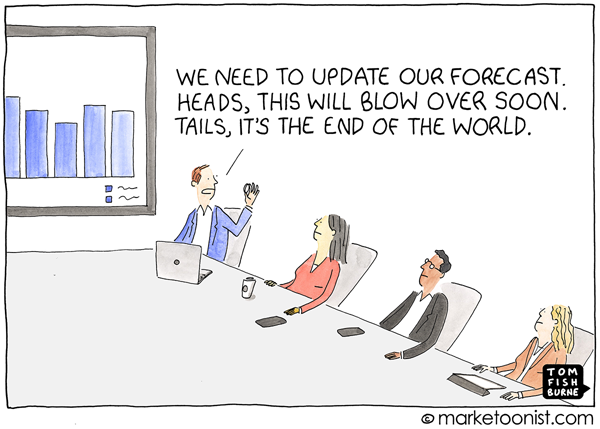
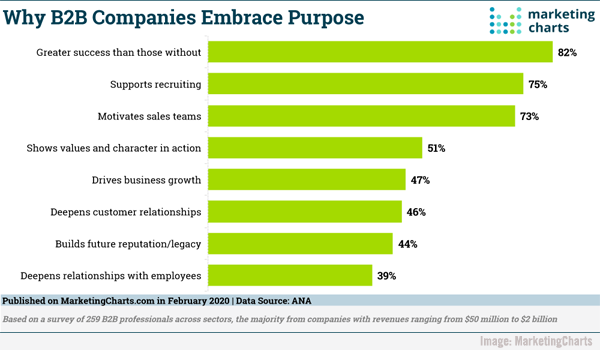
2020 March 13 MarketingCharts Chart B2B Companies See Purpose As A Path to Success Some 82 percent of B2B executives see companies with purpose having more success than those without, with 86 percent saying that purpose is important to their business — two of the insights contained in a recently-released B2B brand purpose survey. MarketingCharts Content Consumption and Production Trends for B2B Marketers Creating brand awareness, educating audiences, and building credibility and trust are the three top B2B content marketing goals, according to a new report on content consumption and production trends. Blog posts, customer testimonials and reviews, and whitepapers were the most effective methods for moving prospects along the sales funnel, the report revealed. Chief Marketer Twitter starts testing its own version of Stories, called 'Fleets,' which disappear after 24 hours Twitter has begun testing its take on Story-format tweets, which it has dubbed "fleets" for the fleeting ephemeral element. If rolled out to the platform's full user-base, fleets could provide new options for marketers. TechCrunch Gen Z relies on influencers for purchase decisions, Kantar says People in the Gen Z demographic place the most weight on influencers when it comes to making purchasing decisions, with 44 percent buying based on a social influencer's recommendation — notably higher than the 26 percent of the general population, according to a recently-released consumer study. Mobile Marketer Reddit Launches Prominent New 'Trending Takeover' Ad Units Social news aggregator and discussion platform Reddit has rolled out its most visible advertising format to date, with "Trending Takeover" 24-hour campaigns that offer prime exposure, offering a new option for marketers, while some of the firm's users predict a Redditor backlash. Social Media Today Gen Z's Favorite Social-Media Platform? None Of The Above Despite using social media more than any other demographic, Gen Z is most at home not on traditional mainstream platforms but on gaming platforms. With 90 percent of the demographic being gamers, gaming platforms serve roles similar to those social media does for the general population, according to a newly-released Kantar study of interest to digital marketers. MediaPost 2020 March 13 Statistics Image Apple now allows push notification advertising, updates dating app review guidelines and more Apple has made changes that allow app publishers to send push notification ads and promotional content to users who choose to opt-in, a move that has given marketers their first opportunity to utilize push-based ads to users of Apple's iPhone and iPad devices, the firm recently announced. 9 to 5 Mac Majority of consumers want standards and tougher action against review fraud Most consumers say that they would like to see more done to combat fake reviews, including new industry standards to fight online review fraud, according to newly-released survey data which also shows that 82 percent won’t buy from a brand they’ve lost trust in. Marketing Land YouTube Analytics Now Lets Creators Compare Metrics Side-by-Side Google's YouTube has unveiled a slew of new analytics features aimed at providing easier side-by-side metrics comparisons, including timelines that can show views alongside comments and other details, the search and video giant recently announced. Search Engine Journal ANA Finds Serious Problem: Marketing Students Just Wanna Have Fun New entrants into the advertising industry are less likely to lean towards the quantitative and analytical side of marketing and more likely to embrace its creative and fun areas, according to newly-released survey data from the Association of National Advertisers ANA Education Foundation (AEF). MediaPost ON THE LIGHTER SIDE: 2020 March 13 Marketoonist Comic A lighthearted look at managing uncertainty by Marketoonist Tom Fishburne — Marketoonist Twitch streamers make thousands by literally just sleeping — Ars Technica TOPRANK MARKETING & CLIENTS IN THE NEWS:
  • Lee Odden — Building trust with influencers and buyers: Influencer marketing in 2020 with Lee Odden — Ai Addyson-Zhang
  • Lee Odden — Bra att veta om B2B influencer marketing 2020 (infograf) [In Swedish] — Pontus Staunstrup
Do you have your own top B2B content marketing or digital advertising stories from the past week? Please let us know in the comments below. Thank you for joining us, and we hope that you'll come back again next Friday for a new array of the most relevant B2B and digital marketing industry news. In the meantime, you can follow us at @toprank on Twitter for even more timely daily news. Also, don't miss the full video summary on our TopRank Marketing TV YouTube Channel.

The post Digital Marketing News: B2B Purpose & Brand Awareness Studies, Twitter Tests Fleets, Gen Z Turns to Influencers, & Apple’s New Push Ads appeared first on Online Marketing Blog - TopRank®.
Thursday, March 12, 2020

Jumpstarting a Pilot B2B Influencer Marketing Program in 5 Steps

Fist Bump Representing Influencer Marketing Partnership

Fist Bump Representing Influencer Marketing Partnership The hardest part is getting started. Has there ever been a more relatable expression? I know we can all think of a task or obligation that we put off endlessly out of some perceived dread, only to find that once we actually buckled down and got to it, the act was rather quick and painless. The spectre of starting from scratch can also stall a lot of decisions in the business world. Take B2B influencer marketing as an example. You might’ve seen the stats showing how effective it is, or how it drives shocking ROI. Maybe you’ve even seen TopRank Marketing CEO Lee Odden out on the speaking circuit, articulating the approach and sharing some of our success stories. But if you have no semblance of an influencer marketing strategy or infrastructure in place at the moment, hesitance is understandable. So to ease the friction and uncertainty, here’s a simple five-step plan to get a pilot program up and running.

Launching a Pilot B2B Influencer Marketing Program in 5 Steps

By no means will this simplified blueprint bring you to a point of sophistication, but it will help you get a feel for B2B influencer marketing, how it works, and why it’s powerful for growing your business. 1: Get Buy-In Throughout the Organization Even for a pilot program, it’s critical to get stakeholders on board and involved. Before getting started, create visibility around the initiative. Clarify why it’s happening, and who can play a role. There are a number of different functions and specialists that play a role in executing influencer strategies — social media managers, strategists, SEOs, designers — but engaging the content team will be most vital for any co-creation efforts, since the planning process changes significantly. 2: Compile a List of Influencers who Align with Your Brand You likely already have a solid understanding of the “who’s who” in your industry. Who are the authoritative voices and thought leaders? Which individuals do your customers listen to and respect? Where are fresh ideas and innovation coming from? This knowledge provides a good starting point. But the exercise of building an influencer list will help you and your team grasp some of the nuances involved with B2B influencer selection, such as:
  • Prioritizing relevance over reach
  • Assessing topical alignment
  • Discovering micro-influencers
  • Analyzing channels and platforms
  • Developing focused audience research
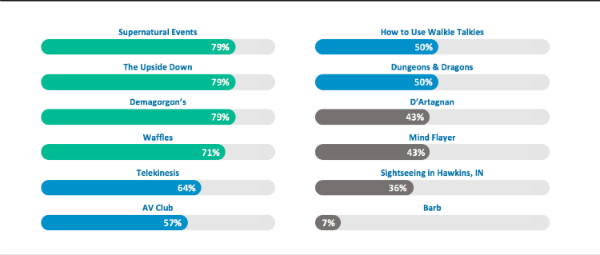
Here’s a visualization of the type of topical alignment chart we like to generate at TopRank (themed in this case around Stranger Things, via a recent Ashley Zeckman presentation): Pilot B2B Program Image 3: Start Priming Influencer Relationships As we’ve written in the past: “Strong relationships are at the root of influencer marketing success — and relationships aren’t built in a day.” This is a long-term process and the initial steps should be entirely focused on building familiarity and connection to the influencer. It’s all about getting your brand on their radar, creating credibility, and letting them know they’re someone your company holds in high regard. A few do’s and don’ts when it comes to priming influencer relationships in this initial stage: DO: Post a link to their latest article on your social media channels and add a message about why you liked it. DON’T: Message them and ask out of nowhere for them to share your latest content piece. DO: Quote one of their insights in a blog post, and tag them in the social promotions for visibility. DON’T: Solicit them to write a guest post on your blog. DO: Approach influencers as partners. DON’T: Approach influencers as assets. [bctt tweet="“Competition for influencers is growing fast and there are only so many top influencers in each industry. It’s essential to create relationships now, long before you need to activate them.” @LeeOdden #InfluencerMarketing" username="toprank"] 4: Integrate B2B Influencer Marketing into Your Strategy  Now that you’ve laid some initial groundwork, it’s time to start thinking about how B2B influencer marketing will fit into your holistic integrated strategy. Chart out the goals of the program, tactics and channels you’ll use, metrics you’ll measure against, and various departments and functions that will be involved. This helps you gain a practical sense of what the influencer program will look like in action, and what steps are necessarily to operationalize it. During this stage, we recommend asking and answering these five essential questions. [bctt tweet="“The nature of influencer-content programs is that they can support multiple objectives from awareness to engagement to conversion.” @azeckman #InfluencerMarketing" username="toprank"] 5: Co-Create a Piece of Content with One or More Influencers Assuming you’ve developed at least one influencer relationship to a point where it makes sense, partner with them in the creation of a piece of content — blog post, infographic, ebook, etc. These types of projects should always offer mutual benefits, and the influencer’s lift should correspond to the value they figure to get out of it. If it’s simply a piece of marketing content for your brand, with the expertise and thought leadership being highlighted in front of new audiences, you might just ask for a few insights to include here and there. If the content can serve as more of a marketing tool for both parties, they might be more inclined to co-author or contribute in other significant ways. Going through the process of co-creating with influencers will give your team a feel for how it works, and publishing your content into the wild will give you a glimpse of the impact. To be clear, without a more comprehensive strategy and long-term infrastructure built out, you likely won’t come close to the potential of what these programs can achieve results-wise, but we’ll bet the level of reach and number of new eyeballs compares favorably to a standard piece of non-influencer content.

Get Your Influencer Marketing Pilot Up in the Air

Yeah, some say the hardest part is getting started. But the late, great Tom Petty offers another point of view: waiting is the hardest part. So why not stop waiting, and get your B2B influencer marketing pilot program in motion? If you have any questions along the way, we’re happy to offer guidance. Get in touch and we can discuss your influencer marketing goals, and how to get there.

The post Jumpstarting a Pilot B2B Influencer Marketing Program in 5 Steps appeared first on Online Marketing Blog - TopRank®.

Wednesday, March 11, 2020

14 Search Influencers at Top B2B Brands

Skyscrapers towering overhead image.

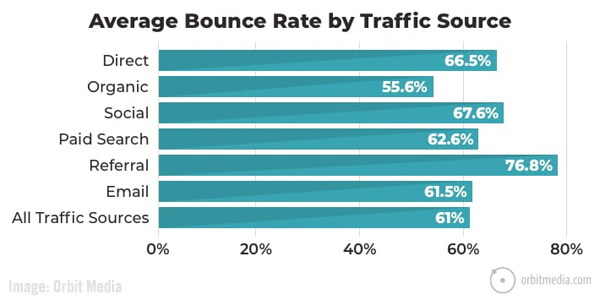
Skyscrapers towering overhead image. Search strategy is undoubtedly vital for most B2B brands today, yet there are several elements that play important roles in its ultimate success that may surprise you. Leading the search engine optimization (SEO) program for a major brand is a vital role that’s only taken on greater importance over the years, as even the rise of social media marketing hasn’t eliminated the need for B2B marketers to have a strong search marketing strategy. With search influencers at top brands facing a nearly constant barrage of new SEO challenges, how do smart search industry leaders build successful campaigns? Non-paid organic search efforts have some of the lowest website visitor traffic bounce rates for B2B and B2C campaigns alike, which is why SEO practitioners at major firms continue to play such an important role in successful marketing efforts. Organic Search Traffic Chart Having a sound search strategy comes not only from long-standing traditional on-page technical elements, but more than ever before three additional tactics working together help to build a new type of cohesive SEO success:
  • Building a Best-Answer Content Strategy
  • Utilizing Knowledgeable Industry Experts for Influencer Marketing
  • Tracking & Adjusting to Search Industry Changes
Let’s take a look at each of these three key areas that combine to form the type of strong search strategy that top B2B marketing leaders rely on, and then we’ll look at 14 search innovators working at major brands.

Building a Best-Answer Content Strategy

Part of building a successful best-answer content strategy is learning the questions that your audience is asking:
  • What is your audience looking for?
  • How is your audience searching for answers?
  • Where are they looking?
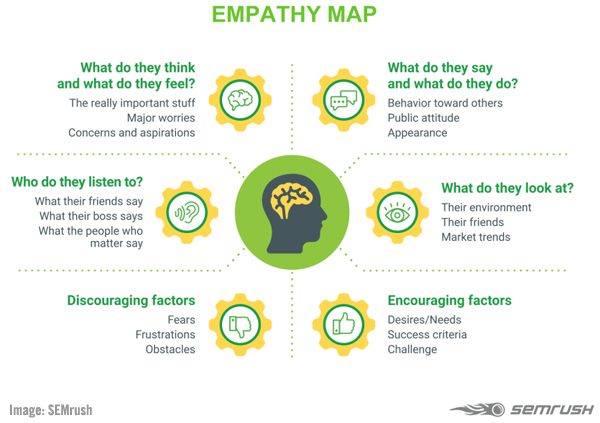
Getting to the heart of the questions that are most important to your audience is a powerful way to provide what we like to call best-answer solutions. Learning what your audience is searching for, where they’re looking, and how they are going about their searches is an entire branch of search marketing, and a number of dedicated tools exist to help in this area, as I cover in “10 Smart Question Research Tools for B2B Marketers,” including offerings such as SEMrush’s helpful empathy map. SEMrush empathy map image. [bctt tweet="“How can you be the best answer for your audience if you don’t understand what questions they’re asking or what problems they’re trying to solve?” — Lane R. Ellis @lanerellis" username="toprank"] To help you create or expand you own best-answer content strategy, we’ve gathered together four resource articles our team has written about the various aspects of building great content that instills trust:

Utilizing Knowledgeable Industry Experts for Influencer Marketing

Influencer marketing may not initially spring to mind when looking for areas important to search efforts, yet it can have tremendous impact on both paid and organic efforts. Brands that haven’t yet utilized B2B influencer marketing have the most to gain. B2B influencer marketing is at the core of the services we’re known for at TopRank Marketing, providing successful programs and campaigns to major firms from LinkedIn and Adobe to Dell and 3M. Such successes led Forrester to list us as the only B2B marketing agency offering influencer marketing as a top capability in its “B2B Marketing Agencies, North America, Q1 2019” report.” Successful B2B influencer marketing uses knowledgeable industry experts to increase trust, create best-answer content, and offer customer experiences that are tailor-made for increasing search findability. You can dig in and explore some of our top recent influencer marketing articles, including the factors that go into making a great B2B influencer, here: [bctt tweet="“Influencer marketing may not initially spring to mind when looking for areas important to search efforts, yet it can have tremendous impact on both paid and organic efforts.” @lanerellis" username="toprank"]

Tracking & Adjusting to Search Industry Changes

The search industry has been one of rapid changes since the days of Alta Vista, and keeping up-to-date with the ever-shifting machinations and technical intricacies can be a full-time job for top B2B SEO leaders. I remember in the late 1990s when my old friend Brett Tabke — who used to call my 300-baud computer bulletin board system back in the 1980s — first started holding informal gatherings of webmasters and search industry professionals, a move that led to forming Pubcon, now one of the longest-running search-related conferences. In-person networking events are hard to beat for not only search but whatever your particular area of marketing, as they offer the ability to form lasting relationships, build new client connections, and learn the latest from presenting keynote speakers, as we explore in "Content Marketing Gold Rush: How to Unearth Content Gold at Marketing Industry Events." There have never been more conferences, including those tailored for B2B marketers, and recently I compiled a list of 50, in “The BIGLIST of 50 Top B2B Marketing Conferences in 2020.” Search industry online news publications are also abundant as sources for staying abreast of the rapidly-changing world of SEO, including SEO Roundtable with industry veteran Barry Schwartz, and many others. [bctt tweet="Tip for creating #ContentGold around industry events: Reach out to organizers, sponsors, or speakers that represent topics and brands of interest to your community to do pre-conference interviews. @LeeOdden" username="toprank"]

Search Influencers From Major Brands to Follow & Learn From

Learning from some of the savviest search marketers is a great way to expand your own SEO repertoire, and we’ve compiled a list of 14 to get you started, listed in random order. Jesse McDonald @jesseseogeek Global SEO Strategist, IBM Carolyn Shelby @cshel SEO Manager, ESPN/The Walt Disney Company Melanie Mitchell @MelanieMitchell Head of SEO, Chewy Derrick Wheeler @DerrickWheeler Senior SEO Marketing Manager, SAP Concur Keith Goode @keithgoode Senior SEO Strategist, IBM Aaron Chronister @TheMadHat Senior Director of SEO, CBS Interactive Brian LaFrance @blafrance Director of SEO, CBS Interactive Milosz Pekala @mnbuzz SEO Manager,  Mayo Clinic Adam Audette @audette Senior Vice President and Head of Global SEO, Merkle Ash Buckles @ashbuckles Global SEO Manager, InterContinental Hotels Group (IHG) Jim Huang @_jimhuang Organic Search SEO Manager, AARP Dan Perry @danperry SEO Director, Turner Broadcasting Dennis Goedegebuure @TheNextCorner Head of Global Consumer Growth Marketing, PayPal Gary Illyes @methode Webmaster Trends Analyst, Google This is just the tip of the iceberg however, and you can find many more top industry marketers in the following additional lists we’ve assembled:

Educate Your Team To Deliver Knockout B2B Search Performance

via GIPHY We hope that our look at how search benefits from building a best-answer content strategy, using industry experts for influencer marketing, and keeping up-to-date with SEO industry news has given you plenty of ideas for taking your own search marketing to new heights. You can learn even more about being the best answer for your customers and the importance of SEO and influence in a presentation TopRank Marketing CEO Lee Odden will be delivering in April: April 22-23, 2020 - Content Marketing Conference — Boston, MA. Be Best Answer for Your Customers with SEO and Influence

The post 14 Search Influencers at Top B2B Brands appeared first on Online Marketing Blog - TopRank®.
Tuesday, March 10, 2020

What Is B2B Influencer Marketing in 2020? Change Is Coming

Woman looking at phone image.

Woman looking at phone image. You already know what B2B influencer marketing is. It is “the practice of a B2B brand engaging internal and industry experts with active networks to help achieve measurable business goals.” But how is that changing in 2020 with social media distrust, the spread of misinformation, advertising regulations, and more? B2B influencer marketing in 2020 has seen new challenges arise, requiring a shift in approach. From trust to transparency to accessibility, 2020 is set to be a transformative year for influencer marketing programs. What is B2B influencer marketing in 2020 and how is it changing? We share the answers with you below.

In 2020, B2B influencer marketing is… niche and targeted.

That big-name influencer you’ve been working so hard to grab? You might want to pivot to a smaller, more niche expert. A whopping 70% of millennials prefer endorsements or sponsorships from non-celebrity influencers. Of course, exceptions exist, but bigger isn’t always better. In our experience, an influencer with a smaller, more engaged audience is much more valuable than an influencer with a large, disconnected following. It is for that reason that it is of paramount importance that you select the right influencers for the job. Even if that means rolling out a campaign with fewer influencers or passing on a big name in your space. The more niche and targeted you can be with your influencers, the better. The research shows that audiences prefer hearing from lesser-known, “hidden gems” in the industry. [bctt tweet="“An influencer with a smaller, more engaged audience is much more valuable than an influencer with a large, disconnected following.” @annieleuman" username="toprank"]

In 2020, B2B influencer marketing is… transparent.

Trust in B2B marketing remains top-of-mind in 2020. One way to grow trust in your brand is to improve your transparency – something that will most certainly impact your influencer marketing campaigns. Most B2B brands are already ahead of the trust curve, disclosing their influencer relationships and denoting when an influencer message or piece of content has been paid for. However, plenty of gray area still exists. For example, what if you didn’t pay an influencer? What’s the guideline then? An average B2B company will continue to disclose only the content they sponsored. A smart B2B company will disclose everything. Audiences don’t like feeling deceived. The more straightforward and honest your brand is, the more your audience will listen.

In 2020, B2B influencer marketing is… approachable.

As our own CEO Lee Odden is known for saying; “Everyone is influential about something.” It is with that same spirit that influencer marketing will expand and become democratized. From internal subject matter experts to customers to individuals without any formal expertise or following at all, B2B brands are realizing that valuable voices come from everywhere. 2020 audiences care about substance over style more than ever before. This leaves brands with the freedom to be more diverse in terms of the types of voices they feature and what they have to say. [bctt tweet="“Everyone is influential about something.” @LeeOdden" username="toprank"]

In 2020, B2B influencer marketing is… media.

Influencers in 2020 aren’t just a new social channel for your campaigns. They’re an entire media company. Take a look at Jay Acunzo or Brian Solis. From podcasts to books to speaking engagements to their own websites, their content expands far and away from just a tweet or LinkedIn post. Successful B2B brands will recognize this in 2020 and tailor their outreach and campaigns accordingly to take advantage of more than just their expertise and social media. For example, you could partner with them on a podcast episode or commission them for a blog post. The more you treat them like the media company CEOs that they are, the better.

In 2020, B2B influencer marketing is… varied.

We touched on this a little earlier, but in 2020, B2B brands are already evolving their message and who delivers it. However, they’ll also need to change how it’s delivered. 2020 has seen many more content formats emerge, such as virtual reality (VR) experiences, interactive content, and more to drive engagement. And we’re certain that more content types are on the horizon. With brands thirsting for more engagement and attention-grabbing campaigns, these new and exciting content formats will also permeate the world of influencer marketing. If you want your B2B influencer marketing campaign to break through the void and stand out among the crowd, you’ll want to think about changing up the format, or even featuring several formats, to switch it up. [bctt tweet="“What makes experiences different and memorable is if they’re really good… or really bad. Anything in the middle tends to blur together in our recollection. Only the extremes stand out.” @NiteWrites" username="toprank"]

In 2020, B2B influencer marketing is… experiential.

The customer experience is everything. For marketing departments executing influencer marketing, those influencers are your customers. Brands that are providing an exceptional influencer experience in 2020 will have no problems retaining and growing those relationships into long-lasting partnerships. Having those positive partnerships with influencers makes it easy for them to say yes to whatever you need. But it also helps spread the word to other potential influencers that your brand is amazing to work with: a sentiment that is worth gold (or maybe platinum) in B2B influencer marketing. So how can you ensure your influencer experience goes above and beyond? Ask yourself:
  • What can I do to make our influencers’ lives easier?
  • How can I help our influencers reach their marketing goals?
  • When was the last time I spoke to each influencer?
Asking these questions will emerge opportunities for a better, more beneficial experience. Haven’t spoken to someone in a month? Reach out and see how they’re doing — not to seek their contribution but to just see what’s new in their lives and how you could potentially help. It is those little details that will go a long way and separate your brand from the rest. [bctt tweet="“Visual, experiential content that is easy to find and satisfies business buyer’s needs to be informed, entertained and inspired will continue to be areas of focus.” @LeeOdden" username="toprank"]

The Times, They Are a-Changin’

In 2020, B2B influencer marketing is already seeing a great amount of change. Their approach is becoming more targeted, influencers are more diverse, the practice as a whole will become more transparent, and so much more. Adapting to these changes is what will set the good B2B brands apart from the excellent. We hope you'll use these insights to help your influencer marketing strategy make the transformation for 2020. How else should you adapt your influencer marketing strategy in 2020? View these 2020 influencer marketing trends.

The post What Is B2B Influencer Marketing in 2020? Change Is Coming appeared first on Online Marketing Blog - TopRank®.
Monday, March 9, 2020

How B2B Marketers Can Enter the Circle of Trust

B2B Marketing Circle Buyer Trust

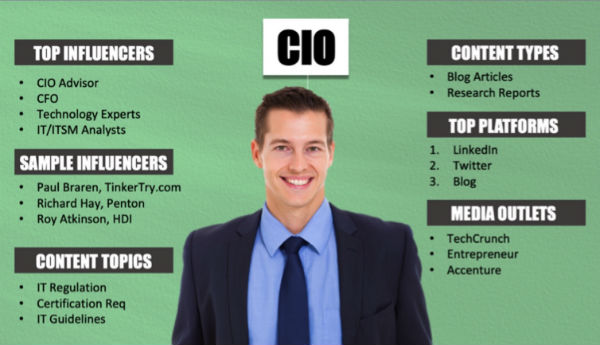
B2B Marketing Circle Buyer Trust Buyer distrust of advertising and brand communications is one of the top challenges of our time for marketers. As TopRank Marketing's Nick Nelson has shared, "trust is currency" and that trust is "arguably the most valuable currency in today’s B2B marketing environment." Studies continue to show that business peers and experts have customer attention over brands. 95% of B2B buyers say they prefer credible content from industry influencers according to a study from Demand Gen Report. As a result, it is more important now than ever for marketers to find ways to become part of this new “circle of trust” for buyers. But how? Like few other marketing tactics, Influencer Marketing provides an effective way for companies to partner with credible experts that have the attention and trust of customers. B2B brand and influencer content collaborations can deliver significant marketing performance improvements across the entire customer lifecycle from awareness to purchase to advocacy. CIO sources of influence The role of influence and creating trust goes beyond working with experts. B2B brands that truly understand the influences of their buyers can use those insights to create best answer content and expert activations in the channels their customers rely on to discover, consume and engage content that supports decision making. Discovering sources of influence can come from first party data, primary research with customers and CRM data among other sources. Answering questions about what people, publications and passions are influential for a buyer can directly inform content planning that can boost relevance, credibility and brand trust. On top of all that, being the best answer with credible content optimized for trust is a better customer experience. While there are many possibilities with influencer marketing, it's still new for many B2B brands. Over the past 5 years, an increasing number of B2B companies have implemented pilot influencer programs and campaigns, giving them exposure to the possibilities and operational realities of influencer marketing. Influencer marketing is a relationship business and while pilots and experiments are good to build a use case, start/stop campaigns do not allow for the full maturation of what’s possible when brand and influencer relationships are strong. Ongoing influencer engagement and always on influencer marketing programs iteratively improve performance and build momentum that results in better returns to the brand, influencers and customers. Always on influencer engagement is truly an "everybody wins" situation.
The Good and the Bad of Influencer Marketing

Good influencer marketing - Adobe is doing a great job at fostering a community of trust with their Insiders group. Not only did Rani Mani and team assemble an impressive group of industry influencers and creators for activation at the Adobe Summit conference, they created an environment where those influencers continue to actively engage on a daily basis MONTHS after the event. As a result, Adobe has not only built continued trust in its brand amongst a community of influencers but with the Adobe customers those influencers reach as well. Bad influencer marketing - A company I will not name reached out to a laundry list of influencers mechanically asking them to answer multiple questions on a Google Form for some kind of content asset. After the form was completed, there was no thank you, no follow up communication or notification of when the content asset published. This approach to engaging influencers is simply crowdsourcing content and really only creates operational value for the brand and not a lot of value for the influencers (who are unlikely to share) or end consumers who probably won't see it. Most of all, a transactional approach to activating influences does not build trust - for anyone. Examples of B2B influencer marketing that builds trust 3M - In their effort to educate the public on the value of science in our everyday lives and build trust and credibility, 3M’s Chief Science Advocate interviews influencers from the scientific community through the Science Champions Podcast. By connecting with experts on topics from the human impact of science to science and innovation, 3M is building brand trust amongst their customers and the public. Dell - Dell Technologies has developed relationships with a network of influencers including Mark Schaefer and Doug Karr, who host the Dell Luminaries podcast. Their discussions with technology visionaries from inside Dell and out, put a human face on technology innovation and build trust in the Dell Technologies brand. Where many B2B brands fail to build trust with influencers is how they approach the value exchange.  Trust is important for the brand and customer relationship as well as for the brand and influencer relationship. No influencer wants to "feel used" by a brand. No brand wants to feel underwhelmed by working with an influencer. One of my favorite sayings about this topic is,

Engage an influencer for a campaign and they are your friend for the day. Help someone become more influential and they're your friend for life.

Brands that engage influencers need to take a step back from thinking only about what they want from the influencer and find out what the influencer wants. When companies can align and find a way to provide the influencer with what they want, whether it’s exposure, access to content, software or people, while also delivering on what the brand wants, it’s a win for everyone. Look beyond individual campaigns and think about how the brand and influencer relationship can create mutual value, influence and trust over time. That trust built amongst an influencer community will translate to trust built amongst customers. Where should B2B brands start with influencer marketing? We've covered this quite a bit in the past, but I can't recommend enough the value of connecting with a resource that has deep experience in the area of influencer marketing. Make a commitment to understand what is possible and develop an informed plan to test, evaluate and scale. State of B2B Influencer Marketing Survey There are many unanswered questions about influencer marketing in the B2B space. We've answered our share across many posts here at TopRank's Online Marketing Blog over the past 6 years, but we're taking our quest for finding and sharing answers a step further: The 2020 State of B2B Influencer Marketing Survey. We are currently collecting survey responses from B2B marketers who have considered, tested, implemented or are fully committed to influencer marketing. This is the first influencer marketing research effort focused specifically on B2B influencer marketing. Please take the survey here and on top of adding valuable insights about strategies, tactics, best practices and trends that will elevate the industry, you can enter for a chance to win a $500 Amazon Gift Card!

The post How B2B Marketers Can Enter the Circle of Trust appeared first on Online Marketing Blog - TopRank®.