Thursday, April 9, 2020

6 Unconventional Social Channels for B2B Marketing

Hand Holding Phone At Urban Overlook

Hand Holding Phone At Urban Overlook This just in: B2B doesn’t have to be boring! People who are on B2B buying committees like to be entertained just as much as everyone else. They use the same social media sites as B2C consumers do, too.  Sorry to drop so many knowledge bombs in one paragraph. Take a minute to let it all sink in. Okay, so maybe self-isolation is making me more snarky than usual. I’m glad that we don’t have to constantly explain why B2B marketing not only can be, but must be relatable and creative. But there’s one mental obstacle most of us are still struggling with: The idea that social media marketing (outside of LinkedIn) is mostly for our B2C colleagues. We’ve accepted that we should have a Twitter account or a Facebook page, but that’s where a lot of organizations draw the line. I get it. I’m over 40. The social apps the kids are on these days are confusing and frightening. Back in MY day, Tik Tok was a Ke$ha song, and I didn’t like it, because I was already too old to listen to Ke$ha.  But the kids these days are rapidly becoming the adults of tomorrow. Millennials are all over 20. Gen Zers are exiting college and entering the work force. They’re the next wave of B2B decision makers, and we need to reach them on relevant channels. Let’s take a look at some of the apps that B2B marketers may be overlooking, and evaluate whether they’re worth a shot.

Slam Dunk: Instagram

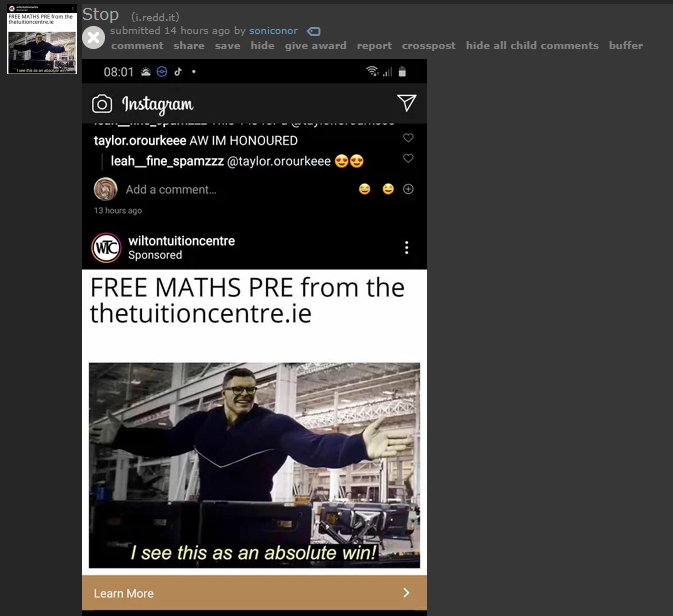
Many folks who read this will think, “Instagram is a lesser-known channel? What?” But the rest will think, “Instagram has B2B marketing on it? What?” So it’s worth an inclusion.  Instagram has 1 billion accounts, with 500 million daily active users. Of these, 200 million visit at least one business page daily. There are many B2B businesses that are killing it with their Instagram pages. For inspiration, check out General Electric, and my favorite, Life at IBM. While IBM has a main corporate page, this spinoff is focused on what employees do in their off time. It’s an amazing way to humanize the brand. If you’re already on Instagram but haven’t started making Stories yet, it’s worth giving it a shot. Stories are rapidly becoming the primary way people consume content on Instagram. Creating these mini-movies is surprisingly simple, but the creator tools are also robust enough to make eye-catching content on the fly. Life at IBM Screenshot

Proceed with Caution: Reddit

Ten years ago, Reddit was the bratty new kid on the block. Their primary goal was to promote uncensored, self-moderated content channels. That led to plenty of creativity and community-building, but also a dark side that most brands wouldn’t want to be associated with. Recently, Reddit has rebranded as a safer place for brands to come and play. They’ve removed hateful and offensive content and are focused on more family-friendly fare. That said, there are still plenty of not-safe-for-work-or-life sub-communities (subreddits). But the site has a massive untapped audience that is generally receptive to relevant marketing.  Reddit is unique in social networks in that you don’t post content on your personal page to generate a following. Instead, you post in specific sub-communities organized by topic. Each post lives or dies by upvotes and downvotes. You’re essentially starting from scratch with every post. If your target audience is on Reddit, it’s worth testing the waters with a few sponsored posts. Just keep it transparent, honest and genuine: There’s a whole subreddit devoted to mocking tone-deaf marketing.

Comeback Kid: Snapchat

Snapchat was the next big thing in social media… until it wasn’t. Instagram cloned the platform’s most popular features, usage declined, and not many folks invested in their content-enabling glasses. Even though they were brightly-colored and fun. But don’t write off Snapchat just yet. After a controversial redesign and a few missteps, the site is seeing growth again. It’s estimated that 62% of 18-29-year-olds use the app daily, for over 210 million daily active users. A few years back, we highlighted B2B businesses that were rocking it on Snapchat. Our advice hasn’t changed much for 2020: Keep it light, keep it spontaneous, and show your followers the behind-the-scenes, human side of your company.

Brand New Throwback: Twitch

Here’s a radical new idea for content: What if your content was only available on one channel, and viewers had to tune into that channel live to watch it? And what if after you were done, the content went away unless you or the viewer decided to record it? It may sound a lot like broadcast television, but (with the addition of some social and interactive elements) that’s essentially what Twitch is doing. The streaming platform began as a way for gamers to connect with an audience as they livestreamed gameplay videos. But the platform was useful for all kinds of creative streaming, from painting to sculpture to hilarious lectures about imaginary creatures. Is your audience on Twitch? The demographics skew heavily in the 18-34 demographic, squarely at the intersection of Millennial and Gen Z. Though the site skews heavily male right now (82% of users identify as male), those numbers are changing as the content moves away from its gamer roots. Brand content is sparse on Twitch now, but the platform offers compelling tools that make it easy to livestream and interact with viewers. It’s worth investigating the possibility of running podcasts or webinars on the platform, taking full advantage of Twitch’s infrastructure and interactivity.

Up-and-Comer: Tik Tok

Okay, I’m as frightened as you are, but we’ll get through it. In the early 2010s, there was an app called Vine that focused on short, mostly funny video. The site launched thousands of memes around the world, but ultimately imploded. Now TikTok is filling the void. It’s an app designed to make it easy to create and share short video, it’s exclusively mobile, and it’s beginning to expand past its young-gen-Z audience. In less than two years, TikTok has expanded its user base 5.5x in the U.S. It currently has 26.5 million active users in the states, and 500 million worldwide, and those numbers are steadily growing.   Where does B2B fit in on TikTok? It’s still early days for even B2C marketers on the platform, so the rules are still being written. We do know that TikTok users are looking for short, low-fi videos that entertain. Be prepared to show off your brand’s lighter side. For inspiration, check out the Washington Post’s page. They’ve developed a quirky personality that’s a stark contrast to their more staid journalistic side. But with over 21 million likes, what they’re doing is clearly resonating with fans.
@washingtonpost????????????????????????????? Bebe - V.A.

Next Big Thing (?): Facebook VR

As I mentioned before, I’m over 40. Which means I’ve seen VR touted as the “next big thing” for 30 years now. Remember the cutting-edge VR in the 1992 cinematic masterpice Lawnmower Man? [caption id="attachment_28313" align="alignnone" width="1024"]Screenshot from The Lawnmower Man of 1990s Computer Graphics Some of us will never forget.[/caption] But it seems like the tech is finally catching up to the hype. And now Facebook is launching a new VR social media site, just in time to engage folks who are going stir-crazy in self isolation.  Will Horizons be the future of social media? It’s too soon to tell whether this will be a leap forward or a dead end. Still, it’s worth keeping an eye on for marketers as the site enters beta testing. Facebook’s built-in audience and bottomless pockets could make social VR an actual reality.

Branch Out Your B2B

B2B marketers should be exploring any channel where their audience is. While it’s easy to feel like the more younger-skewing platforms are optional, we ignore them at our peril. Adopting — and adapting our brand persona to — these channels is a necessary step to engage the next (and current!) generation of B2B buyers. On these channels, as in any other, the keys are authenticity, empathy, understanding what the audience wants on the channel, and respecting their desires. Follow @toprankmarketing on Instagram for our own behind-the-scenes shenanigans.

The post 6 Unconventional Social Channels for B2B Marketing appeared first on Online Marketing Blog - TopRank®.

Wednesday, April 8, 2020

Best SEO Tips for Marketing During the Pandemic Plus 9 Top SEO Platforms

Black and white image of a concerned businesswoman looking out an office window.

Black and white image of a concerned businesswoman looking out an office window. How does search engine optimization (SEO) shine during a pandemic, and how can B2B marketers make sure they’re doing all they can with the platforms and tools at their disposal? For decades SEO platforms have been an integral part of the marketing and research efforts of growing numbers of major B2B brands — each offering a seemingly unending array of ever more helpful features, along with the data insights needed to help businesses succeed. With 51 percent of primarily B2B global marketing professionals seeing data insights and analysis as the single most important element when implementing a marketing technology stack, SEO platforms are poised to deliver the martech information businesses are eager to get. MarTech Chart by SmartCharts With so many powerful SEO platforms available, how can B2B marketers best put these tools to use during our challenging days of COVID-19, when all industries are in a state of flux? We asked some of the top SEO platforms for tips to help marketers successfully weather the pandemic — helpful advice that can serve to guide many areas of your marketing efforts during this uniquely challenging time. Let’s jump right in and take a look at nine of the top SEO platforms including Serpstat, SEMrush, Ahrefs, Moz, SpyFu, WooRank, Majestic, inLinks, and Searchmetrics, listed in random order.

1 — WooRank

@woorank WooRank Image WooRank offers a wide array of SEO and website insight tools including keyword research, site crawling and reporting, SEO monitoring, along with sales tools, a browser extension, and other utilities helpful to digital marketers in both the B2B and B2C realms. WooRank chief executive Adam Lynch sees SEO strategy as key both for our current pandemic situation and during the months and years ahead. “Continuing to invest in your long-term SEO strategy will help you survive our current challenges and set you up to thrive once this ends — and it will end!”, Adam said. “In unpredictable times, people turn to search engines for answers. Whether to find an item they couldn’t find in their local store or to learn more about the developing situation, people are searching for more — and you want them to find you. If you’re a savvy marketer, you can use SEO to position yourself in a relevant and topical way to gain visibility. Not to mention, most of us involuntarily have more time on our hands these days, so it makes sense to invest more energy into a solid online marketing strategy,” Adam added. Implementing a solid digital marketing strategy during a pandemic can be strengthened using platforms such as WooRank. It also takes focus to process both the new challenges and opportunities we’re facing, as our own CEO Lee Odden recently examined in “Four Opportunities for Focus to Improve B2B Marketing.” [bctt tweet="“In unpredictable times, people turn to search engines for answers. Whether to find an item they couldn’t find in their local store or to learn more about the developing situation, people are searching for more.” @AdamfLynch" username="toprank"]
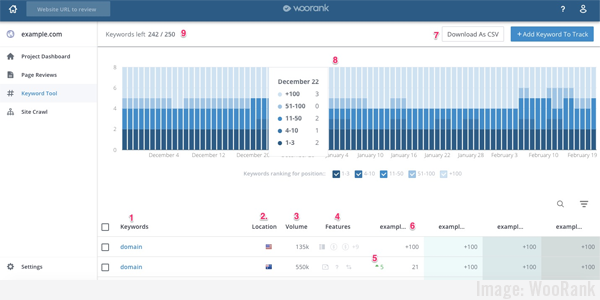
2 — Moz

@Moz Moz Screenshot Image Moz offers a variety of SEO software built for smarter marketing, including an impressive SEO tool-set encompassing site audits, rank tracking, keyword research, back-link analysis, along with tools dedicated to page authority, spam scores, and site crawl information. Marketers hold a particularly powerful position amidst the current challenges presented by COVID-19, and Moz’ senior SEO scientist Britney Muller sees plenty of opportunities for positive action those in our industry can take. “First ask yourself ‘What can I do to help people in need right now?’”, Britney said. “It doesn’t have to be anything big. Think small. Check on an elderly neighbor, donate a few canned goods to a local food bank, offer up an hour or two for free consulting for struggling businesses. Repositioning yourself into a help-first mindset helps to more appropriately frame how to empathetically market or share any business messaging — a.k.a.: Read the room,” Britney added. Marketers can lead by bringing a sense of calmness to the chaos of a pandemic. “Anxiety is incredibly contagious but so is calm. When your flight has bad turbulence who do you look to for reassurance that you’re going to be okay? The flight attendants. Do they look worried? Are they calm? Marketers have incredible power to spread some calm in a chaotic world right now. Use it wisely,” Britney urged. The SEO and other tools provided by Moz can help give your brand or campaign the data insight needed to make sure your marketing efforts are being a helpful and calming force during the challenging period we’re all now living in. Sometimes SEO tools offer a prime method to uncover information that may be going unseen on your website, as our own senior content marketing manager Joshua Nite recently explored in “5 Ways SEO Can Shine a Light on Your Unseen B2B Content.” [bctt tweet="“Marketers have incredible power to spread some calm in a chaotic world right now. Use it wisely.” @BritneyMuller" username="toprank"]
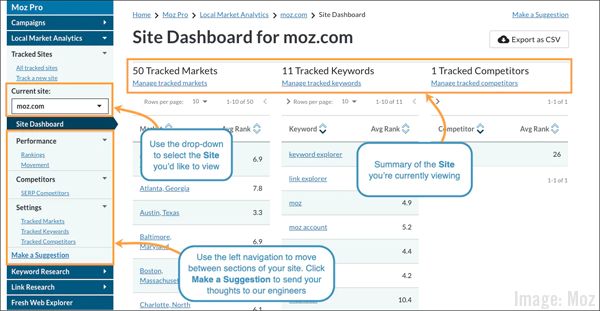
3 — SpyFu

@spyfu SpyFu Screenshot SpyFu provides a slew of competitor keyword research tools that have a focus on Google AdWords SEO and pay-per-click (PPC), along with an impressive number of utilities for keyword and back-link research, historical ad data, domain comparisons, rank tracking, and more. While digging deep into your data goes a long way towards unearthing important information about what your customers are searching for, during the pandemic we all have a rare opportunity to reach outward as well, according to SpyFu founder and chief executive Mike Roberts. “Right now, some of the best minds in the industry are more available than they’ll be any time in the next 10 years,” Mike said. “People that normally have a two-year waiting list have had two thirds of their customers bail.  Agencies have been hit especially hard. My suggestion – and where I’m actually putting my own money – is to reach out to the best of the best ; the quality and attention you’ll get right now will be a huge return on investment. Massive,” Mike added. Early on in the coronavirus situation, Mike announced that certain marketers in need may be able to use SpyFu without cost, in “SpyFu is Free for Anyone Who Needs It.” As Mike suggests, now may be a good time for reaching out in new ways, such as partnering with relevant influencers, as Lee Odden recently explored in “How Influence and SEO Can Drive Customer Experience.” [bctt tweet="“Reach out to the best of the best ; the quality and attention you’ll get right now will be a huge return on investment.” @mrspy" username="toprank"]
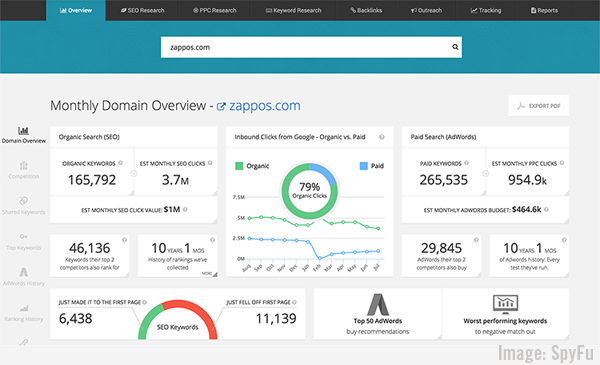
4 — Majestic

@Majestic Majestic Screenshot Longtime industry mainstay Majestic’s platform offers abundant SEO back-link and link-building tools, rank and keyword data, metrics history, domain comparisons and a wide range of other useful information intelligence tools for marketers. Making key adjustments to how we maneuver our business operations during the pandemic can go a long way towards our marketing and personal success, according to Majestic global brand ambassador Dixon Jones. “Riding out this pandemic has many new challenges, but be thankful that you can work from home,” Dixon said. “Feeling grateful for anything right now is a milestone! Do not exploit the situation, but at the same time, try not to give away the farm. Instead of contract cancellations, why not offer to pay back half of your retainer each month, within 48 hours of being paid, for the duration of the lock-down? This means you will not need to change any contracts since you are just giving the customer free money, but it tells the banks that both parties are a: Solvent enough to pay in the first place and b: Showing a willingness to continue business when things return to normal,” Dixon noted. “Stem the immediate losses and reign in what expenses you can without cutting off your ability to run an organization. Cash is far more important than profit in the short term, but if you can, try to envisage what the ‘new normal’ will look like when this is all over and prepare for that. I expect there will be a lot fewer airlines, for example, and society may have been in lock-down long enough to have developed a new societal norm which probably means less face-to-face meetings altogether. That means that some sectors will stay shrunk, whilst others – perhaps virtual reality, or online gaming, health products, home-wares, plants and gardening may all be on the rise as we reassess life’s priorities,” Dixon added. “On the personal front, that feeling of impending doom can often be mitigated by a cold shower every morning. I kid you not! Turning your shower to ice-cold for 30 seconds has several useful benefits, which I encourage you to look up,” Dixon concluded. With fewer in-person meetings taking place both presently and — as Dixon mentioned — fewer also likely to be on tap in the future, the power of online collaboration tools has never been greater, as we’ve recently covered in several articles featuring our clients Slack, monday.com, and Sococo, including our senior content strategist Nick Nelson’s  “6 Tips to Keep B2B Marketing Teams in Rhythm While Working Remotely,” and my own piece, “Remote Communication Opportunities For B2B Marketers.” [bctt tweet="“Riding out this pandemic has many new challenges, but be thankful that you can work from home.” @Dixon_Jones" username="toprank"]
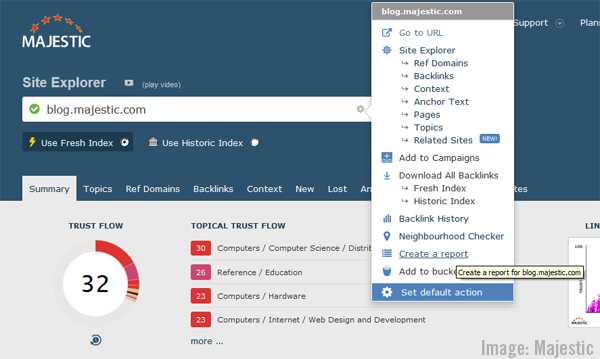
5 — Serpstat

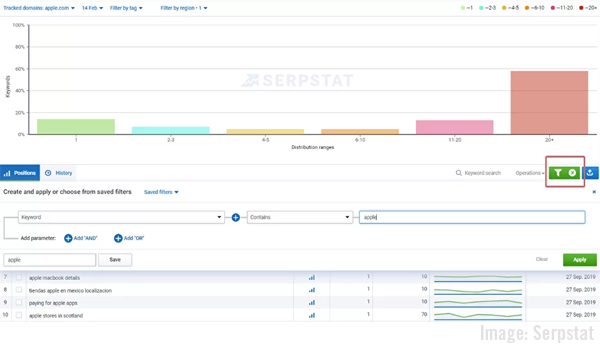
@serpstat Serpstat Screenshot Serpstat features a powerful selection of SEO platform tools including keyword, competitor and content marketing research, search, advertising and back-link analytics, along with historical SERP and market share data and site audit utilities, among numerous other tools. Cooperation and thinking outside the box can be beneficial during the challenges coronavirus presents to marketers, according to Serpstat brand and community manager Maria Sereda. “The times are hard considering the pandemic, still there are ways you may try to stay afloat,” Maria said, specifically listing: “If you're an SEO specialist, cut your costs wherever you can, don't be afraid to ask for discounts at least temporarily, starting from office rentals and finishing with services or tools you're using. I mean it — apply to the companies and ask them directly which discounts they may offer to keep you as a client,” Maria suggested. “Make discounts to your services to keep current customers, and offer win-win cooperation if you can exchange services. Closely monitor the situation, search for new opportunities to refocus your business, and offer services to offline companies to help them switch to online mode. Playing out of the box will help you scale new heights,” Maria added. Thinking outside the box comes in many forms for digital marketers, as I explored in “Content Marveling: Wonder and Astonishment in Marketing” and “Dare to Be Different: 5 Fresh Examples of Innovative B2B Content Marketing.” [bctt tweet="“The times are hard considering the pandemic, still there are ways you may try to stay afloat. Playing out of the box will help you scale new heights.” @Maria_discovery" username="toprank"]
6 — SEMrush

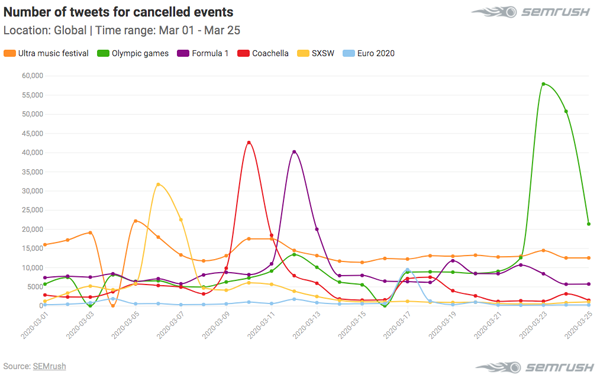
@semrush SEMrush Screenshot SEMrush includes a feature-rich set of SEO platform tools for marketers including extensive online visibility data, market analysis and keyword research utilities, brand and back-link auditing and monitoring, PPC keyword tools, along with an SEO writing assistant tool, among many other features. Search engines have made changes during the pandemic that smart marketers will make note of, according to SEMrush head of global marketing Olga Andrienko. "Google is adjusting their results to the change in online search behavior," Olga said. "Hobbies, literature, pets and education are among the industries experiencing higher demand. If you're in those industries, it's time to create content for most popular queries (free tools: Google auto-suggest and Answer The Public). Also, ads are cheaper now. If you're in the niche that hasn't come to a halt, it's a great time to invest in ads. Try both search and social media. Social media ads are very cheap, audience attention is higher, and competition is lower," Olga added. "Third, advice for industries like travel who have suffered the most: Now it's time to create content to ensure you're ready for the next season. Analyze your website and your rankings, check the health of your website, and update old content. People will travel again, and you want to be their first choice," Olga suggested. “We know how difficult and stressful this time is for every nation,” Olga recently wrote on the firm’s blog in “Coronavirus Economic Impact: Market Winners and Losers of COVID-19.” “Once we move past this crisis and get everyone well, we have to support one another and focus on repairing the impact on businesses worldwide,” Olga added. [bctt tweet="“If you're in the niche that hasn't come to a halt, it's a great time to invest in ads. Try both search and social media.” @Olgandrienko" username="toprank"]
7 — Ahrefs

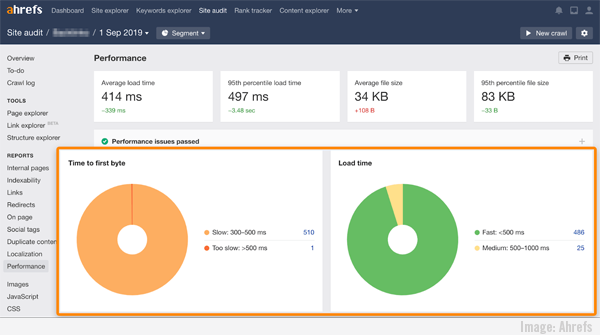
@ahrefs Ahrefs Screenshot Ahrefs provides a robust and growing collection of SEO tools for building search traffic and conducting competitor research and monitoring, plus utilities for rank-tracking, site audits, keyword and page-speed analysis, content exploration, and a slew of other marketing tools. During the pandemic the firm has opened up access to some of its Ahrefs Academy online courses, including a “Blogging for Business” collection of 10 tutorials from chief marketing officer Tim Soulo.
8 — inLinks

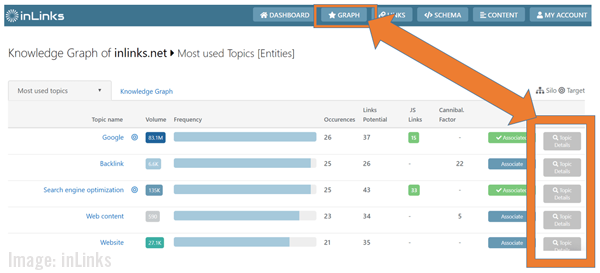
@InLinksNet inLinks Screenshot Semantic SEO platform inLinks provides a fascinating array of content optimization tools along with search engine result page (SERP) analysis, user intent information, internal linking optimization, schema automation and markup, among numerous other features. The firm’s chief executive is previously-mentioned Dixon Jones, who has been a leader in the search marketing industry since the 1990s. Dixon was recently interviewed by Barry Schwartz for Search Engine Roundtable in “Vlog #48: Dixon Jones - SEO Legend Mastering Links Tools & Now Semantic Tools.”
9 — Searchmetrics

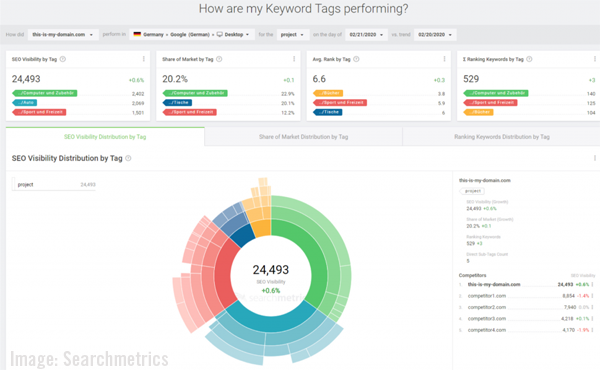
@Searchmetrics Searchmetrics Screenshot Searchmetrics offers an extensive selection of SEO tools for digital marketers including features for on-demand search performance and market research, competitive search tracking, plus website auditing and internal link validation tools, among a variety of other powerful utilities. The pandemic will bring with it new future business models, however marketers should focus primarily on the present challenges, according to Searchmetrics founder and chief innovation officer Marcus Tober. "In crisis moments like this it is important to focus on what’s important right now and what’s important when the crisis is over," Marcus shared. "For companies that did a good job in SEO before, they see SEO paying off more than ever when they have to cut marketing budgets. But still, there might be a good chance to win customers with low and attractive CPAs due to less advertisers. That might not be obvious, but is a chance to use the less competitive market right now," Marcus added. "SEO should also be a focus, because when demand rises and advertising costs increase again, starting SEO is too late. As we all know, SEO takes time and patience, and engagement from multiple departments in companies.  It might even now be a great opportunity to work on technical stories or content where time for this was too precious before. In the long-run, online marketing will be strengthened from the crisis as companies need to invest more in online as risk management and the potential behavioral shift in how people seek and do business. We definitely will see new business models coming up, all enabled by the crisis," Marcus said. Company chief executive Jordan Koene recently sat down for a podcast exploring how to manage SEO in times of crisis. “We’re going to have to reach out to one another in different ways to educate, inform, and communicate about what is happening in search and how things are unfolding,” Jordan said during the podcast, adding “And I think that’s something that we just should be really thoughtful of and mindful of as this new world order takes place.” [bctt tweet="“SEO should also be a focus, because when demand rises and advertising costs increase again, starting SEO is too late.” @marcustober" username="toprank"]
Expand Your B2B Marketing SEO Platform Universe

via GIPHY Thanks to the advanced data insight and SEO features provided by Serpstat, SEMrush, Ahrefs, Moz, SpyFu, WooRank, Majestic, inLinks, Searchmetrics and others, search strategy doesn’t have to be rocket science, even when running extremely complex research reports. As B2B marketers operating during a pandemic, we hope you’ll take to heart the helpful insight some of the leaders at our featured platforms have kindly taken the time to share with us, and that you’ll keep them in mind when developing your own campaigns and data strategies. Finally, to further your SEO marketing toolkit, here are four additional articles we’ve published that feature the SEO platforms we’ve examined:

The post Best SEO Tips for Marketing During the Pandemic Plus 9 Top SEO Platforms appeared first on Online Marketing Blog - TopRank®.

Tuesday, April 7, 2020

Active Social Media Listening: Tips for a New Era of COVID-19

Active social media listening

Active social media listening If you want to have a good business meeting, you want all the participants to actively listen. This requires participants go beyond hearing, and engage and analyze to form an actionable plan. It’s the same with social media listening. It requires marketers to move beyond monitoring to analyzing the full situation, which can often be a moving target. Social media listening is an important first step when starting a new campaign or addressing a situation. When the current situation is heightened with a national emergency, marketers need to key in on their audience at a new level. COVID-19 has changed the lives of folks around the world, including their social media habits. Facebook reports messaging increased more than 50% in March. According to Twitter, COVID-19 related Tweets are being shared every 45 milliseconds and #coronavirus is now the second most used hashtag of 2020. In this fast changing environment marketers need to stay updated. The context of what is in the news and how it is playing on social media can directly impact your messaging from day to day. Let’s explore what social listening is, what you need to know to do it effectively, and how it can help you in this time of crisis.

What Is Social Media Listening?

Most organizations do some level of social media monitoring, where they keep track of who is mentioning the brand. But listening moves a step further, reviewing specific keywords, topics, competitors, or industries. Then, that information is analyzed and reviewed for actionable insights. So, it's a two-part program:  monitoring and analysis. The analysis allows you to understand your audience better and prepare or adjust your strategy.

The Basics of Social Listening

Monitoring and listening both happen with the assistance of social listening tools or software that aggregate multiple pieces of information into one, easy to use dashboard. When setting up your social listening dashboard, think about these key areas of focus:
  • Brand reputation
    • Brand names
    • Key stakeholders
  • Competitors
  • Relevant topics
    • Industry key terms

Fine Tune Your Social Listening Data

Monitoring competitors and industry key terms may be hard for some brands to understand when it comes to relevance. This is where advanced searches and the analysis tools will help you gain context and see changes in the market. The easiest way to set-up an advanced search is to use Boolean operators in your listening tool. “For example, find all mentions of the overarching pandemic (e.g. “covid19 OR “covid 19” OR coronavirus OR “corona virus” OR pandemic) and then use qualifying search terms, so that the results must also include words that are specifically relevant to your business,” says Lance Concannon at Meltwater Social. There is a lot of data to be had. Consider if you are collecting up all the content and data you really want, or is there some content throwing off your insights. “The first thing to do is manually check what you’ve collected. You don’t need to look at every single datapoint, but if something’s gone wrong you’ll be able to spot it,” points out Joshua Boyd at Brandwatch.

How to Approach Social Listening in Times of Crisis

Businesses need marketers to continue to keep the business moving forward, but we do not want to come off as tone-deaf. This is where understanding your social audience is key. Monitoring rapidly developing changes in the environment and messages, will help you share appropriate messages and content. Social listening tools move beyond the top level of monitoring and help hone your strategy with deeper insights into the sentiment, regional differences, and understanding of the conversation. “By keeping a finger on the pulse of the conversation and applying those insights to your approach, your brand can be a considerate, organic and valuable contributor to the conversation.” says Kristin Johnson at SproutSocial.

Add a New Dashboard

During this crisis time, there might be topics, questions and concerns outside of your normal searches. “Think about the important stakeholder groups – employees, customers, partners – and what their specific concerns might be about how COVID-19 might impact your business. Employees will obviously be worried about their jobs, and what they should do during this time. Customers will want to know if you’re still able to provide the products and services they need, and might also have questions about customer support/service during the pandemic. Partners will have concerns around their ongoing relationship with your business,” says Lance Concannon. [bctt tweet="“Think about the important stakeholder groups – employees, customers, partners – and what their specific concerns might be about how COVID-19 might impact your business.” @concannon" username="toprank"] You may find your current dashboards are not providing you the insight you need to follow the conversation around all the COVID-19 related posts. It might be time to contact your listening program customer service and set up specific dashboards related to the epidemic. In a recent email from Sprinklr’s Ragy Thomas, he shared that their tool has COVID-19 listening dashboards already available for any of their research clients. “Consider listening for changes in customer sentiment and behavior. Because the crisis may amplify distrust of brands”, says Laura Starita writing for Gartner. She suggests setting a voice of the customer (VoC) and listening for shifts and new references to the virus.

Evaluate and Implement

Once your monitoring is set up, you can move to the evaluation phase. Hootsuite suggests asking these key questions.
  • How are other, similar organizations responding to the emergency? And how are their customers responding to their response?
  • Do you need to craft content around your relief efforts, or new operational policies?
  • Does your customer service team need to ramp up fast?
As you review your content, consider further filtering by demographics. The current crisis is global, and you may be addressing an audience in a particular region. Keep in mind each region may be dealing with a different stage of the crisis.

Don’t Just Hear Your Audience, Listen to Them

Don’t stop there. Listening is an ongoing team effort. The learnings you find now, will help you deal with the next marketing challenge. For more help marketing during a pandemic, see Lee Odden’s post on understanding how to use SEO to surface key topics.

The post Active Social Media Listening: Tips for a New Era of COVID-19 appeared first on Online Marketing Blog - TopRank®.

Monday, April 6, 2020

Take the 2020 B2B Influencer Marketing Survey

B2B Influencer Marketing Survey

B2B Influencer Marketing Survey Influencer Marketing is positioned to address some of the key B2B marketing challenges of our time: declining buyer trust, improving content quality, reach and effectiveness. On top of that, business marketers are now faced with the additional challenge of in-person marketing being taken out of the mix with many shifting to pure digital and and purpose driven programs.

Influencer Marketing presents an even greater opportunity for B2B brands in an all-digital environment to attract and engage customers with authentic content that builds trust.

While there's plenty of momentum and recent attention towards influencer marketing for B2B companies, the majority of research on the topic has been covered broadly or focused on B2C influencer marketing. Many blogs and publications including this one have cited B2C statistics and examples in the hopes of a correlation to B2B. But it's just not the same thing. Fyre Festival references and comparisons to Kardashians when understanding the possibilities with B2B influencer marketing isn't helping anyone. To give the B2B world some clarity, TopRank Marketing has launched the 2020 State of B2B Influencer Marketing Study. Our goal is to help demystify the top challenges, best practices of top performers, operations, software and future directions of influence for business to business marketers. Survey respondents can get early access to the report PLUS they can also enter to win a $500 Amazon gift card. We've been capturing responses for several weeks and despite all that is going on right now, the survey has been well received. Marketers from B2B companies of all sizes including many of the top B2B brands in the world have taken the survey and the insights so far are compelling to say the least.

If you work in B2B marketing and have tested influencer projects, implemented campaigns or are currently running ongoing influencer marketing programs, I invite you to take the survey today.

With the 2020 State of B2B Influencer Marketing Study, we'll finally have valid statistics based on actual B2B practitioners sharing their successes, challenges, strategies, tactics, measurement, operations, software and trends insights. Now, more than ever, we need clarity on what influencer marketing means for the B2B world as we navigate these challenging times and beyond. Big thanks to MarketingProfs, Content Marketing Institute and B2B Ignite USA for their media partnerships to get the word out on the survey. We'll be sharing multiple additional media sponsors soon. I would also like to thank Mantis Research for their research services.  

The post Take the 2020 B2B Influencer Marketing Survey appeared first on Online Marketing Blog - TopRank®.
Friday, April 3, 2020

Digital Marketing News: Influencers See Surging Engagement, COVID-19’s Impact on B2B Marketers, & New Opportunities For Building Brand Trust

2020 April 3 Social Bakers Chart

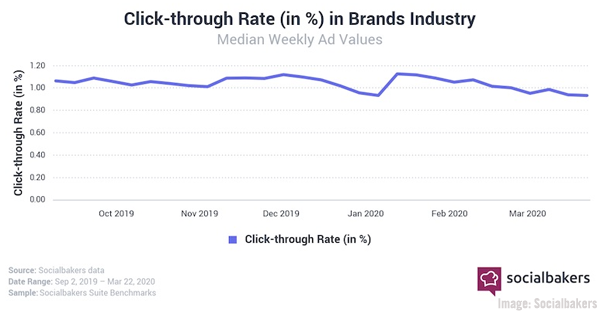
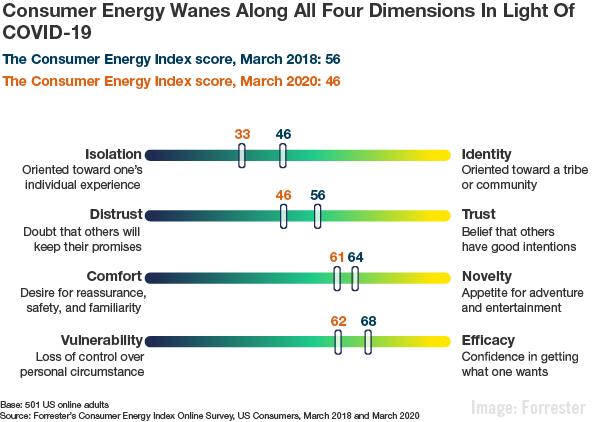
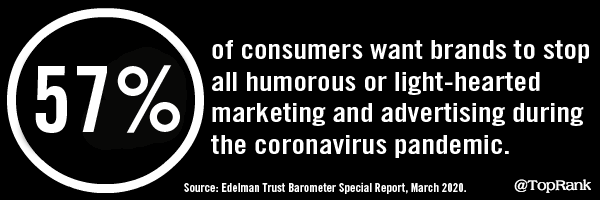
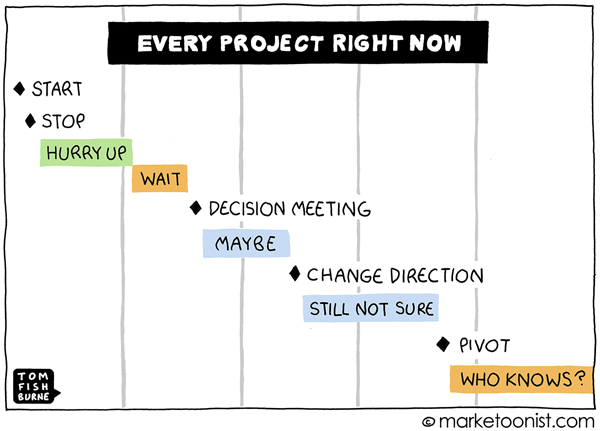
2020 April 3 Social Bakers Chart Influencers see surge in engagement, want to help SMBs While other forms of marketing have generally seen decreased effectiveness figures during the coronavirus pandemic, influencer marketing has seen surging social media engagements and impressions, with some 70 percent of influencers seeing audiences seeking guidance from them during the crisis, according to recently-released survey data of interest to digital marketers. Influence Central Forrester: Brands must build trust as coronavirus saps consumer sentiment Although brands have been facing decreased consumer confidence due to the coronavirus pandemic, some are also achieving new levels of trust by helping consumers regain a sense of control, a shift examined in newly-released consumer energy index survey data from Forrester. Marketing Dive Forrester Chart Facebook Added a New 'Experiments' Element to Ad Manager to Help Optimize Ad Performance Facebook has released new online video watching features to meet growing usage demands due to the coronavirus pandemic, including audience targeting campaign test results that are easier to track, and other additions that had previously been available only to partners, the social media giant announced recently. Social Media Today An Age Gap Emerges in the Streaming Video Ad vs. Costs Debate 52 percent of the 25-34 age group demographic are open to seeing more online advertisements in exchange for lower streaming video service fees, while just 28 percent older than 55 take the same view, two of several findings of interest to digital marketers in new survey data. MarketingCharts The new contextual ad targeting works, study says With browser cookie-based tracking on the wane, contextual advertising has been getting a second look from marketers seeking alternative tracking, and recently-released test results found that contextually relevant ads generated some 43 percent greater neural engagement along with 2.2 times better ad recall, among other findings of interest to marketers. Search Engine Land Trust Barometer Special Report: Brand Trust and the Coronavirus Pandemic [Edelman] Brands can meet the challenges surfaced by COVID-19 by offering solutions and setting aside passion, according to newly-released consumer trust report data from Edelman, which revealed that some 57 percent of consumers want brands to stop all humorous or light-hearted marketing and advertising during the pandemic. Edelman 2020 April 3 Statistic Image Remote working: B2B brands feeling more resilient than B2C B2B marketers have a greater sense of resiliency than their B2C counterparts, especially when it comes to remote collaboration, with 51 percent of B2B marketers viewing their organizations as very proficient at conducting remote work, while just 34 percent of B2C marketers took the same view — two of several findings of interest to online marketers contained in new Marketing Week and Econsultancy survey data. Marketing Week UK B2B marketers split on whether they can overcome coronavirus pandemic While some 45 percent of B2B marketers in the U.K. said that they were either extremely or fairly confident about finding success during the coronavirus pandemic, just 40 percent felt confident in achieving any return on investment (ROI) from current campaigns, according to recently-released survey data from CogniClick. The Drum Three Points B2B Sellers Should Consider to Improve Buyers’ Experiences 86 percent of B2B technology buyers have an expectation that they will receive personalized sales material — a rate that is likely responsible for 71 percent of B2B buyers saying that their salesperson relationship directly influenced a recent purchase. These purchasing experience results are along several of interest to digital marketers in newly-released report data. MarketingCharts How COVID-19 Is Impacting Social Media Ad Rates and Engagement The coronavirus pandemic has brought lower cost per click (CPC), click-through rate (CTR), and ad spending figures for brands, including social media ad engagement that was down 17.2 percent during the middle of March, according to newly-released report data from Social Bakers of interest to digital marketers. MarketingProfs ON THE LIGHTER SIDE: 2020 April 3 Marketoonist Comic A lighthearted look at decision paralysis by Marketoonist Tom Fishburne — Marketoonist MySpace Tells Employee to Stay Home During Pandemic — The Hard Times TOPRANK MARKETING & CLIENTS IN THE NEWS:
  • Lee Odden — What’s Trending: Marketing in Troubled Times — LinkedIn (client)
  • Lee Odden — Creando estrategias de contenido B2B - Webinar con Lee Odden (Inglés) [Video - In Spanish] — B2B Marketers
  • Lane R. Ellis — Want to Increase Your Small Business Knowledge? Here are 10 Expert Tips — Small Business Trends
  • Lee Odden — 10 Takeaways from HubSpot's State of Marketing 2020 Report — Weidert
Do you have your own top B2B content marketing or digital advertising stories from the past week? Please let us know in the comments below. Thanks for taking the time to join us, and we hope that you will return again next Friday for a new array of the most relevant B2B and digital marketing industry news. In the meantime, you can follow us at @toprank on Twitter for even more timely daily news. Also, don't miss the full video summary on our TopRank Marketing TV YouTube Channel.

The post Digital Marketing News: Influencers See Surging Engagement, COVID-19’s Impact on B2B Marketers, & New Opportunities For Building Brand Trust appeared first on Online Marketing Blog - TopRank®.

Thursday, April 2, 2020

5 Ways SEO Can Shine a Light on Your Unseen B2B Content

Lion King Sunset Hidden Content Image

Lion King Sunset Hidden Content Image “Look, marketers. Everywhere the light touches is content beloved by customers.” “But what about that shadowy place over there?” “That’s our unseen content. We worked hard to create it, but nobody ever visits it.” “That’s really depressing.” “That’s life.” Okay, sorry to bring the room down. And I’m also sorry to say that it gets worse. A recent study found that 69% of all web content is not seen by consumers. Hidden Content Image The remaining 31% is our kingdom. Fortunately, there are many ways to create content that beats the odds. For example, you can co-create with influencers, or experiment with interactive content that inspires social media sharing. But what about the content you have already created? The really good stuff that never caught on with an audience? With the right search engine optimization, you can shine a light on that content and help it earn organic traffic. Here’s how we do it.
Ungate the Good Stuff

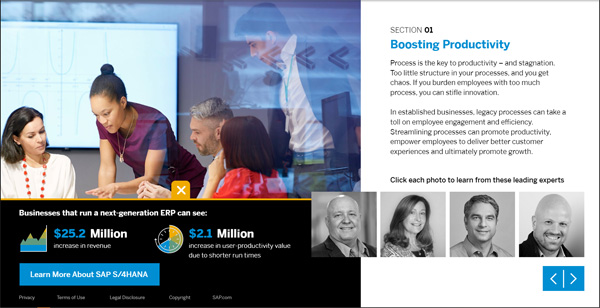
Five years ago, the best practice for marketers was to gate your most valuable content. It makes sense: You’re offering something great, so people should be willing to offer their contact info in return for it. It’s a simple value exchange. The flip side, though, is that your most impressive and useful content is now being seen by a smaller audience. You’re intentionally introducing a barrier between your target audience and your most persuasive content.  I’ll grant that the debate of “to gate or not to gate” is ongoing, and marketers are seeing results with either tactic. But especially for SEO purposes, we recommend trying an ungated approach.  For example, this asset from client SAP has it all: influencer participation, stats, eye-popping interactive visuals. It’s ungated, and the container page is optimized for search. Keeping this substantial piece of content ungated makes it more crawlable, findable and sharable. As people discover and share it, it gets even more SEO juice. And as an added bonus, the included influencers are far more likely to share an ungated asset. SAP Image

Ditch the PDFs

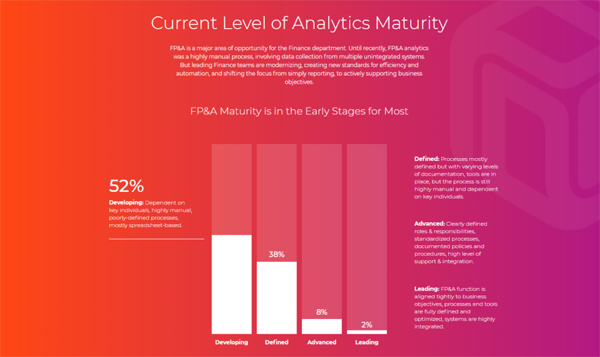
Everybody loves PDFs, but… okay, so nobody really loves PDFs. Their popularity is really a holdover from the old days of the web. You didn’t want to take a beautifully-designed piece of content and try to recreate it in clunky HTML. So the PDF made sure people would see the content exactly as it was designed. Now, however, you don’t have to be a web designer to create something beautiful on a regular web page. And since plain text is crawlable and PDFs are not, turning that PDF into a web page is a solid SEO move. Our client Prophix just published original research in their CFO Benchmarks Report. Instead of making a landing page with an ungated PDF embedded, we turned the report into a long-scrawl web page, then offered a PDF download at the bottom. That way, the content is crawlable by search engines and more easily accessible to potential readers. What’s more, the content is now optimized for visually impaired users as well. Prophix Image

Consolidate Posts by Topic Clusters

It’s standard SEO practice to combine thin content that addresses the same keyword into one comprehensive post. If you’re not doing that type of repurposing yet, that’s a good place to start.  To take it to the next level, think beyond individual keywords and consolidate posts around topic clusters. For example, your outdoor gear company might have a post for the best hiking shoes, one on how to pick the right backpack, one on the best shirts to wick away sweat, and so on.  Even though these posts have different keywords they’re aiming for, they all fall under a cluster: Best hiking gear. Combining all the posts into a mega post with navigation elements gives you a more valuable asset for search engines and humans. People will likely spend more time on the page, and be more likely to share and link to your comprehensive resource.

Build a Web of Internal Links

Another common cause of hidden content is that it’s minimally accessible through your site’s navigation. This is especially true if you’ve changed your site architecture over time — and who hasn’t? Content can end up with only a couple links to it, or even none at all. Content architecture is one way that search engines can better understand your site and which content to recommend to searchers. An orphaned page with few or no links is unlikely to pass muster.  This guide from Search Engine Journal can help you find your orphaned pages. Once you identify them, add links to and from relevant pages throughout your site. The goal is to build a logical link structure that helps users and bots understand which content is the most important. You may also find that these orphaned pages are ripe for consolidation and optimization into more substantial content pieces, too.

Build External Links 

The end goal of our first four points is creating assets that are substantial, valuable, easy to find and share, and optimized for SEO and humans. This type of content is perfect for ethical link building.  Backlinko has an excellent, comprehensive linkbuilding guide (ungated!) that’s well worth your time. But here are a few quick strategies to get started:
  1. Write guest posts for relevant industry publications and include links back to your content.
  2. Identify posts that are linking to similar, but outdated content and suggest updating with a link to your piece.
  3. Promote your content with paid and unpaid social media posts — those shares will indirectly influence your ranking, and can lead to more backlinks as well.

Let Your Little Light Shine

It can be demoralizing to think that 69% of your content is stuck in the dark. But think of it this way: You have a massive resource of already-written content that can find an audience with just a little SEO illumination. Make your content more accessible, easier to find, and more substantial for your audience, and you can bring that forgotten content into the light. We can help bring your content out of the dark. Request an SEO audit to get started.

The post 5 Ways SEO Can Shine a Light on Your Unseen B2B Content appeared first on Online Marketing Blog - TopRank®.

Wednesday, April 1, 2020

5 Stars: 20+ Tips to Invigorate Your B2B Marketing Using Testimonials & Reviews

Hand holding one of five white stars image.

Hand holding one of five white stars image. What’s in a review? With the right client testimonials and customer reviews, B2B brands can increase trust and loyalty in uncertain times while strengthening existing connections and fostering new ones. Your brand may even be sitting on a goldmine of evergreen trust-building user-generated content. Let’s take a look at 20+ tips to invigorate and expand your B2B marketing toolkit with a smart customer review and testimonial strategy.

Making The Statistical Case For Testimonials & Reviews

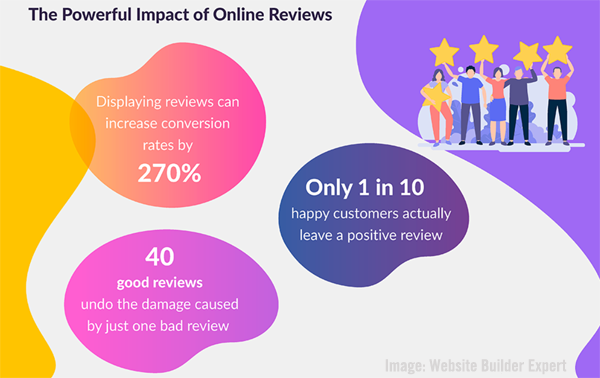
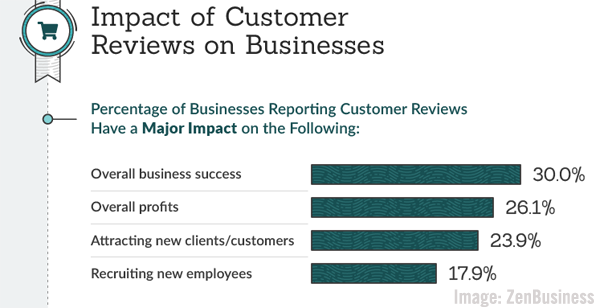
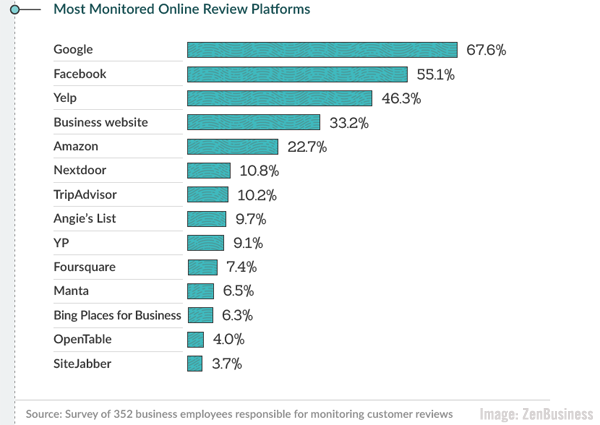
With some surveys showing that  90 percent of adult Internet users rely on reviews before making purchases, and others placing the figure even higher at nearly 99 percent, it’s important for B2B brands to make sure they feature the reviews and testimonials their customers have taken the time to write and share online. Despite their unique power to build brand trust, just 43 percent of B2B businesses use reviews in their marketing toolkit. Conversion rates can skyrocket by as much as 270 percent when online reviews are smartly incorporated, however, as shown in the Website Builder Expert data below. Website Builder Expert Image Some 30 percent of businesses said that customer reviews had a major impact on their overall success, and just over 26 percent said reviews also had a major impact on profitability, as shown in the following chart from a recent ZenBusiness survey. ZenBusiness Chart The same survey revealed that 52.2 percent of older businesses monitor online reviews weekly and 18.5 percent do so daily, while 47 percent of newer firms monitor weekly, and 39.3 percent monitor daily, suggesting that more established brands have settled into a weekly cadence, while younger firms tend to keep a more frequent watch over reviews. Businesses tend to monitor a multitude of online review platforms for reviews, with 67.6 percent using Google, 55.1 percent Facebook, and 46.3 percent Yelp, followed by others as shown below. ZenBusiness Chart Only 11.9 percent of businesses said that they respond to every review left for them, while 60 percent said that they interact with either some or most reviews they receive, the same survey noted. Younger B2B buyers are increasingly looking for reviews and testimonials to be delivered to them in methods that differ from those of older buyers, creating an opportunity for some brands looking to connect with younger audiences. “Sixty-one percent of Millennial buyer decisions are influenced by user reviews that they trust,” Brian Fanzo recently noted in “Meet The Millennials: How Marketers Can Effectively Connect With The New B2B Buyer,” urging smart B2B marketers to not rely solely on traditional websites, and to instead “bring the testimonials — the trusted user reviews — to the buyer.” Brian was one of the 13 B2B social media marketing leaders offering trends and predictions in our "13 Top B2B Social Media Marketing Trends & Predictions for 2020." His sentiments are largely echoed in report data recently examined by Social Media Today. [bctt tweet="“In 2020 social media marketing will shift from vanity metrics to transparent and authentic channels to focus on real-time customer engagement.” @iSocialFanz" username="toprank"]
You May Already Have a Goldmine of Testimonials

Many established B2B brands may already have a fantastic cache of glowing testimonials from clients, however because some firms don't have any established practice for gathering, collecting, and most importantly utilizing them in marketing efforts, they remain mostly hidden. Gathering existing reviews and testimonials can be a great way to get new insight into your most loyal customers, unearth any points of customer dissatisfaction, and to build new mechanisms for improving communication with your customers. “Your offerings should be so attractive to your loyalists that they have no reason to look elsewhere for additional products or services,” Rob Markey wrote in an insightful Harvard Business Review look at how to “Make It Easier for Happy Customers to Buy More.” Client and customer kudos today comes from more channels than ever, which can make it challenging to gather and compile into a dedicated testimonials file. A list of only a few of the digital channels to search for possible existing testimonials includes:
  • Email Correspondence
  • Online Collaboration Tool Chat History
  • Private Social Media Posts
  • Public Social Media Posts
  • Mobile Device Text Message History
  • Voicemail Transcripts
Whether it's each quarter, weekly, or every day, taking the time to mine testimonials from each of the channels your firm user is a great way to unearth potentially powerful customer and client testimonials. Tactfully encouraging clients to consider leaving a review or testimonial is a nuanced process best customized on a per-client basis, however there are also some universal methods to help guide a good strategy, such as those outlined in “14 Proven Ways to Encourage Customers to Write Reviews.” Social media and search engine firms have also done their part to try boosting the visibility of customer reviews, such as Google adding highlighted business reviews in Google Posts. [bctt tweet="“Whether it's each quarter, weekly, or every day, taking the time to mine testimonials from each of the channels your firm user is a great way to unearth potentially powerful customer and client testimonials.” — Lane R. Ellis @lanerellis" username="toprank"]

Testimonials & Reviews Increase Trust & Loyalty

Trust is paramount as B2B marketers seek to attract, engage, and convert new clients, and testimonials and reviews from satisfied existing customers are among the most powerful forms of messaging when it comes to earning the business of potential new clients. It's no secret that for many years study after study has shown that testimonials and reviews hold the power to build trust, and ultimately help persuade people to engage your company's services. Some 90 percent of B2B buyers said that they are more likely to complete a purchase after seeing a positive review. [bctt tweet="“High rates of loyalty are a huge asset in business. They provide a necessary foundation for profitable growth.” — Rob Markey @rgmarkey" username="toprank"] The earned power of trust becomes even more apparent when paired with survey data showing that globally 54 percent of consumers would still buy from a brand even after a negative product experience if they felt that a firm hadn’t broken trust. When trust has been lost, however, some 82 percent said that they would not purchase again from the brand, highlighting the importance of building brand trust — something reviews and testimonials excel at.

Testimonials & Reviews Strengthen Existing Connections & Foster New Ones

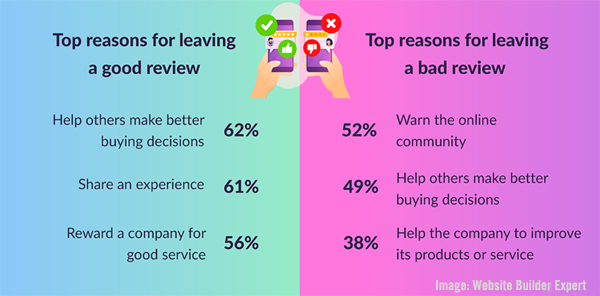
Testimonials and reviews showcase the ability of your business to provide best-answer solutions so well that people take the time to personally write appreciative messages sharing their gratitude. Testimonials and reviews also take good business partnerships and strengthen them, and help bring B2B relationships to new levels of commitment and trust. 62 percent of consumers leave positive reviews in order to help others in making buying decisions, while 52 percent say they leave negative reviews to warn others, as shown below. Website Builder Expert Image The connections forged through testimonials and reviews makes the relationship between your business and your clients stronger, and also serve as an important and visible example for potential new clients who are looking for information about your company. More firms are also making it easy for customers to leave video feedback, such as a method Airbnb has implemented that mimics the ease of use users have come to expect for sharing videos on YouTube or Instagram. The video review format has led some customers to share lengthier and more precise feedback, which in turn allows businesses greater insight into their customers. “Videos can be richly emotional — offering the real voice and face of the customer. That emotion, transmitted directly to front-line employees and leaders, often generates the sort of empathy that inspires and motivates thoughtful action,” Rob Markey has noted. By making video reviews a simple and optional part of customer feedback surveys, brands can have the best of both traditional text-based input and — for those who choose — the advantages of video reviews. “If they say yes, then we've incorporated a video widget into the survey where they can just turn the camera on on their phone or computer and leave a response,” Airbnb customer insights manager Raj Sivasubramanian has said. “The customers that chose that option really embraced it. And we actually had a lot of customers tell us in the video, ‘This is really cool. I love the fact that I can do this,’” Sivasubramanian added. B2B firms can also utilize more formal video testimonials into their feedback efforts, as Business 2 Community explored in a helpful how-to guide, “How to Shoot the Perfect Video Testimonial.” [bctt tweet="“Testimonials and reviews take good business partnerships and strengthen them, and help bring B2B relationships to new levels of commitment and trust.” — Lane R. Ellis @lanerellis" username="toprank"]
The Challenge of Combating Inauthentic Reviews

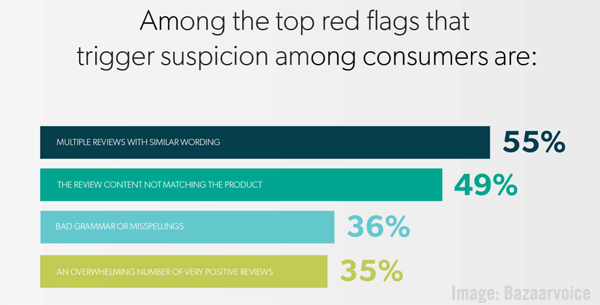
While no firm wants poor reviews, they are nonetheless important in their own way to consumers. 62 percent of U.S. consumers found that negative reviews were just as important as positive ones when it came time to make purchasing decisions. Customers have grown to be suspicious of businesses that have conspicuously uniform five-star reviews, however, and more now say that they look to utilize multiple sources of reviews when researching a firm. Despite this, 65 percent of U.S. adult consumers believe the reviews they read are generally accurate, however. Recent survey data has also shown that 55 percent of consumers see the biggest red flag with reviews that use the same wording, while 35 percent view an overwhelming number of positive reviews to be indicative of inauthentic reviews, as shown below. Bazaarvoice Chart

Testimonials & Reviews Are Evergreen

Most testimonials focus on the things that a client or customer loved about working with your team, and these are also largely the type of praise that isn't particularly directed at a specific time, which makes testimonials excellent sources of evergreen content that can often remain relevant and convincing for years. HubSpot has compiled an extensive list of good examples of testimonial pages that can serve as inspiration, in Lindsay Kolowich’s “14 Testimonial Page Examples You'll Want to Copy,” showing how to implement quotes, video, audio, case study, customer interview and other types of testimonials. To help you along your path to building more powerful testimonials and reviews into your current strategy, or to begin implementing your first such plan, here are several additional recent resources that have been published:

Reinvigorate Your B2B Marketing Testimonial Strategy

We hope this introductory look at the power of client testimonials and customer reviews to help B2B brands boost trust and loyalty and strengthen connections has been helpful, and that the tips and statistics we’ve shared will help make your marketing testimonial strategy more robust and successful.

The post 5 Stars: 20+ Tips to Invigorate Your B2B Marketing Using Testimonials & Reviews appeared first on Online Marketing Blog - TopRank®.