Tuesday, February 11, 2020

25 B2B Influencer Marketing Campaign & Engagement Ideas for 2020

B2B Influencer Marketing Campaign Ideas

B2B Influencer Marketing Campaign Ideas In the business world, you don't have to look far to see that the number of B2B companies engaged with influencer marketing is growing. As more companies are moving beyond experimentation to conducting pilots, sequential campaigns and always on programs, there is an increasing desire to expand how brands engage with business influencers. To help B2B marketers solve that problem, I'm going to share a swipe file of sorts of different business influencer campaigns and engagement opportunities. Implementing just a few of these could help a company with a substantial amount of influencer program activity. Of course just because you can, doesn't mean you should! As with all effective marketing, it's important to match up the campaign approach with the criteria for your customers and how they want to engage with influencer/brand content.  Check out the list below and hopefully some good ideas will spark and ignite your 2020 B2B influencer marketing to new levels.

25 B2B Influencer Marketing Campaign and Engagement Ideas for 2020

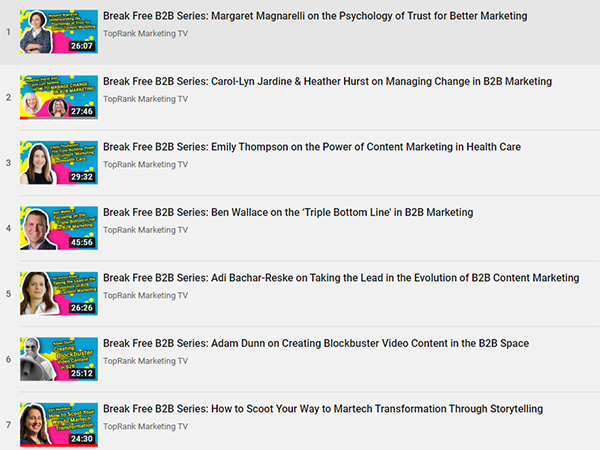
1. Conduct a series of video interview with influencers - Pick a theme and topics you want your brand to be influential about, then interview the top experts. The Break Free B2B interview series is a good example of that. The great thing about video is that you can repurpose as a podcast or even as text for social shares and quotes for related blog posts, presentations, reports and newsletters. 2. Engage an Influencer host on a brand podcast - @TamaraMcCleary does an amazing job for the SAP Tech Unknown podcast, interviewing other influencers and executives from SAP. 3. Invite Influencers to provide content for an interactive content experience - Of course we've been specialized in this form of content collaboration for many years and have numerous examples. The interactive content format is engaging for your audience and also for contributing influencers because it elevates their status and visibility. One of my favorite examples of this is this microsite featuring 10+ influencers and a simulated voice assistant named Penny, who helps you navigate the world of finance, machine learning and AI. 4. Publish a list of top influencers in each industry vertical where you operate - Many companies want to begin developing an influencer program but have no meaningful connections with influencers yet. One of many ways to get on influencers' radar is to publish a qualitative list of who is leading the field. Then reach out to share the honor followed by an invitation to collaborate. Go beyond one-off lists and make it an annual event like the list we've been publishing each year for the past 10 years of women who rock on digital marketing. 5. Add influencer reactions and expertise to a research report - When IT Service Management leader, Cherwell Software released their research report on Work Process Integration and Digital Transformation, they engaged a group of relevant influencers including Dr. Sally Eaves, Tim Crawford and Ray Wang to share their expertise. 6. Enlist influencers as judges in a contest - This is exactly what Alcatel Lucent Enterprise did with their IT Vanguard Awards. Industry influencers were invited to review nominations for IT network and communications professionals. The program created great exposure for the winners, the judges and for ALE, resulting in multiple six figure leads. 7. Engage influencers to interview brand executives either online or in real-time at a conference - The influencer marketing team at SAP engaged multiple influencers to interview SAP executives during the SAPPHIRE conference, an ideal time to connect industry pros with in-house thought leadership like this interview I did with Oliver Betz, General Manager, Innovative Business Solutions at SAP, on innovation. 8. Invite influencers to an event at brand HQ: tours, executive meet and greets, education, social content creation - Adobe does a great job with this kind of B2B influencer activation and hosted 18 industry marketing, design, tech and business influencers to San Jose for a deep dive into topics like CDP, CXM and of course, Adobe's solutions. The bonus was a fun visit to the company store for Adobe swag.  Here's a fun video from Ross Quintana documenting the experience. 9. Invite influencers to write a series of articles published on the brand site - Brands that answer buyer questions provide a valuable service. Inviting 3rd party experts to answer those questions through useful content is even more valuable. Keep in mind, in most cases a commitment to writing on a regular basis is a paid engagement with the contributing influencers. 10. Engage influencers to keynote or workshop at your brand's user conference - Another common form of paid influencer engagement is as a featured speaker at a company event. These engagements can elevate the performance of an event when a talented performer that also has deep industry expertise can inspire the audience. 11. Partner influencers with your customers to interview each other for a web video series - Customer trust in brands is not high but trust in peers and experts is. Creating conversation opportunities between credible industry experts and your clients can inspire truly meaningful dialog that resonates with potential customers. 12. Invite influencers to an event to livestream and document their experience - I have been invited by multiple B2B companies to attend events and share my impressions using whatever media I was comfortable with including Adobe, SAP, IBM, and Oracle. A small number of influencers experiencing a brand event can have a big impact. At SAP's annual conference, 15 influencers drove 25% of all social media impressions. B2B Marketing Influencers 13. Invite influencers along with clients and prospects to VIP dinners where your brand presents, sponsors or attends industry events - This is one of my favorite things about attending industry conferences: connecting our clients with top industry influencers. There's no selling, just an experience and connection that everyone involved remembers - and that top of mind effect is priceless. 14. Create an ebook featuring brand thought leadership accentuated by relevant industry influencer insights - Oracle Dyn created the Cybersecurity Intelligence Report featuring a combination of respected influencers and practitioners as well as an Oracle executive, building credibility by association. 15. Run a webinar or series of webinars featuring an influencer as host or guest and a brand executive - Featuring an industry expert in a webinar is a fairly common influencer activation and the reason is, it works! So why not create a series of webinars to build audience, momentum and a body of content that can be repurposed? 16. Engage influencers to contribute expertise to content that advances a key brand theme - It sounds pretty basic, but I can't tell you how many B2B brands produce content without any 3rd party credibility. Adobe engaged multiple influencers to provide insights around customer experience management in this interactive infographic in support of the Adobe Summit conference. 17. Feature quotes from a group of influencers for a roundup blog post or landing page - Dell Outlet Small Business added commentary from multiple small business influencers about the value of refurbished computers on this landing page to drive awareness and engagement. 18. Curate quotes from influencer contributions and repurpose them as social shares throughout the year - Modular content means planning repurposing by using templates with influencer interviews and content capture. This makes it easier to create a library of influencer quotes organized by topic for social shares, use in contributed articles, newsletters, blog posts and presentations. Not only does reposting influencer quotes add credibility to brand content, but they also give the influencer ongoing exposure, which they will appreciate. 19. Engage influencers with a blog network, or podcast network to come up with a creative campaign for your brand - The notion of "creator" is most often associated with B2C influencers. But more B2B influencers are adapting and acquiring media creation savvy. Better yet is when influence creators and media publishers bundle themselves together. 20. Invite influencers to an executive meeting or retreat to discuss topics of mutual interest, then publish a summary - Guided discussions amongst industry experts and internal subject matter experts can generate a goldmine of ideas. The Digital Marketing Institute has formed the Global Industry Advisory Champions with representatives from major brands Google, Facebook, IBM, CocaCola, The Economist, LinkedIn and even TopRank Marketing :) to share insights around the state of digital marketing and education. Summaries of conversations are released along with industry research. 21. Engage an influencer to be an Emcee or digital correspondent during a brand conference - A few people I know do this really well. First, Jay Baer and Katie Martell are excellent emcees and influential in their unique ways. Sarah Evans is an amazing digital correspondent that can cover a conference with interviews and commentary to really level up the brand. 22. Make your influencer community available to a publication - 12 influencers including Dion Hinchliffe, Tamara McCleary, and Ronald Van Loon were interviewed by The New Economy publication during the SAPPHIRE conference for this video focused on a key topic of interest to SAP: The Experience Economy. 23. Create a series of blog posts featuring author influencers and their books  - The team at LinkedIn Marketing Solutions has published a series of posts honoring top marketing authors that have been well received by their readers and inspiring for authors to share. Even better, is when authors recommend other authors to be featured. 24. Have a tech influencer do an "unboxing video" of a server or other hardware from your tech brand - Many B2C influencer tactics could be cleverly applied to B2B products. Go ahead and search for "server unboxing" on YouTube and you may be surprised at how many there are. Maybe a "haul" video from an office supply store isn't such a bad idea? 25. Publish a list of the most influential speakers at conferences relevant to your industry - Of course this is something we've been doing here on our blog for several years including Content Marketing Influencers / Speakers and B2B Marketing Influencers / Speakers. Publishing influencer lists before the conference can open up conversations while attending the event and complement other outreach afterwards. BONUS! (Thanks to Debbie Friez @dfriez and Jack Fitzpatrick @fitzJackrick from our Influencer Marketing team) 26. Invite influencers to do software walkthroughs and post them to IGTV, Facebook, and YouTube. They could could also be live-streamed on platforms like Twitch. 27. Host a networking happy hour with influencers and your key customer contacts during a conference or in your city. 28. Co-create a series of podcasts on the influencers channels that include supporting content like blogs, twitter chats/polls and cross-channel amplification. 29. Create an ask-the-expert video series on your brand YouTube channel where influencers join a brand co-host to answer top questions. While there's a variety of solid and actionable ideas in this list, it's really important to lay the groundwork and strategy for an influencer marketing program in terms of understanding what kind of influencers and topics make the most sense for your brand and customers. Influencers are not magic, but when you develop strong relationships with a relevant group of influencers, the impact on your marketing across the customer lifecycle can seem magical. If you would like to learn more about influencer marketing for B2B, see these resources and be sure to check out the following list of upcoming conferences where I will be sharing strategies, best practices and case studies featuring B2B brands of all sizes: February 24-25, 2020 - B2BMX - Scottsdale, AZ How to Optimize ABM Results with Influencer Marketing March 19, 2020 - Convergence Summit - Minneapolis, MN In Search of Trust: How Authentic Content Drives Customer Experience March 24, 2020 - Pubcon - Miami, FL B2B Influencer Marketing Workshop April 20-22, 2020 - Content Tech - San Diego, CA How to Optimize Content Performance with Influence April 22-23, 2020 - Content Marketing Conference - Boston, MA Be Best Answer for Your Customers with SEO and Influence May 27 -28, 2020 - B2B Ignite USA - Chicago, IL In Marketing We Trust: How to Build Influence with the C-Suite and on the Street I hope to see you there!
The post 25 B2B Influencer Marketing Campaign & Engagement Ideas for 2020 appeared first on Online Marketing Blog - TopRank®.

Monday, February 10, 2020

Hungry for More: What B2B Marketers Need to Know About Episodic Content

B2B Marketing Episodic Content

B2B Marketing Episodic Content The cliffhanger is one of the greatest tools in entertainment. I’ll explain why later. Seriously though, we’ve all experienced the cliffhanger: It’s that tension-building moment of uncertainty at the end of a chapter or installment that leaves the audience impatiently awaiting the next one. Some of my favorite binge-worthy TV shows and page-turning novels have been defined by this quality. A perfect example from modern cinema is the conclusion of 2018’s Avengers: Infinity War. While I won’t give anything away, the movie ended with a shocking turn of events that seemed to leave little hope for the franchise’s heroic protagonists. In the 12 months that passed between Infinity War and its sequel, fans waited with rabid eagerness for answers and closure, reveling in theories and hyper-analysis. When Endgame finally arrived one year later, it delivered a hugely satisfying payoff. This helped the movie score the biggest box office opening of all time, and earned its creators high praise from our own Josh Nite for overcoming common Hollywood pitfalls and fully satisfying the fanbase.
via GIPHY B2B content marketing is increasingly taking cues from the world of entertainment in the quest to keep busy customers and prospects tuning in. When it comes to riveting your audience, there may be no more important model to borrow than episodic content, and the benefits don’t stop there.

Advantages of Episodic Content for B2B Marketing

Let’s start by springboarding off the point above, by highlighting the way this content delights those who consume it. Then, we’ll discuss some of the key operational implications for marketers.

Episodic Content Builds Loyalty and Retention with Your Audience

Storytelling is very powerful in B2B marketing. It helps audiences mentally organize, connect, and contextualize information in a way that makes the content much easier to understand and remember. In addition, storytelling through content marketing helps build trust. Episodic content provides a means to extend the storytelling dynamic over lengthier time periods and campaigns. In the same way a strong narrative or theme compels a reader to keep scrolling through a blog post or viewing a video, connecting multiple pieces of content through this framework urges content consumers to find and enjoy that next nugget. [bctt tweet="“Episodic content provides a means to extend the storytelling dynamic over lengthier time periods and campaigns. Connecting multiple pieces of content urges content consumers to find and enjoy that next nugget.” @NickNelsonMN" username="toprank"] When you drill right down to the essential purpose of content marketing — per the venerable Content Marketing Institute, that is “creating and distributing valuable, relevant, and consistent content to attract and retain a clearly defined audience” — it’s easy to see how well an episodic cadence aligns.

Episodic Content Brings Efficiency and Greater Utility to Your Content

Here’s a scenario: You’ve got a big old 5,000 word writeup on a topic critical to those in your industry or niche. You spent months planning, developing, and refining it. You’re convinced it’s interesting and informative enough to hold a reader’s attention all the way through. So why drop it all at once? Divvying such a hefty piece of content up into multiple parts means you can stretch the content out over multiple days or weeks, filling up your content calendar while also making the information itself more easily digestible and giving your audience a distinct reason to come back. The same is true of audio content, video content, and so forth. This is something that can be (and often is) done in hindsight — “Wow, this turned out to be really long, let’s cut it into parts” — but is most effective when baked into planning, so you can build in those pivotal cliffhangers and a smooth overall flow.

Episodic Content Adds Cohesiveness to Your Content Strategy

One of the habits I recently suggested B2B marketers should leave behind in the 2010s is aimless content creation. Episodic content is a simple solution to the fragmented nature of many wayward strategies. When you start planning around sequential series of related pieces, it becomes far easier to tie everything together with a consistent thread, and helps embed that mindset throughout the rest of a program.

Examples of Episodic Content in B2B Marketing

It might feel easier to envision episodic content in the context of TV shows or movie franchises than in a B2B marketing strategy. So let’s explore a few practical ways to bring this framework to life within business-oriented campaigns and programs.

Webcasts/Vidcasts

This format is the easiest to associate with episodic mainstays like TV and film, because it follows the very same premise: pull in a viewer with an engrossing video, and then leave them wanting more. There are many examples of this throughout the world of B2B marketing, one of them being our own Break Free B2B webcast series. The interconnected quality in a video content series doesn’t always have to be an ongoing narrative. Sometimes it’s simply a theme that resonates and applies to various installments. In the example of Break Free B2B, there’s no direct linkage between different episodes, except for the core concept — smart, forward-thinking pros sharing their best tips to escape the traditional constraint and barriers of our field. Break Free B2B Video Example Screenshot YouTube itself illustrates the power of episodic video content. By automatically playing another related video after one ends, viewers sometimes stay tuned in for long durations. And to reinforce the platform’s irresistible appeal, Google recently disclosed that YouTube earned more than $15 billion in revenue last year.

Podcasts

These fall into a similar bucket as vidcasts and webcasts, but with a strictly audio focus. There are plenty of popular podcast shows that unpack a progressive narrative over the course of many episodes (Serial was a breakthrough in this regard), but again, it’s often about a cohesive theme or concept. Two of our B2B clients at TopRank Marketing are helping lead the way on this front: 3M’s Science Champions highlights the human side of complex topics, while SAP’s Tech Unknown explores cutting-edge innovation through the eyes of the innovators. When Josh shared B2B podcasting stats here a few months ago, some of the most striking were around the devoted consumption of listeners. For example, 76.8% listen to podcasts more than seven hours a week, and 52% of monthly listeners listen to the entirety of each episode. In other words, once you pull someone into a podcast, there’s a good chance they’ll be hooked. [bctt tweet="“Podcasts continue to attract new listeners. And, most promisingly, those who listen are far more likely to add new podcasts than cut down.” @NiteWrites #B2Bpodcasting" username="toprank"]

Social Casts

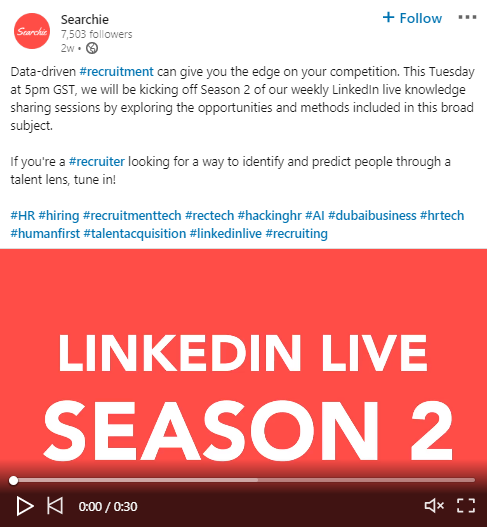
This is a somewhat new frontier, but definitely an intriguing one. Driving consistent social engagement is a challenge for many B2B brands, and episodic social content contributes to solving it. The LinkedIn Marketing Blog* recently highlighted companies that are excelling with video on the platform, and the post includes several examples of episodic campaigns, such as Searchie’s LinkedIn Live series and the Keynotes educational series from eCornell. LinkedIn Live Image Other common examples of episodic social content include weekly hashtag posts, employee spotlights, and daily polls.

Blogs, Guides, Email

The above examples are mostly multimedia-focused, because that best correlates to the high-profile entertainment examples cited from the outset, but written content like blog posts and guides are also perfect for episodic delivery. A thematic newsletter, or series of related blog posts, or collection of ebooks covering the same topical area can all fit the bill. If you strike a chord with your audience, you’ll have them looking out for the next one.

On to the Next Episode

As you plan out your upcoming content initiatives, think about ways you can build them around an episodic framework. It will help you form long-running narratives, gain consistent attention and awareness from your audience, add efficiency to your creation process, and support a cohesive strategy. Instead of thinking about the conclusion of your next campaign or content piece, start thinking about the cliffhanger. A big part of episodic B2B content’s appeal is that it creates a lengthier and deeper experience for the reader, listener, or viewer. Learn more about why experiential content is on the rise in our recent blog entry.     * Disclosure: LinkedIn, along with 3M and SAP, is a client of TopRank Marketing

The post Hungry for More: What B2B Marketers Need to Know About Episodic Content appeared first on Online Marketing Blog - TopRank®.

Thursday, February 6, 2020

Break Free B2B Season 1 Wrap Up: Top Insights from the Marketing Industry’s Best and Brightest

Break Free B2B Marketing Round Up

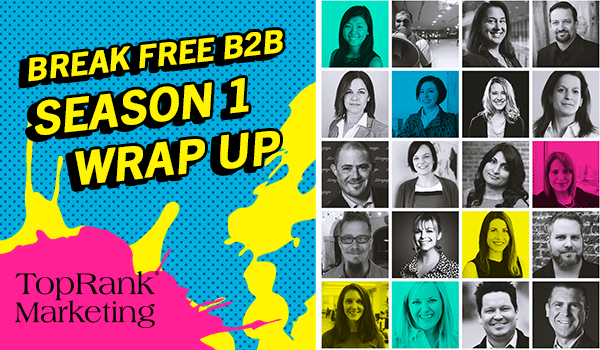
Break Free B2B Marketing Round Up Three different hosts, 19 jam-packed episodes, 20 incredible guests—countless amazing insights gained. TopRank Marketing’s inaugural season of Break Free B2B, a video podcast series featuring the expertise, experiences, and advice of diverse marketing minds, is officially wrapped.  With the goal of delivering B2B marketers the encouragement and inspiration to break free of business-to-business norms to drive bigger, better, bolder results, we covered everything from change management to visual storytelling to what’s next in B2B influencer marketing. And of course, we’d be remiss if we didn’t take a moment to reflect and share some of our favorite tidbits from each of our incredible guests. Throughout the season, there were a few key topical areas we honed in on:
  • Creating more effective B2B content marketing strategies through better planning, data usage, and more—this is where we spent most of our time.
  • The evolution of B2B influencer marketing, and best practices from piloting to measuring impact.
  • The trust-building power of content marketing across industries.
  • The future of B2B marketing, including key trends such as ABM.
Read on to get just a taste of how our guests touched on these important topics.

Building B2B Content Marketing Strategies that Drive Bigger, Better, Bolder Results

Amanda Todorovich

Senior Director of Health Content, Cleveland Clinic @amandatodo “It’s imperative that people understand that content marketing isn’t a fling… It’s a long-term strategy. It’s something that you really have to think about how you build a long-term committed relationship with that user—it’s not a one-and-done. There’s never really an end to it. It’s continuous and iterative.” [bctt tweet="Content marketing isn’t a fling… It’s a long-term strategy. There’s never really an end to it. It’s continuous and iterative. - @amandatodo #BreakFreeB2B #ContentMarketing" username="toprank"] Watch Amanda’s full interview.

Brody DorlandBrody Dorland

Co-Founder, DivvyHQ @brodydorland One of the things that we still see—and we preach every day, but we still see it—is the campaign mentality. There’s still a large focus on very business-focused campaigns and obviously, they need content. So, a lot of times, the same content team that is doing all of the content efforts are also going to be responsible for creating assets for this campaign. But there’s a mindset shift that needs to happen to get away from just “campaign, campaign, campaign” and filling our channels with these time-bound things. [bctt tweet="There’s a mindset shift that needs to happen to get away from just ‘campaign, campaign, campaign’ and filling our channels with these time-bound things. - @brodydorland #B2BContentMarketing #BreakFreeB2B" username="toprank"] Watch Brody’s full interview.

Clare CarrClare Carr

Vice President of Marketing, Chief @clareondrey “When it started, we thought a data-driven marketer would be someone who was able to track everything correctly, be able to give their conversion path, and figure out the KPIs and metrics they need to measure. But now, we’re talking about applying data to content. “I think the biggest takeaway that people are surprised by is the data can be really closely associated with your brand. It can be something that makes you unique and memorable. It’s something that is hard for other people to replicate.” [bctt tweet="Data can be really closely associated with your brand. It can be something that makes you unique and memorable. - @clareondrey #DataDrivenMarketing #B2BContentMarketing #BreakFreeB2B" username="toprank"] Watch Clare’s full interview.

Hal WernerHal Werner

Global Manager of Digital Marketing and Strategy, Mitel @halwerner I always like to start every project with an insight. If there’s not a core insight at the beginning of a project, then I tend to not actually pursue it because I think it’s kind of empty. I think those insights can come from a lot of places, and they have to funnel into content and SEO. Sometimes the insight might be a keyword, you might see something on Google Trends blowing up that you can get on top of, or it might come from the sales team. [bctt tweet="I always like to start every project with an insight. If there’s not a core insight at the beginning of a project, then I tend to not actually pursue it because I think it’s kind of empty. - @halwerner #B2BContentStrategy #BreakFreeB2B" username="toprank"] Watch Hal’s full interview.

Stephanie StahlStephanie Stahl

General Manager, Content Marketing Institute* @EditorStahl As content creators, sometimes we try to do everything that we possibly can on every channel. I think it’s important for content teams and marketing teams to go back and say, “What do we need to stop doing? What are we doing that really isn’t giving us the result that we’d like? And how can we then focus more on the things that are working?” So ask yourselves, “What can we stop doing today, so we have more time to do the things we’re really good at?”  [bctt tweet="B2B brands and marketers, ask yourselves: What can we stop doing today, so we have more time to do the things we’re really good at? - @EditorStahl #BreakFreeB2B #ContentMarketing" username="toprank"] Watch Stephanie’s full interview.

Adam Dunn

Film and Video Director, Colorist, Motion, and VFX, Evil Ice Cream Productions @adamjdunn “Cohesiveness of vision. So while all the videos are totally different, making sure your team is 100% on the same page when making the content is what makes the most successful stuff on my end.” [bctt tweet="I think the biggest factor in successful video content is cohesiveness of vision. - @adamjdunn #VideoMarketing #BreakFreeB2B" username="toprank"] Watch Adam’s full interview.

Best Practices and the Evolution of B2B Influencer Marketing

Amisha Gandhi

Vice President of Influencer Marketing and Communications, SAP Ariba and SAP Fieldglass* @AmishaGandhi “B2B doesn’t have to be boring, but you have to know your audience and what they’re looking for… I always think about ‘What can we do to make things viral in a B2B world?’ Sometimes we end up with outrageous ideas we don’t ever use or could never use, but it can inspire something real to happen. It informs creative and fun ways to reach people and touch people in a different way than you would normally think of in B2B.” [bctt tweet="I always think about ‘What can we do to make things viral in a B2B world?’ Sometimes we end up with outrageous ideas... but it can inspire something real to happen. - @AmishaGandhi #B2BInfluencerMarketing #BreakFreeB2B" username="toprank"] Watch Amisha’s full interview.

Janine Wegner

Global Thought Leadership Program Manager, Dell Technologies* @JanineWegner “What I’m really excited about and what I’ve been seeing over the past years is that there’s this kind of democratization of influence, right? Social media provided us the tools to share our opinions, but now we advance to a stage where people are very passionate and have an incredible reach to — maybe a small subset of community — but their authenticity and their integrity are so valued that people listen to them. And I find this fascinating for society overall, let alone for us from a marketing perspective. So it’s all coming back to: what do you want to achieve as a marketer and what type of influencer is the right one?” [bctt tweet="There’s been a democratization of influence... Now we’re at a stage where passionate people’s authenticity and integrity are so valued that people listen to them. - @JanineWegner #B2BInfluencerMarketing #BreakFreeB2B" username="toprank"] Watch Janine’s full interview.

Judy Tian

Marketing Manager, LinkedIn* @judytian07 “I would say that one of the biggest traps that I’ve seen when it comes to measurement in influencer marketing is really caring about the reach metrics… When I first started partnering with some of the internal stakeholders who were excited about the influencer programs as this new shiny object, many of the questions were around, ‘Okay, if we do this one post with them, how many impressions are we gonna get? Is it a million per influencer?’  “Even though I think reach is part of the equation, and we want to work with influencers who have a substantial amount of reach, I think I’ve had to do a lot more internal education of: actually, the relevancy and engagement are what’s important. Are the influencers actually experts in the areas you wanna talk about? And are they gonna have credibility with their end users? And then are they going to shed credibility onto your brand as a result?” [bctt tweet="Even though I think reach is part of the equation, and we want to work with influencers who have a substantial amount of reach, the relevancy and engagement are what's most important. - @judytian07 #InfluencerMarketing #BreakFreeB2B" username="toprank"] Watch Judy’s full interview.

Building Trust through Content Marketing

Margaret MagnarelliMargaret Magnarelli

Executive Director of Digital Product Evolution and Growth Marketing, Morgan Stanley @mmagnarelli  "If you want to be a trustworthy company… it can’t be just a marketing philosophy. It has to be a business philosophy. People can see through fake attempts to build trust. So, I would caution brands away from being all things to all people… "So how can we actually in video form or even in text form, like really prove to the people that our products work? And I think that also comes out of using third party validation where we can… It’s hard for consumers to just believe a brand when they say they can do a thing. So if you have other people who say you can do a thing and you can do it well, and they can be your advocates, that’s really powerful." [bctt tweet="If you want to be a trustworthy company… it can’t be just a marketing philosophy. It has to be a business philosophy. People can see through fake attempts to build trust. - @mmagnarelli #BreakFreeB2B #TrustInMarketing" username="toprank"] Watch Margaret’s full interview.

Adi Bachar-ReskeAdi Bachar-Reske

Marketing Executive and Consultant @AdiBacharReske “These days, the way you build the trust is showing how nimble and flexible you can be. Both in your development and your product, but also it has to be reflected in your marketing and your digital presence. You have to look accessible, you have to look open.” [bctt tweet="The way you build trust is showing how nimble and flexible you can be. Both in your development and your product, but also it has to be reflected in your marketing and digital presence. - @AdiBacharReske #TrustInMarketing #BreakFreeB2B" username="toprank"] Watch Adi’s full interview

John JoyceJohn Joyce

Global Marketing Director, Brennan Industries @mrjohnjoyce “We try to do mainly two things: build trust and also provide value. Since we have a product that’s more of a commodity product… we have to provide a value add. And we try to do that as a company. So as a brand, even down to the marketing, we’re constantly trying to add value, and that’s why we do the content marketing and all — it’s to start communicating and providing value.  “So here’s value: educational information, something you didn’t know, some information you’re looking for. We want them to trust this and to think of us as the place to go that provides value from the very beginning of the relationship. [bctt tweet="As a brand, even down to the marketing, we’re constantly trying to add value, and that’s why we do the content marketing and all — it’s to start communicating and providing value. - @mrjohnjoyce #B2BContentMarketing #BreakFreeB2B" username="toprank"] Watch John’s full interview.

Emily ThompsonEmily Thompson

Writer and Content Strategist, EST Creative  @BosCreativeCopy [Building trust]… That’s really what, to me, content marketing is all about… When an organization can deliver strong content that helps inform people, it only builds that trust. [bctt tweet="When an organization can deliver strong content that helps inform people, it only builds that trust. - @BosCreativeCopy #BreakFreeB2B #TrustInMarketing" username="toprank"] Watch Emily’s full interview.

Keeping an Eye on Top Trends in B2B Marketing

Jon MillerJon Miller

CEO and Co-Founder, Engagio @jonmiller “The drivers of ABM are really capturing that story. It’s the need to go upmarket. It’s the need to find new growth engines. It’s the people realizing that inbound only gets you so far. You don’t get to control who responds. So I think those are the main factors why ABM has become hot… “The explosion of digital noise means that traditional marketing channels like ads are becoming less and less effective … What marketers need to think about is, how do I orchestrate multiple channels together?” [bctt tweet="The explosion of digital noise means that traditional marketing channels like ads are becoming less and less effective … What marketers need to think about is, how do I orchestrate multiple channels together? - @jonmiller #BreakFreeB2B #ABM" username="toprank"] Watch Jon’s full interview.

Tom Treanor, Arm Treasure DataTom Treanor

Global Head of Marketing, Arm Treasure Data* @RtMixMktg “The creepy factor is when you try to personalize too quickly in the relationship. At the very top of the funnel—initial engagements—you don’t want to come out and say too much and share too much data back to them [to the point] where they go, ‘Well, how the heck did you know that?’ “As people get more engaged with your company and provide you some information—maybe they become a customer or do a trial—then it flips. And they expect you to know something about them and not to be speaking anonymously… So at the top of the funnel, keep it very basic and personalize at a high level. So maybe geography or where they found you—that kind of thing. And then as you get deeper, you have more and more understanding.  [bctt tweet="At the very top of the funnel—initial engagements—you don't want to come out and say too much and share too much data back to them. - @RtMixMktg #BreakFreeB2B #MarketingPersonalization" username="toprank"] Watch Tom’s full interview.

Zari VenhausZari Venhaus

Director of Corporate Marketing Communications, Eaton @zvenhaus  “I think one of the things that we learned really early on when it came to martech, is that we couldn’t come to our leaders and just talk about the next shiny new thing we wanted. We were starting to get no’s, and too many no’s.  “So we really had to take a step back and think more strategically about our technology stack...We were picking the technology and just thinking that if we said the right thing, our leaders were going to sign off on whatever dollar amount we wanted them to sign off on… And that just wasn’t the case. We really had to take the steps to teach them what it was we do every day.  “If they’re not marketers, they don’t understand what we do every day and the impact it has. So, we had to learn how to storytell. We had to take our roles as marketers and turn it internally and really do that for our senior leaders.” [bctt tweet="If they're not marketers, they don't understand what we do every day and the impact it has. - @zvenhaus on getting stakeholder buy-in for #martech #BreakFreeB2B" username="toprank"] Watch Zari’s full interview.

Ben WallaceBen Wallace

Co-Founder, Minify Energy @BenWallace “We’ve seen an ebb and flow of sustainability messaging over the years. There was a period of kind of heavy greenwashing… But the sustainability and corporate citizenship story can get a lot bigger; it is more and more important now… “There’s something considered the “triple bottom line” benefits. You’ve got profits—and it’s definitely good for profits if you’re saving energy, saving on maintenance, getting better lease [rates]… “But people are what we really come back to in this and how its supporting wellness and reduced absenteeism, and just a happy, productive workforce. “But then the planet impact is the third “P” of that and the climate impact, and the more that you can demonstrate your carbon footprint and what you’re doing to reduce that [the better].” [bctt tweet="Planet, Productivity, Profit: These components make up the Triple Bottom Line, according to @BenWallace. #BreakFreeB2B #SustainableBusiness" username="toprank"] Watch Ben’s full interview.

Creating an Incredible Marketing Culture

Maliha AqeelMaliha Aqeel

Director of Global Communications, Fix Network World @MalihaQ “There’s still a misconception that culture is about only HR. But culture is something that’s pervasive throughout the organization, and why we choose to work somewhere, why we choose to engage with the brand… “I think that the charge is really led by the senior leadership. They have to set the tone from the top. The culture comes, in many organizations, it’s still top-down, and I think it’s going to take time for that to change. Because, just the way organizations are structured, the top-down approach works. So I think they have to set the tone.  “But marketers and communicators within the organizations have to take the charge. And, they have to say, ‘Okay, we hear you, here’s how we think you should do it. And here’s how we can visualize that for you in the marketplace.’” [bctt tweet="Culture is something that's pervasive throughout the organization, and why we choose to work somewhere, why we choose to engage with the brand. - @MalihaQ on #CorporateCulture #BreakFreeB2B" username="toprank"] Watch Maliha’s full interview.

Heather Hurst

Senior Director of Digital Engagement, Vivint Solar @hehurst We talk a lot about trends in the way that we market and in the way that we bring products to life. I think one of the elements that we miss a lot in that conversation is the impact that change has on the employees. Whether you are a new leader coming into a department or whether you’re making another change, another shift within the organization, it’s really, really important to help lead and manage a group through any change.  [bctt tweet="Whether you're a new leader coming into a department or you’re making another change within the organization, it’s really important to help lead and manage a group through any change. - @hehurst #BreakFreeB2B #ChangeManagement" username="toprank"]

Carol-Lyn JardineCarol-Lyn Jardine

Vice President of Marketing Operations and Productivity, Alteryx @cljardine  When it comes to change management and kind of breaking free, I think there are a few things I would keep top of mind. One, assume good intent from the people around you as you’re going through change behaviors. I always try and make sure that when I’m going through these things, I assume good intent until it’s proven that I can’t—but by and large, people don’t disappoint me in that way. [bctt tweet="I always try and make sure that when I'm going through change management, I assume good intent until it’s proven that I can't. - @cljardine #BreakFreeB2B #ChangeManagement" username="toprank"] Watch Heather and Carol-Lyn’s full interview.

Stay Tuned for More Break Free B2B

We’d like to extend our sincerest thanks to this season’s panel of guests. Thank you for sharing your marketing smarts. And stay tuned B2B marketing world, production on Season 2 is underway. What topics would you like to see our team cover in an upcoming episode of Break Free B2B? Tell us in the comments section below.

The post Break Free B2B Season 1 Wrap Up: Top Insights from the Marketing Industry’s Best and Brightest appeared first on Online Marketing Blog - TopRank®.
Wednesday, February 5, 2020

Authenticity and Great B2B Content Marketing Go Hand In Hand

Circle of people holding hands image.

Circle of people holding hands image. Are you using enough authenticity in your B2B marketing to build greater inherent trust into your brand purpose? If you're not sure, read on — and let's examine how authenticity, influence, and trust go hand-in-hand to deliver great B2B content marketing. Authenticity is a key factor in great B2B marketing, with the trust it builds powering campaigns that will stand apart from the crowd. Influence plays two roles in authenticity, as those who have influence are seen as being authentic, and content built with authenticity creates its own inherent influence. This connection between influence and authenticity has a surprisingly lengthy history, as I explored in “10 Tips From Influencer Marketing’s Hidden 1,000-Year History.” Taking a more conversational tone in your content marketing efforts, even in the B2B realm, can go a long way towards building brand storytelling that bolsters authenticity. [bctt tweet="“Buyers expect and want authenticity from the brands with which they engage. This trend has caused a shift in voice and tone, that includes being conversational in your content.” — Brody Dorland @brodydorland" username="toprank"] At each step in your B2B marketing journey, whether it’s writing a case study, article, social message or white paper, ask yourself whether your work authentically represents the message and story you’re telling. Consider the words of English poet William Wordsworth as a litmus test. [bctt tweet="“Fill your paper with the breathings of your heart.” — William Wordsworth" username="toprank"] B2B content marketing that comes from your heart and rings true to you and your team is a major part of the foundation for building the kind of audience, brand trust, and genuine influence that authenticity allows.

Authenticity Accepts No Substitutes

via GIPHY Artificial intelligence (AI) and the rise of so-called deep fakes should make it clearer than ever that trying to use substitutes instead of authenticity is shortsighted, as Katherine Hays recently wrote about in “What Happens When You Fake Authenticity” for Entrepreneur. [bctt tweet="“The brands that will win in the future are those daring enough to partner with their customers and smart enough to leverage robust technologies to ensure brand safety at the same time.” @KatherineAHays" username="toprank"] Building authenticity can be accomplished by sharing the kind of best-answer content that your audience is actively searching for, so learning about search intent can be an important part of trust-building in B2B marketing. We've explored best-answer content and how to find what people are searching for in several recent articles:

Genuine B2B Content Marketing Offers a Wealth of Trust Benefits

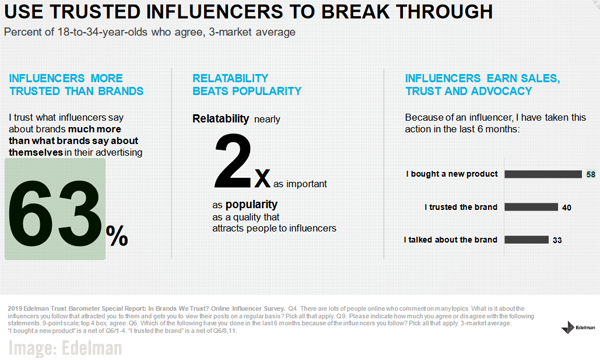
Authenticity matters everywhere in our lives, and leading a life where we’re as authentic as possible in every area makes it easier and more natural to incorporate it into our marketing efforts. Digital audiences in 2020 are savvier — and more skeptical — than they've ever been, and having been exposed to countless marketing messages on an hourly basis, marketers face a trust barrier that authentic content can reach through. When done well, authenticity is a business growth engine for B2B marketers, and with trust in marketing at the low levels seen in the following chart, boosting trust is a much-needed benefit, especially when done by using trusted influencers in your marketing mix. 2019 Edelman Trust Influencer Image

Be True To Your B2B Marketing Efforts

via GIPHY Maintaining your meticulously constructed authenticity is an ongoing effort that involves constant observation, readjustment, and assessment. Making this process transparent to your team, clients, and audience can go a long way towards building your genuine content marketing a passionate following. Achieving a passionate following through authenticity brings with it dedicated fans on social media platforms, and brand advocates who will recommend your brand whenever and wherever they can. [bctt tweet="“For more than a millennia we’ve had the trust, expertise, and wisdom that meld together to allow one person to hold influence over another.” — Lane R. Ellis @lanerellis" username="toprank"]

Learn More About Authenticity in B2B Marketing

We hope this introduction to authenticity's role in B2B marketing has given you new ideas to explore and brought to light a few of the tactics you can implement in your own content marketing efforts and campaigns. We've also got you covered if you want to learn even more about authentic content and trust in marketing. Our CEO Lee Odden will be delivering a keynote presentation entitled "In Search of Trust: How Authentic Content Drives Customer Experience," on March 19 at the Convergence Summit 2020 in Minneapolis, Minnesota, where he'll cover a wide range of trust and authentic content experience issues:
From fake news to privacy issues to deep fakes, the digital world has become an uncertain source of information for consumers. Tired of information overload, sales focused brand messaging and unremarkable content, 86% of customers say authenticity is important when deciding what brands they like and support. In this keynote presentation, Lee Odden will share the current state of content marketing and how brands are winning customer hearts, minds, and trust with authentic content experiences.
Finally, highlighting the importance trust plays in authentic marketing, we’ve put together an entire series of articles detailing various aspects of trust in marketing, and you’ll find nine of them here:

The post Authenticity and Great B2B Content Marketing Go Hand In Hand appeared first on Online Marketing Blog - TopRank®.
Tuesday, February 4, 2020

What B2B Podcasters Need to Know About SEO

What B2B Podcasters Need to Know About SEO

What B2B Podcasters Need to Know About SEO There are few things more satisfying than clicking “Publish” on a shiny new podcast. All the hours of planning and recording are done. You ran down your podcast launch checklist. Now it’s time for the world to enjoy the fruits of your labor.  You can sit back and watch the downloads roll in, right? Well… it depends on whether people can find your podcast. While the podcast market isn’t oversaturated yet, it’s still a crowded playing field Post-launch, your podcast promotion plan will likely include a mix of paid promotion, influencer amplification, and social media marketing to help build your audience. But before you record a second of audio, your organic strategy can help ensure your podcast is found and treasured. Here’s what you need to know about SEO for podcasts.

Search Engine Optimization for Podcasts

We’ll get deep into how you can build SEO into your podcasts — as you would for any other type of content — in  a few paragraphs. First, here’s a quick checklist of tactics that can help improve visibility.

Podcast SEO Quick Wins

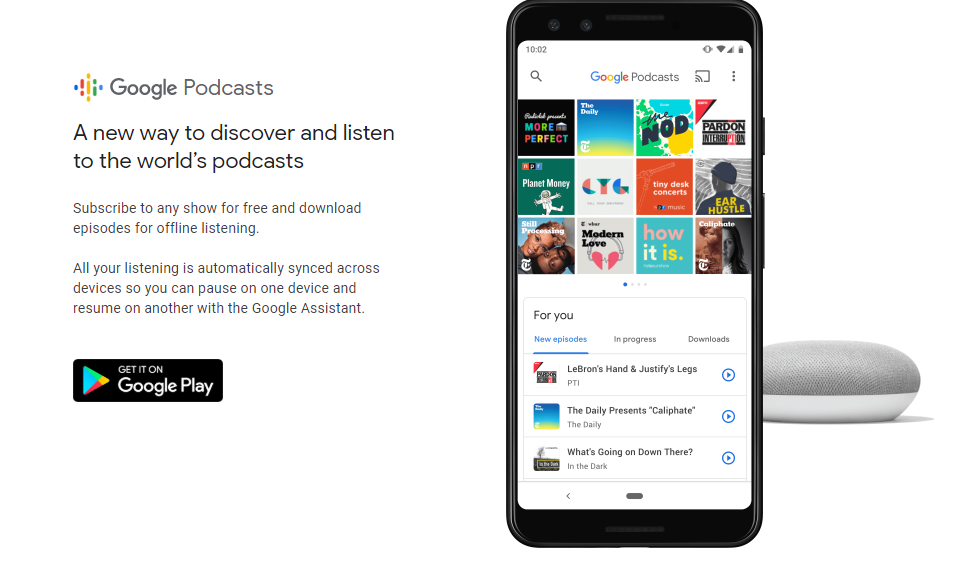
1. Make Your Title Hyper-Relevant Podcast directories like iTunes and Spotify rely heavily on your podcast title for ranking. What’s more, if your title does pop up in search, it needs to be immediately compelling. Make sure your title is something that clearly states what the podcast is about, and will inspire people to click — thereby sending positive signals back to the directory’s search engine. 2. Submit to Google Podcasts You’ve likely heard that Google is indexing podcasts now. They’re even transcribing the audio to make it searchable. So yes, your podcast can show up in the SERP, right up top with a big play button next to it. But only if you have submitted to their directory. Screen Shot of Google Podcasts Directory Home Page 3. Tag and Title Your podcast host will have an option to add tags to your RSS feed. Use these sparingly; one or two phrases at most. For titles, focus on a clear benefit to the listener. Instead of, “Our Q&A with Bob Johnson,” make it, “Increase Your CTR with Tips from Bob Johnson.” 4. Use Keywords in Episode Descriptions The majority of your clicks will come from your podcast title and episode title. But don’t overlook the description. Think of it like the meta description on a blog post. It should aim to draw your listener in as quickly and succinctly as possible. 5. Solicit Reviews and Subscribers The other major ranking factor in a podcast directory is engagement. Every episode, you should encourage listeners to review and subscribe. It’s a good idea to include that ask in internal promotion and promotional emails, too. 

How to Build SEO into Your Podcasts

Many podcasts in the B2B realm are produced as continuous conversations; informal Q&A sessions. They're quick and easy to produce, and that's certainly not a bad thing. However, an informal interview/chat show usually involves talking to guests about their background, area of expertise, experience, that sort of thing. Then you listen back through and pull out key themes for your episode title and description. Certainly, optimization can be done during production and post-production. But building SEO research and strategy into the planning stages will enhance your content and its visibility potential. Plan Your Podcast Episodes Like a Blog Post Google is transcribing your podcast and analyzing the content. What if your podcast episode was an audio power page for an entire keyword cluster? Imagine the SEO juice you can get from a pages-long transcript organized around a specific set of search terms. Hopefully, you've already identified your overarching theme and topical pillars you want to cover. But as you're planning each episode, do some additional keyword research to help ensure the topic or sub-topics are covered well. Find the topic that has the most interest, and the keywords (short and long-tail) that support it.  When you draft the questions (or topic notes) to guide the episode, use your research as the template. Treat each question as though it were an H3 tag on a blog post.  Make the Topic the Star Now your questions will keep the conversation focused on what's most relevant to your audience. For example:
  • Without topic planning: “Bob, tell us what you’ve learned in your five years with WidgetCorp.”
  • With topic planning: “Bob, based on your time at WidgetCorp, how do you optimize a widget assembly line?”
You can see how the focus shifts from Bob’s personal experience to tips that match your audience’s search needs. Bob's response is likely to contain a whole host of long-tail keywords that match what your audience wants to know. When you center your planning around keyword research, you’ll end up with a discussion that is naturally optimized for search. As with good written content, you won’t need to awkwardly shoehorn terms into the discussion. They’ll come up naturally because they will be relevant to the topic. [bctt tweet="When you center your planning around keyword research, you’ll end up with a discussion that is naturally optimized for search. @NiteWrites on building SEO into #B2BPodcast planning" username="toprank"] Now when Google crawls your podcast, it will be easy for the algorithm to determine what it’s about and what queries it should match. What’s more, your podcast is likely to be more relevant to your audience, too. That can inspire more linking and sharing, which in turn boosts your search visibility. Publish a Good Transcript Google will use their own auto-generated transcript for displaying your podcast in search. But you shouldn’t rely on that transcript for all your SEO needs.  Instead, publish a blog or episode page that includes a full, edited transcript. Don’t treat it as an afterthought; use a transcription service, then polish their work for publication. Include H3 headers for each question or topic shift, pull out the most valuable quotes for click-to-tweets, and include key takeaways at the top. For a 15-20 minute podcast episode, you will likely have 2,000+ words of optimized, highly-relevant content for Google to feast on. 

Case Study: Tech Unknown

Our client SAP has seen the difference pre-planning makes in the second season of their Tech Unknown podcast. The first season was an interview format focused on a single guest each episode. The first six episodes did well; they beat benchmarks and found a healthy, relevant audience. But for the second season, we wanted to take it up another notch. We organized the episodes around a single topic per episode, interviewed multiple guests, and assembled each episode around the central narrative. The results so far: The new episodes are already among the most popular of the entire series. Episode 2 is smashing 30-day benchmarks after a single week. Focusing on a more edited, topic-driven format not only improved SEO, it also made for an even more compelling finished product. Hear for yourself: SAP's Tech Unknown Podcast

Think Before You Cast

The barrier of entry for starting a podcast has never been lower. With enough time and know how, anyone can get a podcast up and running. Getting people to listen, however, requires a more strategic approach.  Plan your podcast like you would plan any other long-term content commitment: With an editorial calendar, solid keyword research, and always with audience value as the driving force. The best podcast SEO is to provide content people will love listening to and learning from. Need help planning, producing, publishing and promoting your podcast? Check out our B2B Podcasting Webinar.

The post What B2B Podcasters Need to Know About SEO appeared first on Online Marketing Blog - TopRank®.

Monday, February 3, 2020

The Science and Art of Best Answer B2B Marketing Content

Colorful Image of Outer Space

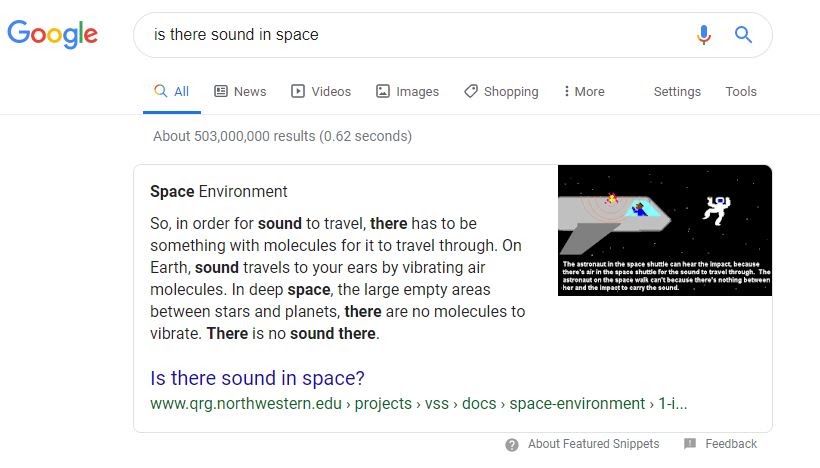
Colorful Image of Outer Space As a marketer, I love experiencing the inner dynamics of our profession from the other side. Our agency talks so much about the value of delivering best answer content and fully satisfying a searcher’s curiosities; recently I experienced this value first-hand. Let’s set the stage. A couple weeks ago I was mindlessly flipping through channels on cable TV and I came across an old favorite: Alien, the 1979 sci-fi horror flick from director Ridley Scott.  This classic film also had a classic tagline: “In space, no one can hear you scream.” In my boredom, I got to wondering about the validity of that statement, so I pulled up a Google search on my phone and typed in: is there sound in space. The featured snippet in the results answered that question so succinctly, so clearly, so comprehensively, that I was flat-out amazed. I’m no brainiac when it comes to the complexities of outer space, but in about 50 words, I gained a full understanding of what I wanted to learn: screen shot of google search results for best answer content about sound in space It got me thinking: Isn’t this what content marketing is all about? Taking the complex and making it digestible?  When it comes to ranking near the top of results for topics that matter to your audience, and delivering a best answer experience that builds trust, there’s both art and science at play. Launching from this opening example, let’s explore both dimensions.

The Science of Best Answer B2B Marketing Content

It’s no secret among digital marketers that the traditional technical signals for SEO have lost some of their impact in recent years, as Google shifts toward more of a user-driven algorithm. The example above is a perfect illustration: Despite landing in the most valuable SERP real estate for the query, did you notice that the actual pertinent keyword — “sound in space” — does not appear in the excerpted copy? A bygone SEO approach would’ve called for stuffing that exact phrase into the content (and page title, and meta description) for the piece you wanted to rank, but Google’s gotten much smarter over the years. It can inherently make the connections by stringing together the relevant words, and is more likely to prioritize a result that users are engaging with most, as opposed to one that offers the most precise keyword match. That brings us to the art of best answer content, which we’ll get to shortly. But there is still very much a methodical, proven science to this endeavor. Here are a few tried-and-true qualities that you’ll want to include for high-ranking content:

Customer Insight

In my case, there was no way to anticipate I’d be prompted to run a search about sound in outer space by watching a 40-year-old movie on cable. Luckily, customer journeys tend to be more predictable and coherent. Understanding the questions your audience wants answered is possible through in-depth research around both the people you wish to reach, and the topics you’re crafting content around. via GIPHY In the past, I’ve detailed some of the ways to identify best answer opportunities, which include:
  • Reverse-engineering keyword data
  • Consulting the “People also asked” feature in Google
  • Leveraging schema markups
  • Relying on keyword research tools
  • Searching for whitespace in relevant SERPS
But it also comes down to simply getting to know your customers and prospects. Actually interacting with them and hearing the way they talk or write is important as semantic search gains more sway. 

Structure and Focus

No, you don’t need to contort your content to repeatedly include the exact keyword you’re targeting — especially in cases where it hurts readability. But that isn’t to say you should be ignoring keywords and phrases entirely. While you don’t see the specific sequence “sound in space” in the snippet above, you do see plenty of instances of both “sound” and “space” in a way that feels natural to the writing. This helps Google understand the premise of the article. Technical signals do still matter, especially because your content has to appear in searches to begin with in order for user signals to matter. The answer from Northwestern University was also crafted in a way that made it well-suited for the featured snippet. Even in longer-form content, you can be intentional about this, as TopRank Marketing SEO Strategist Birdie Zepeda explains. “Keep the best part of your answer, the nugget you're really trying to get across, concise,” she says. “A featured snippet is roughly 280 to 315 characters. You've only got a couple of sentences to get the answer across.” [bctt tweet="Keep the best part of your answer, the nugget you're really trying to get across, concise. A featured snippet is roughly 280 to 315 characters. @birdie_zepeda #BestAnswerContent #B2BContentMarketing" username="toprank"]

Experimentation

Experiments are fundamental to the scientific method, and also to digital marketing in pretty much every form. Smart strategy and seasoned experience go a long way, but the discipline will forever be founded on making educated guesses and bets, validating them through testing, and then implementing adjustments and optimizations along the way.  This is why an always-on content marketing approach is so valuable; it enables continuous cycles of experimentation, understanding, and improvement. [bctt tweet="Why is an always-on content marketing approach is so valuable? it enables continuous cycles of experimentation, understanding, and improvement. @NickNelsonMN #BestAnswerContent" username="toprank"] via GIPHY

The Art of Best Answer B2B Marketing Content

The thing that really struck me about the sound in space snippet was how casual and conversational it is. It begins with, “So…” and keeps the language pretty simple, even though it’s discussing molecular principles in outer space. via GIPHY As a B2B marketer, this is a valuable thing to register. Given the subject matter we tend to cover, and the knowledgeable audiences we intend to reach, it can be all too easy to get caught up in professorial jargon. But that’s not generally what people want. This is something that John Joyce of Brennan Industries hammered home in his interview for our Break Free B2B series, when explaining how his company’s strategy, centered on educational content, yielded an 800% increase in leads.  “What I’ve found is people don’t have time to just know everything about everything,” Joyce said. “So they really want you to make it easy and just tell them what they need to know.” [bctt tweet="People don’t have time to just know everything about everything. They really want you to make it easy and just tell them what they need to know. @mrjohnjoyce #BestAnswerContent" username="toprank"] Worth repeating: make it easy. To the extent you can avoid it, don’t bog people down with five-dollar words and industry lingo. Challenge yourself to be as human and straightforward as possible. At the same time, find creative ways to differentiate your content and make it stand out from the many others who are vying for the same SERP. This isn’t always easy to do. But it is the content marketer’s credo, and I believe it will be an increasingly vital aspect of successful B2B marketing content as we move forward.

Strike a Balance with Your Best Answer Strategy

The internet is a vast expanse, and sometimes trying to gain visibility for competitive searches can feel like screaming into space. But rest assured, your brand can be heard. It takes a creative, human approach grounded in the modern science of good SEO. Ready to become the best answer, and satisfy your audience’s burning questions? Learn about TopRank Marketing’s SEO services and reach out to kick off the conversation today.

The post The Science and Art of Best Answer B2B Marketing Content appeared first on Online Marketing Blog - TopRank®.