Tuesday, December 10, 2019

Break Free B2B Series: Judy Tian on Humanizing B2B Through Influencer Marketing

As the world's largest social network for professionals, LinkedIn* lies at the epicenter of people and business.  Profiles on the platform put a real face on our professional brands, allowing visitors to learn about our interests, career experiences, and personalities. Emphasizing this human element, and creating a genuine sense of community among members, is paramount to LinkedIn's brand mission according to Marketing Manager Judy Tian “As a platform where so much of people's job opportunities and personal and professional development takes place,” she says, “we really sought to humanize the brand and make it a more community-based platform, where real stories can be told and people would feel like they have relatable experiences there with others.” [bctt tweet="We really sought to humanize the brand and make it a more community-based platform, where real stories can be told. @judytian07 on @LinkedIn’s #InfluencerMarketing strategy #BreakFreeB2B" username="toprank"] A key aspect of this initiative was launching an ambitious influencer campaign, helping LinkedIn connect more deeply with its audience of marketers and salespeople by highlighting the human side of these professions, through partnerships with recognizable and respected pros from both fields. In her interview with TopRank Marketing President Susan Misukanis, Judy provides a behind-the-scenes look at that campaign and LinkedIn’s overall influencer marketing strategy. She unpacks one specific empathy-driven campaign, where influencers shared personal struggles and trials in their careers and how they overcame them. She also offers her views on measuring the seemingly immeasurable, aligning with influencers around shared values, understanding the crucial difference between reach and relevance, and more. 

Break Free B2B Marketing Interview with Judy Tian

If you’re interested in checking out a particular portion of the discussion, you can find a quick general outline below, as well as a few excerpts that stood out to us.
  • 0:30 — Growth and progression of influencer marketing
  • 1:15 — Understanding relevance and why it matters
  • 2:15 — Tracking shared values with influencers
  • 4:00 — Example of a human-focused LinkedIn influencer campaign
  • 7:00 — Measuring the success of an influencer program
  • 10:45 — The difference between reach and relevance
  • 12:00 — The "four Rs" as influencer selection criteria
  • 14:00 — Overcoming internal skeptics to launch an influencer program
  • 16:45 — Paid vs. unpaid influencer initiatives in B2B
  • 19:30 — Where will influencer marketing evolve in the next 2-3 years?
  • 21:00 — Nurturing micro influencers and integrating offline tactics
Susan: Can you give an example of how LinkedIn is working with influencers at a campaign or ongoing relationship level? Judy: We did a really exciting campaign around telling stories of our influencers. We work with marketing and sales influencers, and so we really wanted to celebrate who they were as a person beyond just their profession. We developed this social campaign called "My Marketing Story" and "My Sales Story," and we asked each of these marketing professionals and sales professionals about, what were some of the most vulnerable moments in their careers? What did they learn from their failures? Maybe some career mistakes or bumps along the way. What we got were some really honest answers about people being fired, people being let go unexpectedly, people learning a lot of business lessons from working at Little Caesar's, and that actually shaping their career in a different trajectory. Susan: Where do you think marketers who are just getting started with influencer program might be heading down the wrong path in terms of how to measure, and how would you counsel them? Judy: I would say that one of the biggest traps that I've seen when it comes to measurement in influencer marketing is really caring about the reach metrics, and trying to understand: if we're working with an influencer how big is their network, and how many followers do they have? I'm really excited that now we're changing the conversation a little bit more to relevancy. When I first started partnering with some of the internal stakeholders that were excited about the influencer programs as this new shiny object, many of the questions were around, 'Okay, if we do this one post with them, how many impressions are we gonna get? Is it a million per influencer?' Even though I think reach is part of the equation, and we want to work with influencers who have a substantial amount of reach, I think I've had to do a lot more internal education of: actually, the relevancy and engagement are what's important. Are the influencers actually experts in the areas you wanna talk about? And are they gonna have credibility with their end users? And then are they going to shed credibility onto your brand as a result? [bctt tweet="Even though I think reach is part of the equation, and we want to work with influencers who have a substantial amount of reach, the relevancy and engagement are what's most important. — @judytian07 #InfluencerMarketing #BreakFreeB2B" username="toprank"] Susan: Who do you admire in terms of influencer marketing? Judy: Mindy Kaling was somebody that I really respected and really enjoyed hearing from at Content Marketing World. There was a question of how does she choose working with a variety of brands, and for her it has to be something that she really cares about. For instance, she loves shopping, so DSW was one of the partners that she chose to work with, because that's something she already feels passionate about. And I just love that she chose to do something that would be authentic and true to her. I think right now there's a lot of backlash that celebrities and influencers are facing because they're accused of being sellouts, and they just promote brands or products that may not necessarily be something they believe in, but they just want the checks. I think the more we can push the conversation, and influencers, to think about it in that way, and brands to also think about partners that will have authentic, true passion for your products and your business, the better it will be for us as consumers.  Stay tuned to the TopRank Marketing Blog and subscribe to our YouTube channel for more Break Free B2B interviews. Here are a few interviews to whet your appetite: * Disclosure: LinkedIn is a TopRank Marketing client.

The post Break Free B2B Series: Judy Tian on Humanizing B2B Through Influencer Marketing appeared first on Online Marketing Blog - TopRank®.

Monday, December 9, 2019

10 Top B2B Influencer Marketing Predictions for 2020

Influencer Marketing Predictions for 2020

Influencer Marketing Predictions for 2020 In late 2018, B2B influencer marketing was on the industry watch list as predictions for what this year would hold began popping up. And what we saw were some major advancements in what B2B marketers had planned for influencer marketing in 2019 including: Some of these initiatives rose to the top for 2019, while others got lost in the day-to-day shuffle. However, 2019 was the year that B2B marketers really LEANED IN on influencer marketing in a way they hadn’t before. Many of the predictions from last year have become best practices for some of today’s top brands. What does 2020 hold? To help turn your B2B influencer marketing dreams into a reality, we’ve tapped 10 influencer marketing leaders to share their top predictions for 2020.

The Integration of Influence in 2020

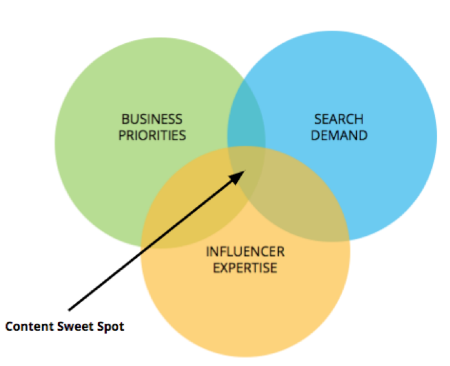
TopRank Marketing has been in the business of B2B influencer marketing since before it had a name. We're constantly iterating on our approach and finding new ways to help our clients achieve influencer marketing success, and we're proud to have been named by Forrester as the only B2B marketing agency with influencer marketing capabilities. In 2020, I predict that we’ll see EVEN MORE brands integrating influencer marketing into strategic marketing initiatives in a way that supports multiple objectives (and even departments or business units). The intersection of business priorities, search demand and influencers is what we like to call the “Content Sweet Spot”. And, by integrating these three areas (and keeping an eye on trending data), influencer programs have the opportunity to create strategic and long-lasting impact for your business on an even grander scale. So, what do our other experts predict will change in 2020? Read on to find out!
Focusing on Engagement Over Reach

  Alyssa Samuelson Senior Communications Manager, Microsoft Bigger doesn't necessarily mean better when it comes to influencer reach. Brands are finding more value in the ways in which followers engage with influencers rather than in how many people might see a piece of content. Measuring likes, comments and shares show that an influencer’s audience is listening and the content is resonating. Tapping into influencers who may not have millions of followers but do have a loyal audience can be meaningful to brands, particularly those who are trying to reach very specific audiences. [bctt tweet="Now and in 2020, bigger doesn't necessarily mean better when it comes to influencer reach. @alyssasamuelson #B2BInfluencerMarketing #MarketingPredictions" username="toprank"]

Going All-In on Always-On Influencer Marketing

Garnor Morantes Group Marketing Manager, LinkedIn I predict organizations are going to lean more heavily into fostering deep, personal relationships with influencers. Influencer marketing was largely borne from leveraging an influencer's scale and mass appeal, but consumer savvy and skepticism have resulted in greater importance on authenticity. As a result, I anticipate organizations will focus their efforts on building lasting, ongoing relationships with a more targeted group of influencers. In addition to working with influencers more as partners and collaborators, the investment in an always-on program focused on uncovering/sharing true, authentic messages and insights that resonate with customers will make influencer "reach" less of a priority. [bctt tweet="In 2020, I predict organizations are going to lean more heavily into fostering deep, personal relationships with influencers. @garnormorantes #B2BInfluencerMarketing #MarketingPredictions" username="toprank"] Judy Tian Marketing Manager, LinkedIn I predict that brands and influencers will have an increasingly collaborative relationship, with influencers being brought in even earlier in the process. We’re already seeing collaboration at the content and creative development stage, but I predict that influencers will partner on even earlier work such as brand messaging, idea validation, and campaign brainstorming – ultimately in service of better content for the end-consumer. [bctt tweet="In 2020, I predict that brands and influencers will have an increasingly collaborative relationship, with influencers being brought in even earlier in the process. @judytian07 #B2BInfluencerMarketing #MarketingPredictions" username="toprank"]

Taking Influencer Activations Beyond Digital

Rani Mani Head of Social Influencer Enablement, Adobe Despite the fact that today's technology makes it beyond easy to connect with people around the world virtually, there is something profoundly special and different about in-real-life (IRL) activations. Shared, in-person experiences facilitate a sense of community and form bonds between people that no amount of emails and social media likes can possibly come close to. Though it is often a substantial time and financial investment, we at Adobe are always looking for IRL influencer activations. It can be as simple and informal as grabbing a bite to eat together or something a bit more planned like a visit to HQs to meet with the corporate strategy team and participate in product demos. My favorite was our AdWeek related Nasdaq interview experience followed by our group cooking class. We were able to support each other and build on one another's thoughts and later let our hair down and engage in some good, old-fashioned fun. We all left so energized and invested in one other's lives in ways that you simply don't get with online interactions alone. [bctt tweet="In 2020, I predict in-real-life experiences between brands and influencers will grow and facilitate a greater sense of community. @ranimani0707 #B2BInfluencerMarketing #MarketingPredictions" username="toprank"]   Janine Wegner Global Thought Leadership Program Manager, Dell Technologies The biggest challenge for brands is the break-through of key differentiators like their USPs, values and the benefit to their stakeholders – online and offline. Besides engaging key spokespeople, brands will increasingly collaborate and co-create content through real-life activations with external experts that influence their target audience. It takes a “mesh” of the right voices to bring the stories and proof points to live. For instance, at key events, brands can partner with influencers to shape audience engagements by providing key audience and industry insights, as well as be a participant to elevate the conversation and/or be an amplifier of the activation digitally. [bctt tweet="In 2020, I predict that brands will increasingly collaborate and co-create content through real-life activations with external experts that influence their target audience. @JanineWegner #B2BInfluencerMarketing #MarketingPredictions" username="toprank"] Read: How to Integrate Online and Offline Tactics to Cultivate Influencer Relationships

Combining Content and Influence

Amisha Gandhi Vice President, Influencer Marketing & Communications, SAP Ariba and SAP Fieldglass In B2B, the emphasis will focus on building “communities of influence” around industry experts, employees and brand advocates/customers.  The communities will act as watering holes where people can learn, share ideas and find value through authentic interactions vs. one-way content. This will play well with ABM efforts to personalize content by making it more interactive and engaging. The effect will be to attract target consumers rather than push content to them. [bctt tweet="In 2020, I predict that the emphasis will focus on building 'communities of influence' around industry experts, employees and brand advocates/customers. @AmishaGandhi #B2BInfluencerMarketing #MarketingPredictions" username="toprank"] Lee Odden CEO, TopRank Marketing Content is the currency of value that B2B brands and influencers exchange. However, as more buyers become numb to information overload and brand marketing, it's not enough for B2B companies to inform buyers with expert quotes, interviews and webinars. To truly stand out in 2020, B2B influencer marketing programs must optimize beyond reach to experience. Influencer-driven content experiences—from audio to video to interactive—deliver engaging information that inspires buyers to action. When content is experiential and influential, everybody wins. [bctt tweet="In 2020, I predict that influencer-driven experiences will be what it takes to optimize influencer marketing programs beyond reach and to inspire action. @leeodden #B2BInfluencerMarketing #MarketingPredictions" username="toprank"]

Integrating with Employee Advocacy

Ryan Bares Global Social Programs Lead: Social Influencers & Employee Advocacy IBM Systems, IBM I’m building brand ambassadors by enabling employees to be active on social media. Any influencer strategy must incorporate employee advocacy. ... It’s no longer one or the other. I’ve seen success with my tailor-made social media education for IBM subject matter experts. This included social media 101 (i.e., building out a profile), to more advanced topics like social listening and producing long-form content. I then served-up great influencer content (topic-based) to interested IBMers so they can join the conversations and engage online. I highly expect to see more brands focusing on employee coaching and mentoring to elevate their influencer strategy in 2020. Employees are an important part of the mix so don’t overlook them. [bctt tweet="I highly expect to see more brands focusing on employee coaching and mentoring to elevate their influencer strategy in 2020. @RyanBares #B2BInfluencerMarketing #MarketingPredictions" username="toprank"]

Embracing The Rise of Video & Audio

Ursula Ringham Head of Global Influencer Marketing, SAP 2020 will be the year of B2B influencer marketing, with companies finally understanding how to use video, podcasts, and long-form content such as blogs to tell their story and reach new audiences. And storytelling will be key to this success, having the influencer tell the brand story through their lens. [bctt tweet="2020 will be the year of B2B influencer marketing, with companies finally understanding how to use different types of content to tell their story and reach new audiences. @ursularingham #B2BInfluencerMarketing #MarketingPredictions" username="toprank"]

Making Authenticity a Priority

Angela Lipscomb Influencer Relations Manager, SAS Even as recently as five years ago many B2B marketers didn’t understand how influencers could bring value to a brand if they weren’t endorsing it. They didn’t understand that the essence of an influencer’s value is in their neutrality. To be a trusted advisor an influencer must remain objective. So, for the sake of authenticity, it’s important that brands don’t expect influencers to regurgitate a brand message which is fundamentally detrimental to the brand, the influencer and the consumer. If you’re collaborating with an influencer who is the right fit then their vision should be in sync with your vision. Give them free rein to do what they do best; to educate and inspire. [bctt tweet="In 2020, I predict that more brands will understand the true essence of an influencer's value: neutrality. To be a trusted advisor an influencer must remain objective. @AngelaLipscomb #B2BInfluencerMarketing #MarketingPredictions" username="toprank"]

Finding Your Influencer Marketing Focus for 2020

According to CMI and MarketingProfs’ 2020 B2B content marketing benchmarketing report, 46% of marketers that identify as high-performers, are investing in influencer relations. So the question remains, what will your 2020 influencer marketing journey look like? And which of the predictions above will you lean into first? *Disclosure: LinkedIn, Dell and SAP are TopRank Marketing clients.  What else is on the 2020 marketing horizon? Get a glimpse with our roundup of top B2B content marketing trends and predictions for 2020.

The post 10 Top B2B Influencer Marketing Predictions for 2020 appeared first on Online Marketing Blog - TopRank®.

Thursday, December 5, 2019

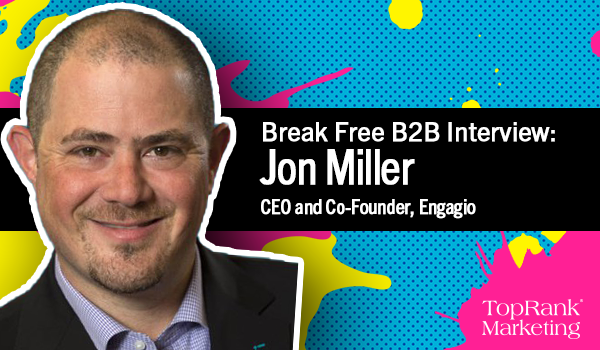
Break Free B2B Series: Jon Miller on How ABM Can Help Marketers Keep Their ‘Ship’ Together

Do you know that account-based marketing (ABM) is like spearfishing? Or that effective ABM requires sales and marketing departments to act like a unified soccer team? Or have you heard that some say B2B marketing may be heading for a shipwreck? These were just some of the great analogies that Jon Miller, CEO and co-founder of Engagio, shared with our very own Susan Misukanis during a recent Break Free B2B interview. And, while Jon threw around analogies like a doting owner tossing a frisbee for his dog in the backyard, he also provided deep insights based on his impressive experience in marketing which also includes being a co-founder of Marketo. According to Jon, all signs point to a dramatic shift in B2B marketing tides. “Marketers need to break free over the next 10 years by radically changing how they work with sales, stopping the baton handoff model and really moving to a much more of an integrated team,” he said. [bctt tweet="Marketers need to break free over the next 10 years by radically changing how they work with sales, stopping the baton handoff model and really moving to a much more of an integrated team. @jonmiller #BreakFreeB2B #ABM" username="toprank"] Jon believes that ABM is essential for the future health of B2B marketing. But while he’s all in on ABM—it’s his business after all—he admits that there are some significant obstacles to perfect implementation including cross-department communication and consistent data. “It's really hard to be aligned when you're looking at different information,” he said.  The excellent news is that Jon had plenty of suggestions to help marketers stay afloat if B2B marketing veers from its current course. So, check out the full interview to learn why B2B marketing is changing, the value of ABM, and how to keep your ship together when things get choppy. 

Break Free B2B Marketing Interview with Jon Miller

If you’re hunting for specific ABM insights, use the following to jump ahead to specific sections or check out some interview highlights captured in the excerpts below. 
  • 0:36 - Why marketers need an ABM system
  • 1:54 - ABM is a new way to fish
  • 2:47 - Taking proactive measures to land the right fish
  • 3:54 - Resources required to build out your ABM team 
  • 4:32 - How ABM is like a soccer game
  • 7:03 - B2B marketing heading for a shipwreck
  • 8:00 - What’s privacy got to do with it?
  • 9:13 - Old revenue models aren’t sustainable
  • 10:08 - The explosion of digital noise
  • 10:38 - The future of B2B Marketing
  • 12:31 - How an ABM stand-up unsticks opportunities
  • 15:37 - The importance of data in marketing and sales alignment 
  • 17:23 - Using 3rd party intent data, for all intents and purposes
  • 20:56 - Scaling ABM based on deal size
  • 25:17 - Who’s winning at ABM?
  • 27:40 - The future of content marketing 
  • 29:40 - How can marketers break free? 
Susan: Account-based marketing is still arguably in its infancy. What what are the drivers? Why does a marketing professional need an ABM system? Jon: When I was doing marketing at Marketo, we were responsible for generating as much as 80% of all the pipeline that the sales team was closing … What we had been doing [in demand generation] was fishing with a net … We’d throw these campaigns out there, … we didn't care which fish we caught; we just cared if we’d catch enough fish.  When we started to go after the bigger companies—our existing customers and so on— it was something more like fishing with a spear where we would identify who we wanted, and then we'd find ways to ... proactively go after them. That was a pretty different model. That model is ultimately what came became known as account-based marketing.  The drivers of ABM are really capturing that story. It's the need to go upmarket. It's the need to find new growth engines. It's the people realizing that inbound only gets you so far. You don't get to control who responds. So I think those are the main factors why ABM has become hot. [bctt tweet="The drivers of ABM are… the need to go upmarket. It's the need to find new growth engines. It's the people realizing that inbound only gets you so far. @jonmiller #BreakFreeB2B #ABM" username="toprank"] Susan: You write about B2B marketing heading for a shipwreck? Can you dig into that? Jon: In the era of marketing automation, I think marketing did a lot to change the way people thought about the marketing department ... And that helped shift the perception of marketing to be a real part of the revenue process … but that model that was built, the linear handoff [between marketing and sales]—that's breaking down. For example, privacy regulations have really come around. And that means that's a lot harder for marketing to send emails at the top of the funnel. And at the same time, you've seen the rise of tools like Outreach and Salesloft. So that's a big change in the role of marketing. You don't get to just be the email people at the top of the funnel anymore, because that's going away. You're going to have to shift and adjust where you spend your time and energy.  And another big change on top of all that is the rise of recurring revenue models … the vast majority of revenue that companies create today happens after that initial sale. And yet, most marketing departments are still focused on generating new business … there needs to be an adjustment about how the marketing department thinks about what their job is. The explosion of digital noise means that traditional marketing channels like ads are becoming less and less effective … What marketers need to think about is, how do I orchestrate multiple channels together? [bctt tweet="The explosion of digital noise means that traditional marketing channels like ads are becoming less and less effective … What marketers need to think about is, how do I orchestrate multiple channels together? @jonmiller #BreakFreeB2B #ABM" username="toprank"] You put all that together, and I think we're going to see a very different role for B2B marketing departments in the next 10 years.  Stay tuned to the TopRank Marketing Blog and subscribe to our YouTube channel for more Break Free B2B interviews. Here are a few more interviews to provide inspiration to your marketing efforts. 

The post Break Free B2B Series: Jon Miller on How ABM Can Help Marketers Keep Their ‘Ship’ Together appeared first on Online Marketing Blog - TopRank®.

Wednesday, December 4, 2019

5 Marketing Podcasts To Strengthen Your B2B Efforts

Red rivets in steel beams image.

Red rivets in steel beams image. Podcasts are a fantastic way to find new takes and tactics for your B2B marketing. They’re also great for picking up new marketing ideas and getting fresh perspectives you might not otherwise find. We’ve put together a list of five podcasts that offer marketing insight from a wide array of industry innovators — who share their own stories along with tactics and advice to take your marketing efforts to the next level. From exploring the B2B content marketing trends that will grow in 2020 to first-person stories of life’s professional and personal adventures, the hosts and guests on these five podcasts have a great deal to share. Here is our random-order list of five podcasts to help strengthen your B2B marketing efforts in 2020 and beyond.

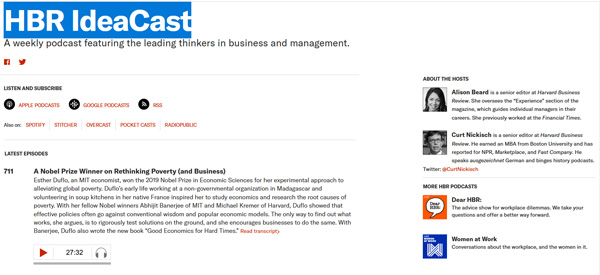
#1 - HBR IdeaCast by Harvard Business Review

HBR IdeaCast Summary: Each week the Harvard Business Review’s podcast HBR IdeaCast explores expansive topics affecting digital marketers at all levels, featuring some of the world’s most successful business-people.
  • Hosts: Alison Beard and Curt Nickisch
  • Recent Topics on Tap: To Truly Delight Customers — You Need Aesthetic Intelligence, Melinda Gates on Fighting for Gender Equality, How Companies Like Google and Alibaba Respond to Fast-Moving Markets
  • Recent Guests: Melinda Gates, Scott Young, Sari Wilde
  • Episode Length: 20 - 45 minutes

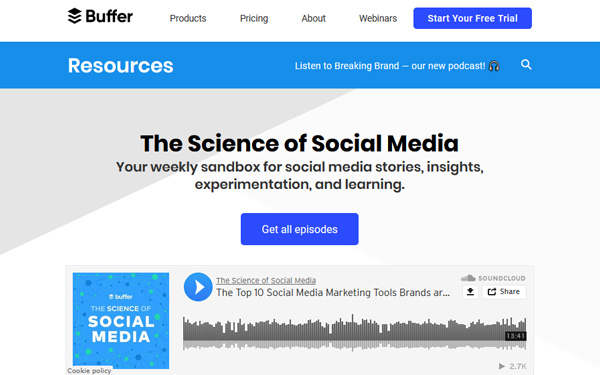
#2 - The Science of Social Media by Buffer

The Science Of Social Media Summary: Social scheduling platform Buffer hosts a marketing-related podcast called The Science of Social Media, and with a listening audience of more than 27,000, each week’s episode looks at a variety of social media-related topics from a diverse section of marketers and business professionals. Buffer also hosts the fine Breaking Brand podcast.
  • Hosts: Heather-Mae Pusztai and Dave Chapman
  • Recent Topics on Tap: Why social commerce will rule social media in 2020, The Complete Actionable Guide to Marketing Personas, A Crash Course in Building Custom Audiences for Your Social Media Ads
  • Recent Guests: Mari Smith, Matt Navarra
  • Episode Length: 12-20 minutes

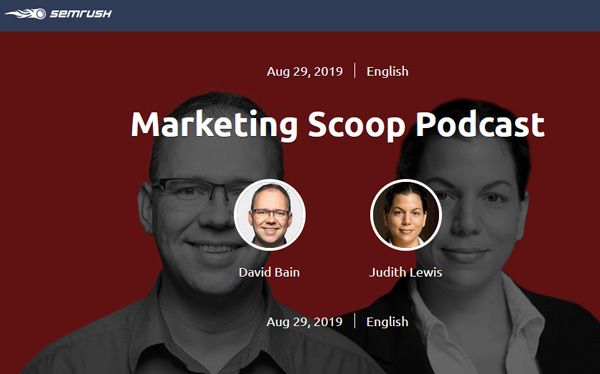
#3 - Marketing Scoop by SEMrush

Marketing Scoop Summary: SEMrush’s Marketing Scoop podcast looks at digital marketing news and offers a cadre of guests sharing knowledge about a variety of marketing topics ranging from search and email to customer relationships and marketing research.
  • Hosts: David Bain and Judith Lewis
  • Recent Topics on Tap: How do you recover from a Google Penalty?, What Works Best for Email Marketing Now?, What is the ROI of optimizing your local search listings?
  • Recent Guests: Duane Forrester, Chad White, Colin Gray
  • Episode Length: 20 - 40 minutes

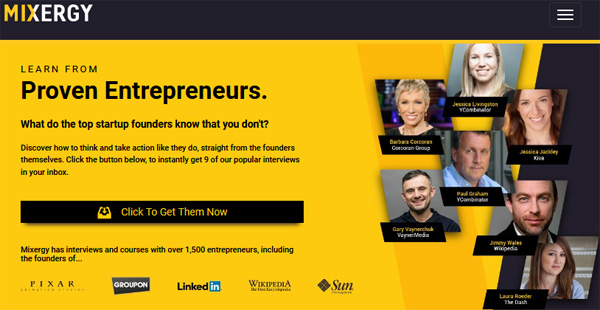
#4 - Mixergy

Mixergy Summary: The Mixery podcast features top leaders from businesses including Google, LinkedIn, Pixar and others, and offers a variety of inspiring ideas and stories on marketing and more.
  • Hosts: Andrew Warner
  • Recent Topics on Tap: Case Study: A virtual assistant company with a niche, How do you create company culture in an international business?, The $8 billion dollar software you’ve never heard of
  • Recent Guests: Craig Walker of Google Voice, Ryan Smith of Qualtrics, Ahti Heinla of Skype
  • Episode Length: 60+ minutes

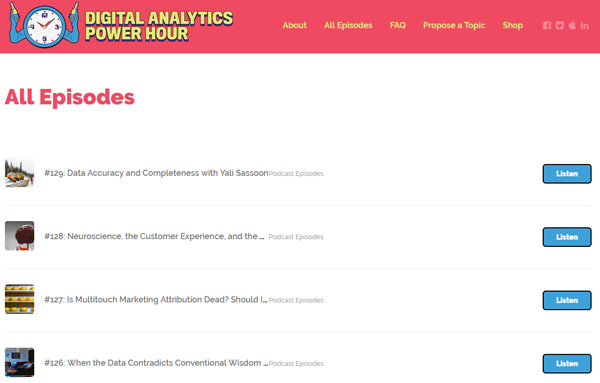
#5 - The Digital Analytics Power Hour

Digital Analytics Power Hour Summary: The Digital Analytics Power Hour podcast takes an informal look at the analytics side of digital marketing, featuring a strong lineup of industry guests sharing their latest insights and stories.
  • Hosts: Michael Helbling, Tim Wilson, and Jim Cain
  • Recent Topics on Tap: Neuroscience, the Customer Experience, and the Data Therein, Is Multitouch Marketing Attribution Dead?, When the Data Contradicts Conventional Wisdom
  • Recent Guests: Priscilla Cheung, Diana Lucaci, Yali Sassoon
  • Episode Length: 45 minute to over an hour

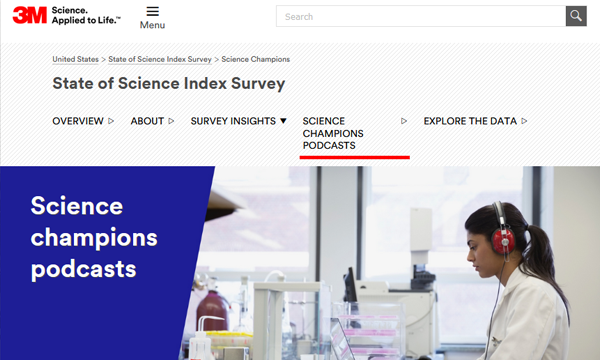
Bonus Podcast - 3M Science Champions

3M Science Champions Screenshot Image As a bonus podcast that shows how B2B brands can benefit from incorporating podcasts into their efforts, check out our client 3M’s Science Champions podcast. It has featured a variety of industry experts including Professor Stephen Curry, Department of Life Sciences at Imperial College London, Dr. Suze Kundu, Materials Chemist and Science Presenter, Chris Gammell, Principal, Analog Life, LLC, and Matt Hartings, Associate Professor of Chemistry at American University.

Expand Your Own B2B Marketing Podcasting in 2020

With the insights you’ll gain by listening to the podcasts we’ve looked at from The Science of Social Media, Marketing Scoop, HBR IdeaCast, Mixergy, and The Digital Analytics Power Hour, your year ahead in 2020 can be filled with new inspiration and plenty of innovative B2B marketing ideas. Looking for even more marketing podcasts? We’ve got you covered, with “20 Podcasts To Elevate Your B2B Marketing” and “10 More Marketing Podcasts To Boost Your Business.” As B2B marketers, you’ll also find helpful insight about creating and marketing your own podcasts in the following five TopRank Marketing articles:

The post 5 Marketing Podcasts To Strengthen Your B2B Efforts appeared first on Online Marketing Blog - TopRank®.

Tuesday, December 3, 2019

Break Free B2B Series: John Joyce on Taking B2B Content Marketing Back 2 Basics

One of the central tenets of best-answer content is comprehensiveness. Your content needs to fully and artfully answer your buyers’ most burning questions. And as John Joyce and his team at Brennan Industries remind us, sometimes that requires going back to the basics. It can be all too easy for B2B marketers and brands to get caught up in new trends, industry lingo, and the next big lofty concept in their niche. We grow conversant in these matters on a day-to-day basis. But to assume the same is true for all — or even a majority of — our audience is a mistake, and potentially a costly one. In the latest entry of our Break Free B2B interview series, John shares how a content strategy rooted in educational content helped yield an 800% increase in leads for his company.  In detailing his experiences as Global Marketing Director for Brennan, John explains how he was surprised to find that the most basic information was in highest demand among his audience. “At first glance, when someone from the sales field brought this to me as, there’s a need for this, I thought: you can’t possibly be serious, this is like the most basic — how do people not know this in our industry?” he shares. “But that’s exactly what people want. That’s the No. 1 thing that people want on our website. That super basic information.” [bctt tweet="What I’ve found it is people don’t have time to just know everything about everything. So they really want you to make it easy and just tell them what they need to know. — @mrjohnjoyce #BreakFreeB2B #Back2Basics" username="toprank"] Learn all about the content marketing strategy that drove big results and helped Brennan Industries break free in the industrial B2B marketing space in John’s candid interview with TopRank Marketing President Susan Misukanis

Break Free B2B Marketing Interview with John Joyce

If you’re interested in checking out a particular portion of the discussion, you can find a quick general outline below, as well as a few excerpts that stood out to us.
  • 0:30 – How John’s team achieved an 800% increase in leads with content
  • 1:30 – Educational content in the industrial space
  • 4:45 – Gated vs. ungated content
  • 6:30 – How Brennan attracts a targeted audience
  • 7:30 – Dealing with long and complicated sales cycles
  • 9:45 – How trust factors in
  • 12:15 – Is content generally getting less valuable in B2B?
  • 15:00 – Nurturing through the buying journey
  • 18:30 – John’s vision for the next three years
  • 21:15 – How can industrial B2B marketers break free?
Susan: Tell us about your gating strategy. John: When we first started, you know, the first thing we produced was white papers and everything was gated, but we had the gate basically set really low, you just needed to put your email address in. And over time, what we've done is, as we've grown that library of content, we started taking off the first items, or maybe the most responsive items, and making ungated versions of that. So we'll have a pillar page, for instance, on fitting identification, which is directly taken from our fitting identification guide, which is still a gated piece of content. So what we're doing is having ungated content with a premium content upgrade of – you can also get this guide, which we supply in actual physical form. One of the things that's been super performant for us is crossing the barrier into the real world. So instead of just providing things in like a PDF format, we actually print the guide and mail it to people for free if they fill out the form.  [bctt tweet="What we're doing is having ungated content with a premium content upgrade… Instead of just providing things in a PDF format, we actually print the guide and mail it to people for free. — @mrjohnjoyce #BreakFreeB2B #B2BContentMarketing" username="toprank"] Susan: Trust is really an important element in everything you're communicating to your market, correct? John: Yeah, for sure. So you're trying to build rapport with your customer base, just like in any marketing situation. You're trying to simulate the same level of rapport that you and I would have sitting here if I was trying to sell something to you or you were trying to sell it to me, but you're trying to build that rapport organizationally. Between everybody in the organizations and the different silos and roles and whatever. And a lot of that is done through marketing, because that's the first contact point that people have with your organization. So we try to do mainly two things: build trust and also provide value. Since we have a product that's more of a commodity product, okay, it's a very simple product. And you can get cheap versions of it from Korea or China or wherever it wherever you want, we have to provide a value add. And we try to do that as a company. So as a brand, even down to the marketing, we're constantly trying to add value, and that's why we do the content marketing and all – it’s to start communicating and providing value.  So here's value: educational information, something you didn't know, some information you're looking for. We want them to trust this and to think of us as the place to go that provides value from the very beginning of the relationship, from the first time they go to the website – oh yeah, this is really good. It's providing me the answers to my questions and knowledge I need, it's saving me money, they're going to send me a physical guide, you know … any little way, that's another reason why we do things in the real world. It's, it's a physical value. People are used to the digital aspect of everything. [bctt tweet="As a brand, even down to the marketing, we're constantly trying to add value, and that's why we do the content marketing and all – it’s to start communicating and providing value. — @mrjohnjoyce #BreakFreeB2B #B2BContentMarketing " username="toprank"] Susan: What is your vision for the next three years as you move forward? John: We're making an educational channel where we're putting a lot more of this educational content in more forums, in one place that's completely ungated. So my vision is lots and lots more ungated content. We're going to continue creating gated content and then ungate old content, as as we move forward, creating more gated content, so that there's just more free content because, again, it provides value, right? So you come to the website, you get immediate value, you don't even have to subscribe to an email or anything. So part of my strategy is basically more free content. Okay, and the other part of it would be more granular content – so granular meaning like specific to your industry, specific to your role in your industry. Stay tuned to the TopRank Marketing Blog and subscribe to our YouTube channel for more Break Free B2B interviews. Here are a few interviews to whet your appetite:

The post Break Free B2B Series: John Joyce on Taking B2B Content Marketing Back 2 Basics appeared first on Online Marketing Blog - TopRank®.

Monday, December 2, 2019

Our Top B2B Content Marketing Trends & Predictions for 2020

2020 B2B Content Marketing Trends & Predictions Well, B2B marketers, it’s that time of year again. The holiday season is in full swing. The countdown to a new year and a new decade has begun. And of course, we’re all channeling our psychic powers, hoping to uncover what 2020 has in store so we can seize opportunities, prepare for challenges, and ultimately improve the effectiveness of our content marketing efforts.  2019 was a bonding year for elevating experiences, with many B2B marketers making significant investments in interactive content, influencer content collaborations, and multi-faceted campaigns. 2020 will be the year where many brands will cement experience as a strategy. So, what does this look like in 2020? Below we dive into our top 10 trends and predictions for 2020—each of which have overt or underlying ties to experience.

TopRank Marketing’s Top B2B Content Marketing Trends & Predictions for 2020

#1 - The Evolution of Experiential Content 

In case you missed my opening: It’s the age of experience, marketers. Research shows that marketing leaders expect to compete on experience now and long into the future. “Customers don’t compare you to your competitors anymore—they compare you to other positive experiences they’ve had,” Shep Hyken, seasoned customer service and experience expert, told me not long ago. “Satisfactory is a rating. Loyalty is an emotion. So, you need to figure out a way to create a lasting emotional bond.” [bctt tweet="Satisfactory is a rating. Loyalty is an emotion. So, you need to figure out a way to create a lasting emotional bond. @Hyken #B2BContentMarketing #CX" username="toprank"] Certainly, creating incredible experiences doesn’t begin and end with the marketing department. But marketing chiefs and their teams have the opportunity to rise as CX leaders in 2020. How? With experiential content. Animated, infotaining infographics. Audio-guided eBooks. Gamified power pages. Quirky quizzes. ROI calculators. Augmented reality product catalogs. Virtual reality experiences at live events. AI-powered chatbots. From simple, stand-alone assets to real-time, on-site engagement mechanisms, marketers of all interactive content sophistication levels can design interactive experiences that encourage connection and engagement with their buying audiences—and internal stakeholders. However, when we say experiential content, we’re not just talking about interactivity or entertainment elements—that interactivity is intertwined with data and influential voices, something that will be increasingly vital in 2020. “The sheer volume of information and media that confronts people in the business world is overwhelming and often pretty boring,” Lee Odden, TopRank Marketing’s CEO, says. “Creating compelling experiences with interactive content is one way to stand out, differentiate, and optimize for effectiveness. At the same time, buyers don’t trust advertising or brand marketing messages. Co-creating content with trusted experts brings credibility and interest to the brand message.” [bctt tweet="Creating compelling experiences with interactive content is one way to stand out, differentiate, and optimize for effectiveness. @leeodden #B2BContentMarketing" username="toprank"] Check out our latest interactive asset featuring influential voices. B2B Marketing Fitness

#2 - Trust 2.0 

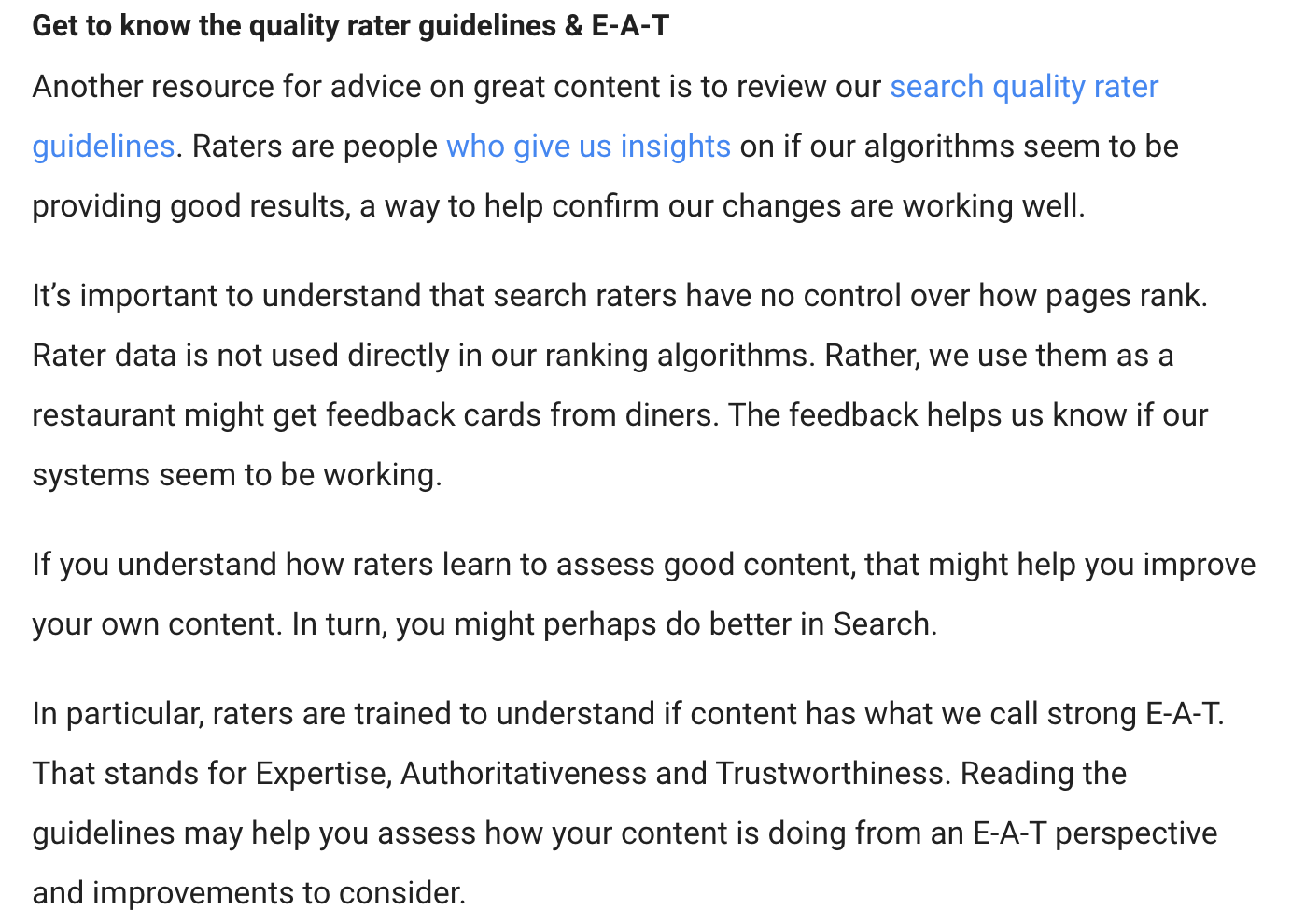
Trust in marketing topped our list of 2019 content marketing trends and predictions. Security breaches, privacy concerns, political scandals, and a long-standing distrust of advertising messages had combined to create a multi-year streak of falling trust among consumers worldwide. But consumer trust began to rebound. The 2019 Edelman Trust Barometer showed that global trust toward business increased in 21 of 26 markets, including the U.S. where 54% of respondents voiced confidence. As we head into 2020, we need to stay the course: No. 1: Get familiar with the California Consumer Privacy Act (CCPA). As my colleague Nick Nelson wrote not long ago: “Whether through the proliferation of state-level laws like CCPA, or the eventual enactment of a similar federal legislation, it’s only a matter of time before data privacy regulations are in place across the United States.”  No. 2: Strive to be the best answer. For years, this has been TopRank Marketing’s mantra and approach, combining art and science to create quality content that informs, educates, and inspires audiences whenever and wherever they’re searching. “Best answer content gets back to the basics,” Nick Nelson once wrote. “When done right, it’s all about delivering value and earning trust before you ask for anything.” But don’t just take our word for it. In August 2019, Google published a reminder and primer on its core updates—specifically calling out a little thing called “E-A-T”, which stands for “Expertise, Authoritativeness and Trustworthiness.” This is a huge hint, marketers. E-A-T up. “Your brand needs to come off as credible consistently for people to trust you,” Margaret Magnarelli, Executive Director of Growth Marketing, Social Media, and SEO at Morgan Stanley, told us earlier this year. “[With content created for organic search] you have the opportunity to attract someone from a side door with a specific intent and zero brand awareness; your answer to their question will have a big impact on whether you can be trusted on more consequential matters.” [bctt tweet="Your answer to a searcher’s question will have a big impact on whether you can be trusted on more consequential matters. @mmagnarelli #B2BContentMarketing #TrustInMarketing " username="toprank"] No. 3: Align yourself with credible, influential voices. As Lee Odden says: “For any kind of content a business creates and publishes to the world, there is an opportunity for collaboration with credible voices that have active networks interested in what those voices have to say.” Read more on this subject:

#3 - The Continued Rise of Video

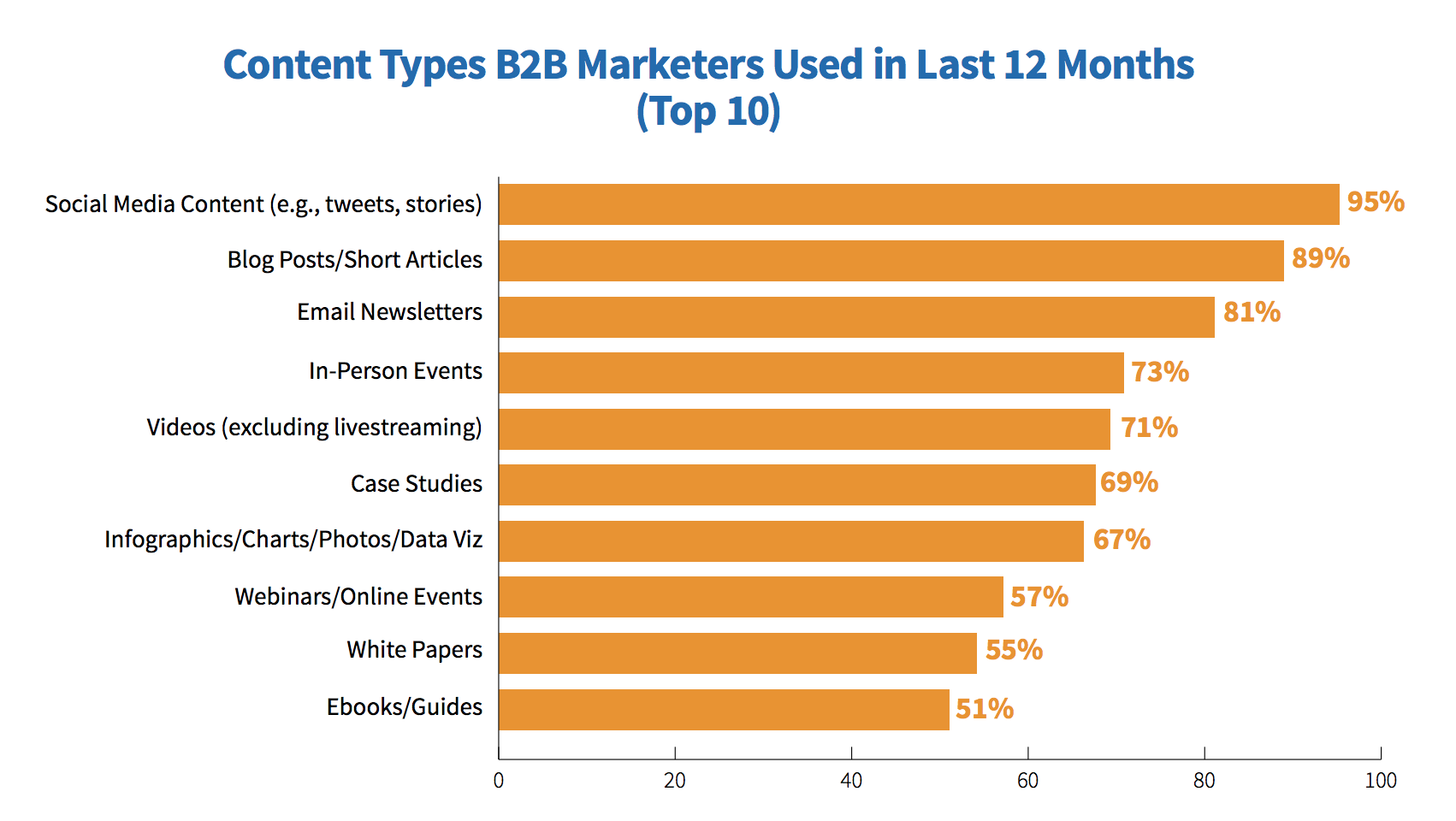
Last year’s annual B2B content marketing benchmarking report from Content Marketing Institute and MarketingProfs revealed that 64% of marketers increased the audio and visual content production. In this year’s report, a whopping 71% of respondents said they’ve used video content in the last year. To put that into perspective, video content outranked case studies, infographics, webinars, white papers, and eBooks. Video content production will undoubtedly grow among B2B marketers in 2020. And from our perspective, the biggest change here will be diversification in terms of strategy and storytelling.  Currently, video is often used as a top-of-funnel tactic. But video can be effective at every stage of the buyer journey. So, as marketers grow more comfortable and sophisticated in the video realm, they’ll broaden their video marketing strategies to reach prospects and nurture customers. And as video becomes more ubiquitous, constructing compelling visual narratives will be the key to success. “If you want to make the best impact and see the highest returns for your video's investment, you've got to SHOW not tell,” Andrew Davis, keynote speaker and bestselling author, says. “Instead of a talking head or another interview, how can you SHOW me? Spend more time shooting the rest of the story and immediately, you'll take your videos from drab to show-stopping.” [bctt tweet="If you want to make the best impact and see the highest returns for your video's investment, you've got to SHOW not tell. @DrewDavisHere #B2BContentMarketing #VideoMarketing" username="toprank"]

#4 - “Marketer, Play Audio Content

Today’s easy listening radio comes in the form of serialized storytelling: podcasts Podcast listenership has grown rapidly over the last couple years. Nearly a quarter of all podcast listeners have gotten started in the last six months. What’s more, 51% of the U.S. population over the age of 12 has listened to a podcast. In the B2B realm, podcasting’s full potential has yet to be unlocked—but more marketers will try in 2020. “B2B podcasting today is where content marketing was a decade ago,” Joshua Nite, Senior Content Marketing Manager at TopRank Marketing, says. “It’s emerging as a marketing discipline. People are starting to get sophisticated about deploying and measuring podcasts. We’re seeing new tools to make it easier to launch, promote, and monetize. And despite the thousands of hours of audio out there already, there’s no sign that the market is satiated.” [bctt tweet="People are starting to get sophisticated about deploying and measuring podcasts… And despite the thousands of hours of audio out there already, there’s no sign that the market is satiated. @NiteWrites #B2BPodcasting #B2BContentMarketing" username="toprank"] That said, podcasts aren’t the only audio medium that should be on marketers’ minds heading into the New Year. According to recent research from Edison Research, more than 53 million Americans now own a smart speaker—a 36% increase in just one year. So, if content optimized for voice search—or as the kids are calling it these days, voice-activated content—didn’t make its way into your 2019 strategy, 2020 is the year. Read: B2B Podcasting: 20 Stats That Make the Marketing Case

#5 - Collaborative Content Ups the Personalization Ante

Content proliferation coupled with evolving consumer expectations and increased skepticism and distrust has created an intensely competitive landscape. It is known. via GIPHY Personalization has arisen a content marketing savior, aiming to elevate experiences by delivering relevant, one-to-one messaging to current or prospective buyers. But the next step in the 2020 personalization game is collaborative. Partnering with select industry influencers and thought leaders, employees, and current customers or prospects can help you create unique, topically-relevant content for your (mutual) target audiences. When it comes to influencers, consider this tidbit from TopRank Marketing’s founder Lee Odden: “Influencers with complementary domain expertise and networks that combine forces can offer a B2B brand the reach of a major publication but with the credibility and trust of respected influencers.” As for leveraging customers and prospects, see what my cohort Nick Nelson has to say on user-generated content:Storytelling is one of the most essential tactics in content marketing, and customer-centricity is among the discipline’s central tenets. UGC presents a way to merge these two by actually making turning your customer into the storyteller. Not only is this an extremely engaging role for the individual whose content is featured, but it makes that content vastly more relatable for those consuming it.” Finally, ponder what Jay Baer, founder of Convince & Convert, has to say about employee advocacy: “If you have a truly differentiated customer experience, something that creates conversations, your employees will naturally echo that and amplify it and connect the dots for potential customers. They will be part of the marketing arsenal.”

#6. A Renewed Commitment to Consistency & Integration

Integrated marketing. Multichannel marketing. Omnichannel marketing. Scope and definitions differ, but the general premises of each approach is the same: consistently create positive brand experiences whenever and wherever your audience is searching. Regardless of the preferred approach, marketers have been pursuing this directive for several years. We know that consistency and integration are the keys to effectively telling our brands’ stories and connecting with our audiences. However, in the pursuit of perfection, complexities—and perhaps even some complatency—have crept in. We’ve added tactics. We’ve added channels. We’ve added tools. But in the midst of all the additions, have we made vast improvements in the content experiences we provide? Have we fallen in set-and-forget mode? The aforementioned CMI and MarketingProfs study reveals that 93% of most successful B2B content marketers prioritize the delivery of relevant content when and where someone is most likely to see it—just 37% of the least successful marketers focus here. So, as experience continues its rise as a competitive differentiator, brands and marketers would do well to reassess and renew their commitments to smart marketing integration in 2020.  [bctt tweet="As experience continues its rise as a competitive differentiator, brands and marketers would do well to reassess and renew their commitments to smart marketing integration in 2020. @CaitlinMBurgess #B2BContentMarketing" username="toprank"]

#7. Data-Informed Content

Every B2B marketer understands the pivotal role data plays in modern content marketing. However, many still make marketing decisions based on gut-feel. Whether they feel overwhelmed by the sheer volume of data available or they don’t have the proper collection and analyzation tools in place, marketers often use just a fraction of the data that they have at their disposal. In 2020, those who are able to focus their data lens will be able to create data-informed content that drives better experiences. If you’re struggling with data quality, leverage this six-rule framework courtesy of Christopher Penn, Co-Founder and Chief Data Scientist at Trust Insights:
  1. Clean: Free from errors 
  2. Complete: Not missing critical parts 
  3. Comprehensive: Answers the questions asked of it 
  4. Chosen: Does not contain irrelevant information
  5. Credible: Collected with as little bias as possible from reliable sources 
  6. Calculable: Usable by both people and machines 
“Data that follows these six rules is data you can use for maximum impact as a B2B marketer, the equivalent of health-giving food,” Christopher says. “Data that breaks these rules is equivalent to junk food, food that steals from your wellness.”  [bctt tweet="Clean. Complete. Comprehensive. Chosen. Credible. Calculable. Adhere to the 6 C’s of data quality and you'll be well on your way to B2B marketing fitness. @cspenn #B2BContentMarketing" username="toprank"] If you’re struggling to identify the “right” data to focus on, we suggest focusing on the following customer data types:
  1. Discovery: Where, when, and how buyers seek and find information that helps them identify a solution.
  2. Consumption: The consumption channels, content types, topics, formats, devices, and experiences your customers and prospects prefer.
  3. Action: The triggers that have and will motivate a desired action.
“With buyer discovery, consumption, and action metrics, you’ll know how to create awareness, great customer engagement, and compelling offers that matter to your customers,” Lee Odden says. “And you’ll always know which approach to use to improve your marketing because it will be customer-driven.” [bctt tweet="With buyer discovery, consumption, and action metrics, you’ll know how to create awareness, great customer engagement, and compelling offers that matter to your customers. @leeodden #B2BContentMarketing" username="toprank"]

#8. Visually-Rich Content Focused on Storytelling 

It’s no longer enough to inform buyers. Instead, you must provide story-driven, visual content that connects on intellectual and emotional levels. This is critical in the experience age. Visual platforms are where we spend our time—a trend that will absolutely continue in 2020. In fact, YouTube is the most widely used online platform among U.S. adults, according to Pew Research Center. Facebook, which has made platform changes to make visual content more easily accessible, comes in second. But the visually-rich storytelling doesn’t begin or end with video on social platforms. “Contrary to popular belief, people do still read traditional content forms like whitepapers, eBooks and case studies,” Michelle Liro, Vice President of Demand Generation at PTC, says. “But first you’ll need to pull them in with attention-grabbing visuals that show them what they’ll get before you tell them what they’ll get.” [bctt tweet="Contrary to popular belief, people do still read traditional content forms like whitepapers, eBooks and case studies. But first you’ll need to pull them in with attention-grabbing visuals. @michelleliro #B2BContentMarketing" username="toprank"] Take a look at this internal marketing example from Antea Group*.  With the goal of educating and rallying their team of consultants around the relaunch of a core service offering, the firm tapped our team to develop an animated eBook that was fully steeped in narrative. Antea Group Remediation eBook

#9. Email Newsletters Make a Comeback

Email marketing is not dead. As we recently reported, open rates aren’t in a state of steady, ceaseless decline. In fact, according to Super Office, the average rate has generally been increasing (or at least remaining steady) year-to-year over the past decade-plus. That said, email marketing strategies are most definitely in need of a refresh. And from our perspective, the email newsletter can make a triumphant comeback in 2020. “My feelings about newsletters are strong,” Ann Handley, Chief Content Officer at MarketingProfs and accomplished email newsletter purveyor, once told AWeber. “It’s the one enduring place that we have as marketers, and it’s the place where conversations are most intimate. Newsletters are 100% effective and they’re still the backbone of so many content marketing efforts.” [bctt tweet="My feelings about newsletters are strong. It’s the one enduring place that we have as marketers, and it’s the place where conversations are most intimate. Ann Handley, @MarketingProfs #B2BContentMarketing" username="toprank"] However, marketers need to be willing to put in the work to ensure those intimate conversations build relationships next year, rather than serve only as a sales pitch. “When someone opts into your newsletter and then starts getting overtly pitched right away, it can feel like a betrayal of trust,” Nick Nelson wrote not long ago. “As a relatively direct and personal form of marketing communication, email should be used to deliver value and build brand affinity. This is not to say you must avoid any type of lead generation elements in your messages, but make them subtle and sparse.”

3. 2. 1... Look Out 2020, Here We Come!

From experimenting with new mediums such as podcasts or interactive content to innovative storytelling, marketers can and should play an integral role in crafting and advancing positive audience experiences with their brands.  So, as we head into 2020, ask yourself: Is my brand poised to deliver experiences that leave a lasting impression? Happy New Year, B2B marketers. What’s your B2B content marketing prediction for 2020? What trends are you watching? Tell us in the comments section below.

The post Our Top B2B Content Marketing Trends & Predictions for 2020 appeared first on Online Marketing Blog - TopRank®.