Monday, January 14, 2019

Two Key Marketing Opportunities Amid Stories of Fake Traffic and Fraudulent Metrics

Why Transparency & Organic Content Are Important for Marketers

Why Transparency & Organic Content Are Important for Marketers

“What you know you can't explain, but you feel it. You've felt it your entire life, that there's something wrong with the world. You don't know what it is, but it's there, like a splinter in your mind, driving you mad.” — Morpheus, The Matrix

~~~~~

"How much of the internet is fake?" pondered the headline of a late-December New York Magazine feature, before answering its own question: "A lot actually." What followed was a systematic unpacking of that premise, via author Max Read. Though somewhat cynical and harsh, his argument was backed by facts and evidence at every turn. He documented case after case of fake traffic and fraudulent metrics. He shared videos of phony engagement factories known as click farms. He cited real stories and statistics that verify the prominence, pervasiveness, and pestilence of these issues. Read's article shook me out of my restful holiday contentment. This wasn't all news to me, but never had I seen so many examples compiled into one grim, gut-wrenching montage. The internet is an inherently murky place – you can't physically count visitors to a blog post, as you could with attendees at a conference speech or customers in a store – so the success of a digital marketplace hinges on our collective faith in the integrity of data (and intentions). It's not the number of non-human "users” that troubles me. We've known for some time that bots make up a large portion of website traffic, and any analyst worth their salt is accounting for that reality. What troubles me is the potential (inevitable?) existence of nefarious actors seeking to deceive and benefit — and the repercussions thereof. Mr. Read puts it best with this poignant observation:
"What’s gone from the internet, after all, isn’t 'truth,' but trust: the sense that the people and things we encounter are what they represent themselves to be."

Taking a Toll on Trust

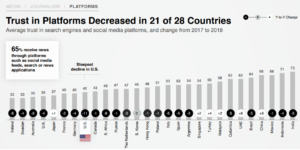
The digital world saw its share of bombshells in 2018, and I'd argue few were bigger than the filing of an amended lawsuit from a group of small advertisers, alleging that Facebook knowingly delivered false video metrics back in 2015/16, and that the extent of this inflation was greater than previously believed. Though just one isolated incident (hopefully), it's the kind of headline that serves to further erode a diminishing level of trust between people and the institutions they rely on. These occurrences send shockwaves through the digital universe that are felt in every corner, with wide-reaching implications.    When polled by CMO Council last year, 62% of marketers indicated that reports about false and faulty metrics have caused them to pull back on spend with Facebook and Google. Meanwhile, the latest Edelman Trust Barometer shows pervasive global drops in trust toward platforms — most sharply in the U.S. Global Trust Index For digital marketers that value accuracy and honesty, it can be tempting to ignore these kinds of stories and headlines, going about our own business and letting all that noise play out on its own. This would be a mistake. We can only control what we can control, but within that realm, there are steps we can take to counteract these troubling narratives.
Two Key Opportunities for Digital Marketers

Internally and externally, marketers are dealing with uphill battles that are steepened by these developments. Internally, we have to be able to confidently trust our metrics and present them to our bosses. Externally, we’re facing an audience that is growing more distrustful by nature. From my view, the growing recognition of fake web traffic and fraudulent metrics should compel marketers to reflect thoughtfully, and double-down on two vital cornerstones in the digital era: transparency and organic content.

#1: Transparency is More Essential Than Ever

It’s getting harder for people to take things at face value. So don’t force them to. The more we can be open and honest about our processes, practices, and principles, the more we can distance ourselves from shady actors who are damaging the industry's reputation. Data measurement and analysis is hard. Errors and mistakes happen. If your agency or business is frontal in the way it identifies and addresses these situations, you’re more likely to sustain trusting relationships with your clients, customers, and business partners. One company that has impressed me with the way it embraces transparency is Lemonade, a tech-driven insurance company out of New York. In line with its overarching mission to combat trust issues that have plagued the insurance industry, Lemonade runs a content series on its website and social media called The Transparency Chronicles, introspectively discussing the business with a stunning level of candor. “We suck, sometimes,” was the title of a post from co-founder Shai Wininger last June, reflecting on the first half of 2018. He didn’t shy away from his company’s shortcomings and failures; he acknowledged them, tried to learn from them, and invited the brand’s community to take part in the conversation. Beyond refreshing to see. Lemonade Transprarency Chronicles Lemonade is basically bringing a new model to the market: insurance claims submitted directly through an app, with a personable AI bot as your guide, removing brokers and conflicts of interest from the equation. There are bound to be unforeseen snags and hiccups along the way with such an endeavor. The company’s openness about its journey makes customers more comfortable in taking part. As a marketer, you can’t guarantee everything you try is going to work. You can’t even guarantee every view counted by a third-party platform is a genuine human being. But if you’re open, honest, and transparent, you can mitigate these uncertainties and ambiguities.

#2: Investing in Organic Content Programs Now Makes More Sense Than Ever

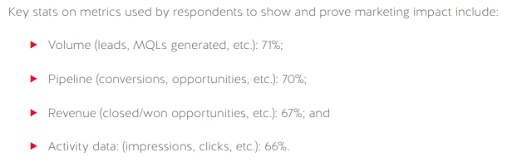
Paid media and digital advertising will forever remain important. But they represent a short-term, finite usage of marketing spend, whereas organic content is a long-term play that can keep on giving. It’s like renting traffic versus investing in traffic. In an age of shaky consumption metrics, the latter becomes all the more appealing.   Smart, strategic content marketing that aligns with your target audience and adheres to modern SEO principles will build equity over time. It’s more qualitative, and not as reliant on short bursts of traffic volume, so brands don’t need to concern themselves as much with the value of each view and click.   Speaking of which, we also need to move away from superficial measurement and toward meaningful measurement. It was encouraging to see, per Demand Gen’s 2018 Marketing Impact Report, that volume, pipeline, and revenue metrics are being prioritized, but still a bit puzzling that two out of three respondents are using activity data as proof of marketing’s value: Demand Gen 2018 Marketing Impact Report At TopRank Marketing we’ve seen the bottom-line impact of content marketing demonstrated through program after program. One client, Welter Heating, saw a 590% combined increase in organic conversions during its busiest month over a four-year span with a best (local) answer content strategy. Another client, Innovatech, boosted conversion rates by 34% year-over-year through CRO and search optimization. As I alluded earlier when talking about transparency, people tend to believe what they can see. The value of content marketing remains plainly evident, even in a hazy digital climate.
A Clear of View of Digital Marketing in 2019

In the movie The Matrix, quoted at the outset of this article, Morpheus presents Neo with an ultimatum: Take the blue pill and you’ll continue to live in blissful ignorance, believing whatever you wish to believe; take the red pill and you’ll see the truth, unpleasant as it might be. That article from New York Magazine served as a red pill of sorts for me. There’s a seedy underbelly to this digital environment, one which has long dug at me like a splinter in my mind, but I’m ready to come to terms with it. And I’m ready to do all I can in 2019 beyond to make sure that our team is part of the solution, not part of the problem. "The frustration across the marketing ecosystem is palpable, and new headlines that breach trust and showcase systemic carelessness have inflamed the issue," says Liz Miller, senior vice-president of marketing at CMO Council. "The industry as a whole must align on transparency and reliability.” Hear, hear. Through transparent practices and the reliability of integrated content strategy, digital marketing and its reputation can thrive as much as ever.   Looking for further information on the subject? Here’s how marketers can use the art of storytelling to build and regain trust.

The post Two Key Marketing Opportunities Amid Stories of Fake Traffic and Fraudulent Metrics appeared first on Online Marketing Blog - TopRank®.

Wednesday, January 9, 2019

Take 2019 By Storm: Get Inspired By These 11 Content Marketing Quotes

Inspiring Content Marketing Quotes

Inspiring Content Marketing Quotes Another year. Another strategy. Another budget. Another long to-do list. Ushering in the new year is both an exciting and grueling time for content marketers everywhere. We’re celebrating accomplishments from the previous year. We’re taking stock of misses and opportunities. We’re working to weave in emerging content trends into next year’s plan. And we’re setting goals. But just like New Year’s resolutions, it can be hard to stick to the plan and tick off all of the things you want to accomplish. After all, the year is long and plans change often in today’s evolving digital landscape. To help you take on 2019 and muster up the motivation and inspiration to achieve your goals, we gathered several inspiring (and perhaps reassuring) quotes from respected and seasoned marketing leaders. From content strategy to execution, they’ll help you find success in the New Year.

#1 - “Your brand is not for everyone.”

Tamsen WebsterTamsen Webster Founder & Chief Message Strategist Find the Red Thread Oftentimes, marketers attempt to cast a wide net for their audience, hoping that more reach and more eyeballs can help them gain more traction. But in today’s content marketing landscape, personalization is essential if you want to reach (and hopefully fill your funnel) with the right people. And this bit of wisdom from Tamsen Webster serves as a great reminder that your brand doesn’t need to be everything to everyone.“Your brand is not for everyone. It isn’t. It’s for the people who want something you can help them get, who value the same things you do, and who see the world the same way you do. And that’s not everyone. Full stop.” [bctt tweet="Your brand is not for everyone. It’s for the people who want something you can help them get, who value the same things you do, and who see the world the same way you do. @tamadear" username="toprank"] Read our full conversation with Tamsen on how to drive change in marketing. Follow Tamsen on LinkedIn or Twitter.

#2 - “Audience members will MAKE time for content if they find something that interests them.”

Andrew DavisAndrew Davis Keynote Speaker & Best-selling Author Monumental Shift Think your audience doesn’t have enough time for you? Andrew Davis urges you to reconsider. In the world of Netflix, Hulu, and YouTube, audiences are bingeing more content than ever before, he told attendees of Content Marketing World 2018. The challenge marketers face isn’t whether or not audiences have time to engage with you, but whether or not your content is worth engaging in.“Audiences will make time to consume content that contains their interest.” [bctt tweet="Audiences will make time to consume content that contains their interest. @drewdavishere" username="toprank"] Get more advice from Andrew with our recap of his #CMWorld 2018 session. Follow Andrew on LinkedIn or Twitter.

#3 - “Stories have the power to engage prospects with an emotional hook that endears them to a brand.”

Heather Pemberton LevyHeather Pemberton Levy Vice President of Content Marketing Gartner At this stage in the game, storytelling and marketing have become married at the hip. But too often, stories come in second place to our larger marketing goals and objectives. Heather Pemberton Levy challenges marketers to change that. If you truly want your message to resonate with your audience, the story needs to come first. “Many marketers still talk about their products and services in terms of what they can do for their audience rather than what the audience cares about, why that’s important, and how their solution can help solve the problem. Stories have the power to engage prospects with an emotional hook that endears them to a brand more successfully than standard marketing copy. [bctt tweet="Stories have the power to engage prospects with an emotional hook that endears them to a brand more successfully than standard #marketing copy. @heathrpemberton" username="toprank"] Read our full interview with Heather to learn more about her story-first marketing approach. Follow Heather on LinkedIn or Twitter.

#4 - “Content marketing should be an active and discrete business model within the organization.”

Robert RoseRobert Rose Chief Troublemaker The Content Advisory More and more brands are pulling their content marketing in-house. But Robert Rose has a word of advice for brands internalizing their content marketing in 2019: don’t treat it as an internal agency. Content marketing needs to be a part of the larger business strategy, not a department that services other internal teams.“Content marketing (and content strategy) should be an active and discrete business model within the organization. Thus, the content team is more akin to your R&D team, your legal team, or your accounting team. “You would never look at the legal team as an internal agency (or firm) that services internal clientele. No. It’s part of the fabric and strategy of how the business operates. It is a strategic leader within the organization, and the legal team serves as experts to lead the business through legal issues. The content team should be viewed the same way.” [bctt tweet="#ContentMarketing (and content strategy) should be an active and discrete business model within the organization. @Robert_Rose" username="toprank"] Discover the rest of Robert’s top content trends for 2019. Follow Robert on LinkedIn or Twitter.

#5 - “It’s important to slow down our marketing to get the basics right.”

Ann Handley Chief Content Officer MarketingProfs Content marketing is no longer a shiny object—it’s a core strategy and tactic for most B2B and B2C marketers alike. Content marketing is just “marketing” in the modern digital era. However, the majority of marketers feel like their efforts aren’t as effective as they could be. In order to grow sophistication and be more effective, you need to master the basics. For Ann Handley, this means we all need to slow down. “It’s important to slow down our marketing to get the basics right. Like developing a documented content strategy. Like doing the required research. Like developing robust, non-one-dimensional Flat Stanley buyer personas. Like articulating your bigger story. Like investing in quality: excellent writing (and editing) and storytelling.” [bctt tweet="It’s important to slow down our #marketing to get the basics right. @annhandley" username="toprank"] Find out what Ann says are her secrets to success. Follow Ann on LinkedIn or Twitter.

#6 - “Thought leadership is about solving, not selling.”

Mina Seetharaman Executive Vice President, Chief Strategy and Creative Officer The Economist When it comes to writing compelling content, marketers need to break the product-plug habit. Mina Seetharaman reminds marketers that your audience doesn’t care about your product, they only care about their problem. “Thought leadership is about solving, not selling. People wake up thinking about their problems, not your product. In our research, Thought Leadership Disrupted, only 28% of marketers cited helping their audience become more knowledgeable as a primary objective. True thought leaders don’t push product, they understand their audience and share ideas to help them tackle issues.” [bctt tweet="True thought leaders don’t push product, they understand their audience and share ideas to help them tackle issues. @minaseeth" username="toprank"] Follow Mina on LinkedIn or Twitter.

#7 - “There’s so little content out there that truly connects with people…”

Tim WasherTim Washer Keynote Speaker Ridiculous Media Resonating with your target audience takes more than a carefully crafted message. It takes evoking emotion. Whether it’s a story or a joke, as long as it inspires an emotional reaction and avoids self-promotion, you’ll be forming more meaningful connections with your audience. According to Tim Washer, when done right, infusing a bit of comedy into your content can do just that. “These days, there’s so little content out there that truly connects with people. … So much of marketing is telling people how great we are. But with comedy—we can show them that we’re not always going to tell you how great we are. And if you can make someone laugh, that is the most intimate connection you can make.” [bctt tweet="If you can make someone laugh, that is the most intimate connection you can make. @timwasher" username="toprank"] Make more connections with your audience by reading the rest of Tim’s tips. Follow Tim on LinkedIn or Twitter.

#8 - “Data helps marketers work more productively.”

Stacy MartinetStacy Martinet Vice President of Marketing Strategy and Communications Adobe At every point in the customer journey, and even outside of it, your audience is leaving valuable data breadcrumbs in their wake. Looking ahead, Stacy Martinet hopes to inspire marketers to collect and analyze these breadcrumbs in order to better understand customers and boost productivity. “Data helps marketers work more productively, create the right content faster, and deliver that content to the right customer, across the right channels, at the right time. Companies that integrate data and creativity in their day-to-day practices actually drive two times the growth of companies that have those capabilities but manage them separately.” [bctt tweet="Data helps marketers work more productively, create the right content faster, and deliver that content to the right customer, across the right channels, at the right time. @stacymartinet" username="toprank"] Follow Stacy on LinkedIn or Twitter.

#9 - “Building trust with customers is one of the biggest opportunities for marketers in 2019…”

Lee OddenLee Odden CEO TopRank Marketing In a world with increasing privacy and security concerns, our CEO Lee Odden, encourages brands to double down on trust, transparency, and credibility. The more you can align your brand values with that of your customers, the more trust and loyalty you will receive in return. “Building trust with customers is one of the biggest opportunities for marketers in 2019. Brands that lead with values and purpose can create opportunities to communicate transparently and with authenticity – leading to greater trust with buyers. Belief-driven buyers now make up the majority of consumers in every market. In 2019, we’ll see many more businesses articulating their brand purpose to more effectively connect with and engage customers.” [bctt tweet="Brands that lead with values and purpose can create opportunities to communicate transparently and with authenticity – leading to greater trust with buyers. @leeodden" username="toprank"] What else does 2019 have in store? Learn the rest of Lee’s digital marketing trends for 2019. Follow Lee on LinkedIn or Twitter.

#10 - “Always be listening.”

Dan GingissDan Gingiss Vice President of Marketing Persado From social media to comment cards to online reviews, your customers are not afraid to let you know what they think. If you want to optimize your business around the needs of your customers, Dan Gingiss challenges you to actively seek out, collect, and act upon that feedback. “Always be listening. People will generally tell you everything you need to know about your business—what’s working, what needs fixing, and what could be your next big hit. Marketers need to embrace the feedback, including compliments, questions, and complaints.” [bctt tweet="Marketers need to embrace the feedback, including compliments, questions, and complaints. @dgingiss" username="toprank"] To learn more of Dan’s marketing tips, read our full interview with him. Follow Dan on LinkedIn or Twitter.

#11 - “You must have a call to action.”

Ursula RinghamUrsula Ringham Head of Global Influencer Marketing SAP No matter what you’re creating, Ursula Ringham has an important reminder: Don’t lose sight of the goal. Give your audience the next step. Nurture them through the customer journey. Otherwise, the marketing stories and best-answer content that you’re creating will do little in terms of helping you produce meaningful, measurable results. “You must have a call to action. What’s the point? What’s your end goal? How are you defining success? Where are you sending them?“Whether your goal is brand awareness or lead gen, if you’re telling a story that has people on the edge of their seat, you need to give them a natural next step to continue their journey.” [bctt tweet="Whether your goal is brand awareness or lead gen, if you’re telling a story that has people on the edge of their seat, you need to give them a natural next step to continue their journey. @ursularingham" username="toprank"] Get more of Ursula’s advice by reading our full conversation about her journey, influencer marketing, social media, and more. Follow Ursula on LinkedIn or Twitter.

Take 2019 by Storm

It’s a new year. And it’s time to bring a breath of fresh air into your content marketing efforts. Hopefully, these insightful quotes can help inspire you to do just that. After all, they’re important reminders that no matter how marketing evolves year-to-year, you need to put your audience’s needs first, guide them on the journey, use data to light the path, and more. Need more insight into how to drive marketing results in 2019? Read up on our 2019 trends and predictions:

The post Take 2019 By Storm: Get Inspired By These 11 Content Marketing Quotes appeared first on Online Marketing Blog - TopRank®.

Tuesday, January 8, 2019

The Content Marketer’s Toolbox: 3 ‘Real-Life’ Tools for Gaining Insight, Inspiration, & Amplification

The Content Marketer’s Toolbox of Non-Tech Tools

The Content Marketer’s Toolbox of Non-Tech Tools In the modern content marketing age, leveraging a diverse set of tools is par for a successful marketing course. Tools help unlock insight. Tools help capture attention and reach. Tools help drive efficiency. Tools help you measure, analyze, and optimize for better success. The simple truth is: Every content marketer needs a robust toolkit that’s tailored to their unique business and marketing needs—but that toolkit doesn’t begin or end with your martech stack. Uh-oh-oh. via GIPHY There’s no denying the importance that marketing technology plays in today’s ever-changing and sometimes tumultuous digital landscape. But your toolbox needs more than software. It also needs more tangible, real-life tools to help you uncover the context and insights that can help you be more effective (and help you use martech tools more effectively).   From my perspective there are three key, non-tech tools that should be content marketing toolbox staples. And with the help of a few fantastic insights and tidbits of wisdom from marketing industry leaders, I dive into them below. via GIPHY

The “Real-Life” Staples to Gain First-Hand Insight, Inspiration, & Amplification

#1 – Your in-house team members from across departments.

For eons it seems, sales and marketing team alignment has been a top struggle yet a key best practice for gaining marketing (and business) traction. Today, that still holds true—but now it’s increasingly crucial for marketers to widen their collaboration scope to include other key departments. Why? Creating an incredible customer experience is the new challenge and opportunity for marketers. In addition, better alignment across major business functions ensures your efforts are truly contributing to the growth of the company—whether that be sales, talent retention and recruiting, product development, or customer service. “Marketers need to work collaboratively across the various areas of marketing as well as partnering with other parts if their company such as sales,” Justin Levy, public speaker and the new Director of Paid Social Media Operations at ServiceNow, told us not long ago. “Marketers need to be integrated and focused, working off of the same strategy instead of working in silos on their own projects.” [bctt tweet="#Marketers need to be integrated and focused, working off of the same strategy instead of working in silos on their own projects. @justinlevy #ContentMarketing" username="toprank"] Beyond creating synergy, your internal team members are insight tools. Sales and customer service reps are talking with customers every day. Your product development team is creating products or services that aim to alleviate customer and prospect pain points and solve problems. Your human resources department is actively recruiting and looking for ways to engage current employees. Your organization’s employees are insight engines who can help you craft more helpful, interesting, and inspiring content—and they’re also engagement and amplification powerhouses, ripe for a little employee advocacy and/or thought leadership. “Leveling up content marketing means going beyond creating consistent customer-focused content. It means engaging your internal experts to share their expertise,” Michael Brenner, Founder of Marketing Insider Group, shared earlier this year. “And it means activating the entire organization to share your passions, your stories, and your expertise.” [bctt tweet="Leveling up #contentmarketing means going beyond creating consistent customer-focused content. It means engaging your internal experts to share their expertise. - @BrennerMichael" username="toprank"] Think of your collaboration with other key departments like the bond a hammer and nails share. Without one another, the work doesn’t get done. via GIPHY

#2 – Your “captive” audience.

Customers. Prospects. Social followers. Newsletter or blog subscribers. You have a “captive” audience that has sent signals that they’re interested in what you provide and what you have to say. But when’s the last time you leveraged your known audience to gather intel or simply connect at any stage of your content marketing process? “If you haven’t spoken to anyone in your audience in the last month directly—about their work and their lives, not about your company or products—then you aren’t ready to plan anything,” Jay Acunzo, Founder of Unthinkable Media, said in relation to content strategy and planning. He goes on: “It’s so breathtakingly simple: If you have a 40-hour per week job, then take literally .2% of your month (20 minutes) and have an informal conversation with a customer or prospect. You will be shocked at how much easier content marketing gets.” [bctt tweet="It’s so breathtakingly simple: If you have a 40-hour per week job, 20 minutes a month and have an informal conversation with a customer or prospect. - @jayacunzo #ContentMarketing" username="toprank"] Not only can you leverage your audience as a tool to make content marketing “easier,” but you can also create content that is more impactful and targeted. “When it comes to content creation, far too often content is created in a meeting room with a bunch of marketers without any thought for the day-to-day reality of the person consuming it. BIG mistake,” Dave Charest, now the Director of Content Marketing for Endurance International Group, says. “Level up your approach by creating content in partnership with members of your target audience.” [bctt tweet="Level up your approach by creating content in partnership with members of your target audience. - @DaveCharest #ContentMarketing" username="toprank"] Think of audience insights as your Swiss Army knife. They’re a trusty tool that can lend insight and tactical help in nearly any marketing situation. via GIPHY

#3 – Your team of external partners.

Your internal marketing team as well as your key contacts across departments are flush with insight and expertise. But there are undoubtedly gaps that need to be filled—resource gaps, budget gaps, and knowledge gaps. This means that in order to get the kind of marketing traction you need and want, you need to build out your team—with people who serve specific purposes. After all, a tool by definition is a device that is used to carry out a particular function. Hilarious and seasoned marketer, Tim Washer, PowerPoint Comedian/Emcee at Ridiculous Media, suggests thinking outside the box when it comes to building out your team. “Build a virtual team. Recruit talented freelance writers and videographers, including college students, to help contribute engaging content production,” he says. [bctt tweet="Recruit talented freelance writers and videographers, including college students, to help contribute engaging content production. - @timwasher" username="toprank"] Whether you’re looking for execution help or need a larger force to handle strategy, creation, and optimization, an agency partner can be an incredible tool in your toolbox. (Not that we’re biased or anything.) “One of the primary responsibilities of any marketing agency is to lighten your workload and alleviate some of the stress that comes with it—and do it in a way that helps drive results,” Alexis Hall, TopRank Marketing’s Vice President of Client Accounts, shares. “From conversion rate optimization (CRO) to reducing cost-per-lead on PPC campaigns to expanding your search footprint, a full-service digital marketing agency can have its subject matter experts dig into the data and make actionable recommendations for optimizing your content or strengthening your tactical mix.” [bctt tweet="One of the primary responsibilities of any #marketingagency is to lighten your workload and alleviate some of the stress that comes with it—and do it in a way that helps drive results. - @Alexis5484" username="toprank"] Think of your external partners like duct tape. They can be molded and implemented for a variety of different functions to help you achieve your ultimate goal. via GIPHY

Bolster Your Content Marketing Toolbox with Real-Life Tools

Your martech stack is just one piece of the content marketing toolbox pie. You also need to look internally to leverage the real-life tools that are right in front of you and ripe with opportunity. Start by looking inside your organization to identify opportunities to collaborate and gain alignment with internal stakeholders and partners. In addition, commit to connecting with your captive audience on a regular basis to gain insight. And finally, add to your tool stack with external partners to fill gaps and add third-party insight and expertise. Oh. And fear not. We'll cover some martech tools you should consider for your content marketing toolbox next time. What does the future of content marketing look like? Get the scoop on the latest content marketing trends that you need to pay attention to in the new year.

The post The Content Marketer’s Toolbox: 3 ‘Real-Life’ Tools for Gaining Insight, Inspiration, & Amplification appeared first on Online Marketing Blog - TopRank®.