Monday, December 10, 2018

5 Common Digital Marketing Data & Analytics Challenges and How to Start Solving Them

The volume and velocity of the data at our fingertips today has the power to transform the way we do marketing. Armed with the right data about our target audience, we can reach them at the right time, in the right place, with the best tailored messages. Given the deluge of marketing messages inundating consumers and B2B buyers at every moment, it’s critical that your marketing messages be the most relevant in order to break through the clutter. However, many of us still aren’t using data to its full potential. Only 30% of B2B marketers use data to inform decision-making. That’s because harnessing data is hard. Over 2.5 quintillion bytes of data are generated every day, across so many different people, channels, devices, and technologies. And nearly 50% of marketers say they don’t have the the right people, processes, and technologies in place to make use all of that data to make an impact. To continue to thrive in a crowded market place, and to truly show the impact of marketing as a revenue generator, it will be critical to get the people, process, and technology in place to make your data work for you. Of course, it won’t happen overnight. But regardless of where you are in your journey to data sophistication, you can start solving your challenges now. Below, we dive into five frequent data challenges and how you can put yourself on a path to overcome them.

Challenge #1 - The data you need doesn’t exist.

Despite all of that data being generated and captured, you could still be experiencing gaps in your data reporting. Typical data holes, include:
  • Lack of attribution
  • Incomplete contact records
  • Not all marketing and buying activities are being tracked
These data holes are usually caused by a lack (or non-adherence) of process by both sales and marketing teams. The result is an incomplete picture, which can lead to inaccurate data analysis. Unsurprisingly, if your marketing activities aren’t properly tracked, you’re not able to truly measure the result of one marketing activity over another. But the good news is that this is one of the easiest challenges to overcome.

Start Solving The Data Gap Challenge

First, examine the process and governance around your tracking and database. If you don’t have one, create a policy around data governance focusing on getting top-down buy-in on the importance of collecting and maintaining accurate data. For your database:
  • Ensure new records are complete by reviewing data input requirements with the sales team, ensuring all know how and why complete data records are critical. And ensure your CRM and website forms are set up properly to ensure mandatory data is collected and entered.
  • Consider a major scrub if you have a lot of bad data. There are a variety of CRM services or add-on tools to help clean up inaccurate or duplicate records. Manually fixing thousands of records will be nearly impossible in most cases, so consider bringing in outside help.
For marketing activities:
  • Create and enforce a process within your marketing team so tracking is in place on every activity possible.
  • If you you’re already using Google Analytics, make the most out of it by:
    • Ensuring goals and events are setup to track major conversions (like a contact form completion) and micro-conversions (like a video play).
    • Use Google URL builder for improved campaign tracking. Unique URLs can help you pinpoint which marketing activities are driving the most activity.
  • Identify other key data points that you’re not currently able to track with your existing set of tools. From there, research free tools to help you fill in gaps or set aside budget to make an investment in new technology.

Challenge #2 - You have data silos.

Many of you are dealing with multiple legacy systems, perhaps put in place by different teams, that don’t necessarily work together. Between your CRM, analytics platform, marketing automation, and social listening tools, data and platform integration may not be happening—and it’s holding you back. Finding a solution to this challenge will enable your data to become incredibly powerful. Integrating data across systems gives you the opportunity to create a more complete view of a customer or prospect, connecting activity throughout the buying journey and enabling you to reach them with the most relevant messages.

Start Solving the Data Silo Challenge

Start breaking down data silos by creating a list of data collection processes and tools across departments. Once you have the list, you can start to identify if any systems can be merged together. Many stand alone CRM, marketing automation, and analytics tools offer integration capabilities with other common platforms. Or you may already have a tool in place you are using for one function, that can be used for other jobs. If merging isn’t possible, then consider an alternative tool that can integrate with your other systems or do multiple things. This is also a good time to evaluate communication and processes across departments. Opening up silos between teams will help minimize new silos from forming and open up communication and access to data, which can improve the effectiveness of marketing activities. Read: How to Become a Better Data-Informed Content Marketer

Challenge #3 - The data is tough to analyze.

Anyone who has ever attempted to analyze thousands of rows of marketing data within an Excel spreadsheet can attest that it can be cumbersome and time consuming. For many of us, data volumes have accelerated much more quickly than our tools and abilities to analyze that data. Even if you have the most accurate, complete data, if you don’t have the right skills and strategies in place to analyze it, you can’t make an impact.

Start Solving the Data Analyzation Challenge

First, ask yourself if you have the right people in place to solve this problem. Data and technology has likely opened up the need for new positions within your team. An experienced analyst (or team of analysts) can manipulate large volumes of data and serve up insights to help your content marketing, social, advertising, and other teams make more informed decisions and show the impact of your work. Data scientist is another in demand title within marketing. The right person in this role can help you evaluate tools, manage data sources, and create process and strategies to turn formless data into a powerhouse of insight to change how your team uses data. From there, assess your technology stack to determine if you have the right tools in place to enable your current or future analysts understand and visualize the data.

Challenge #4 - You don’t trust your data.

It’s safe to say that you and your organization believe data and analytics are critical. In fact, a survey of some of the world’s leading businesses showed that 97% were making big investments in data and analytics this year. However, despite the need and the investment, the degree of confidence in data could be low. According to a recent survey by KPMG and Forrester Consulting, just 38% of respondents said they have a high level of confidence in their customer insights. Furthermore, only a third seem to trust the analytics they generate from their business operations. This gap in trust can be a result of lack of transparency or governance around data sourcing and analysis. And present a significant opportunity for organizations to create, refine and circulate policies for data and analytics management.

Start Solving the Data Trust Challenge

If you’ve already head nodded to one of the first three challenges presented, you likely need to start there. A legacy of incomplete and inaccurate data and analytics has driven the current lack of trust. KPMG recommends taking a systematic approach to building trust within data and analytics, by examining trust in data across four pillars:
  1. Quality (Are your tools and data quality?)
  2. Effectiveness (Is the data analysis useful and accurate?)
  3. Integrity (Are data and analytics being used in an acceptable and ethical way?)
  4. Resilience (Are long-term operations optimized?)

Challenge #5 - You can’t make the predictive leap.

If you have the right people, processes, and tools in place to effectively report on and analyze data across channels, that’s fantastic. You’re likely leveraging your historical data along with human insight to create more effective messaging and showcase the ROI of your marketing activities. But the question is: Are you in a position to get ahead of your audience’s needs? More than likely, you’re “guessing” at what your audience needs and wants based on what’s already happened, and you haven’t made the predictive leap to uncover deeper trends that will require changes in your mix.

Start Solving the Guessing Game Challenge

Start thinking about how machine learning (ML) and artificial intelligence (AI) can be implemented to help you predict future outcomes. ML and AI technologies not only have the ability to automate data crunching, but they can also create models using your multi-channel data to determine what is likely to happen if you stop or start using a tactic. For many marketers, AI and ML are daunting solutions to implement, as they are new and can require a significant investment. But the good news is that you can dip your toe in the waters by outsourcing to an established vendor. If you want to get something going in-house, Microsoft, IBM, and Amazon all have machine learning solutions you can research, consider, and test. Read: This Changes Everything: How AI Is Transforming Digital Marketing

Overcome Your Data & Analytics Challenges in 2019

Without a doubt, the importance of data and analytics will continue to increase as we go forward. Start now to identify what challenges are holding your marketing team back from making the most out of your data. With the right people, process, and tools and technologies in place, you can solve current challenges and evolve a powerful data and analytics operation—ultimately setting you up for more success now and into the future. What are some of the specific strategies and tactics for optimizing performance with data? Our CEO Lee Odden dives into three ways content marketers can leverage data right now.

The post 5 Common Digital Marketing Data & Analytics Challenges and How to Start Solving Them appeared first on Online Marketing Blog - TopRank®.

Wednesday, December 5, 2018

TopRank Marketing’s Top 10 B2B Content Marketing Trends & Predictions for 2019

It’s that time of year, B2B marketers. As the holiday seasons kicks into high gear and the countdown to a new year accelerates, we all find ourselves looking into our figurative crystal balls to gauge what the new year will bring, and how we’ll improve ourselves and our content marketing strategies, capitalize on opportunities, and adapt or side-step new challenges as they come. 2018 was a big year for content marketers—from the implementation of new data privacy and security regulations like GDPR to the rise of promising new tools and technologies to enhance personalization, measurement, and data analyzation. And from our perspective, 2019 is on track to bring even bigger changes, presenting both opportunities and challenges for B2B marketers. So, what does the future hold for content marketing in the B2B space? Here are our top 10 B2B content marketing predictions and trends marketers should know now and keep an eye on into the new year.

#1 - The Trust Factor

From security scandals and privacy concerns to consumers’ dwindling confidence in the world’s core institutions, trust is in crisis. In fact, the last two Edelman Trust Barometer surveys have revealed declining consumer trust toward business, media, and government, and NGOs to “do what is right.” This was the first time a decline was reported since the inception of the report nearly two decades ago. Couple general distrust with historical skepticism of marketing and advertising messages, and it will be even more imperative for B2B marketers to focus on building trust and credibility with buyers and prospects. This means doubling down on marketing with authenticity to create more meaningful audience connections will be critical going forward. “Fostering a truly authentic reputation in this faceless digital world, while combating the instinctive consumer tendency to distrust corporate messaging, presents a very real challenge,” Nick Nelson, TopRank Marketing Content Strategist, said not too long ago. “Those brands that are ready to meet it with gusto will become champions of the new era.” [bctt tweet="Brands that are ready to meet authenticity with gusto will become champions of the new era. - @NickNelsonMN #ContentMarketingTrends #ContentMarketing" username="toprank"] This also means striving to be the best answer for your audience, delivering quality, relevant content that informs, educates, and inspires. This means leveraging the right data, at the right time, for the right purpose to show audiences they can trust your brand. “Great content answers questions and solves problems for your customers,” Amanda Todorovich, Senior Director of Content & Creative Services, Cleveland Clinic, told us. “When you do that—no matter what platform or format—it works and generates engagement every time.” Finally, this also means taking the initiative to align yourself with credible, relevant voices (e.g. influencers) and collaborate on creating incredible, insightful, trustworthy content. (We’ll get into more detail on that later.) Now for the curve ball. via GIPHY In 2019 and beyond, building trust cannot be limited to your prospects and customers. Building trust also has to happen within the organization—especially at the C-suite level. A study from Fournaise Group found that 73% of CEOs say marketers lack business credibility and the ability to generate sufficient growth. Furthermore, 80% of CEOs simply don’t trust marketers at all, yet a whopping 91% do trust CIOs and CFOs. “Marketing done well with a clear why, measurement and purpose creates the kind of value that both customers and business leaders will trust, ensuring credibility and investment far into the future,” our CEO Lee Odden wrote earlier this year.

#2 - Goodbye “Consumable” Content; Hello Personalized Experiences

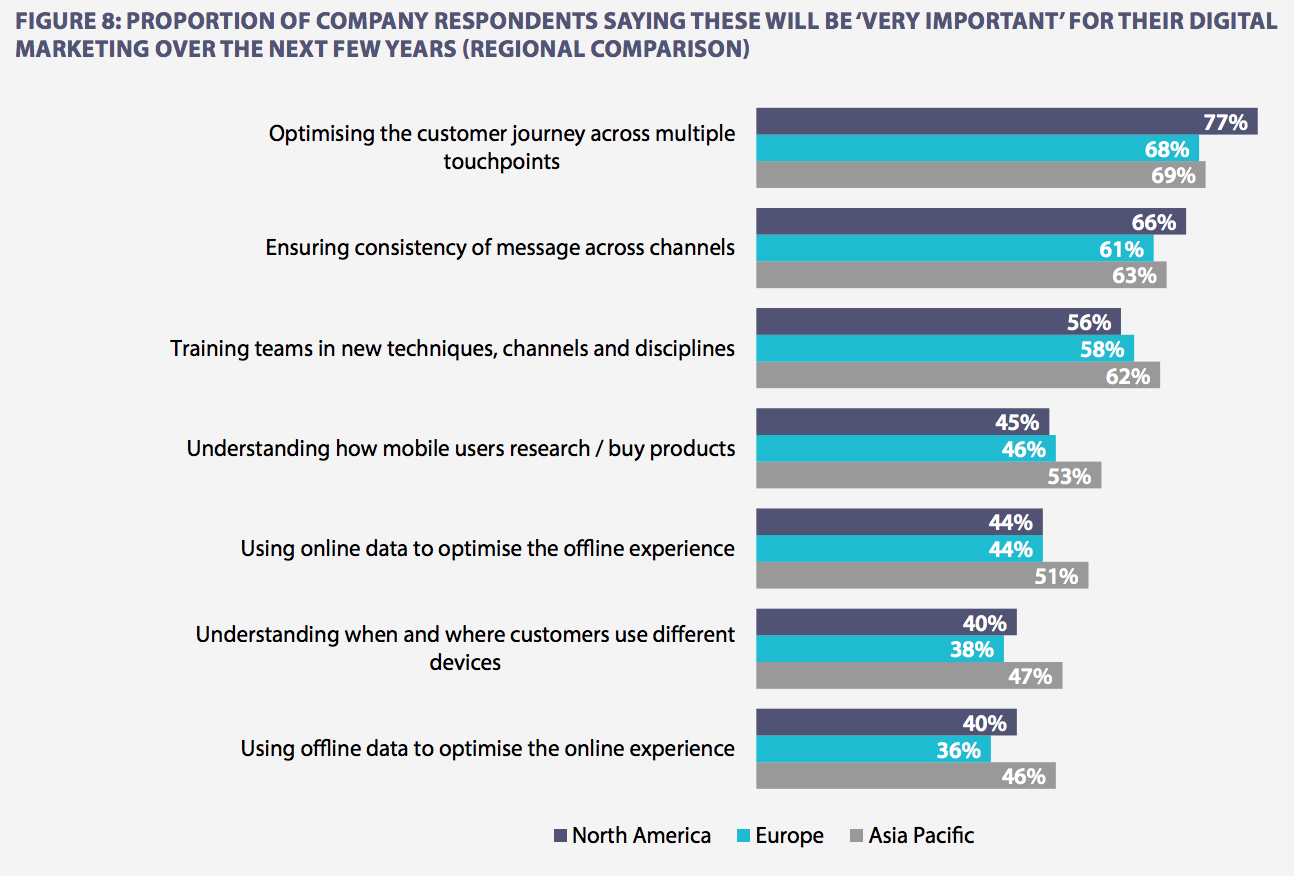
In 2018, talk of “content personalization” and “creating content experiences” has been growing louder. And in 2019, it’ll likely hit a fever pitch. Econsultancy and Adobe’s 2018 Digital Trends report revealed that delivering personalized experiences in real-time is the most exciting opportunity for digital and marketing professionals. Furthermore, optimizing customer experiences across multiple touchpoints is a top priority over the next few years. This means that in 2019 and beyond, B2B marketers have to stop thinking about how audiences “consume” content, and start thinking about how audiences want to experience content and how they can deliver. More than likely, to deliver tailored experience you’ll need to embrace proven and emerging marketing technologies such as those driven by AI and machine learning that can help enable personalization and enhance experiences. In addition, this will require you to align different stakeholders/departments across the organization. “First and foremost, personalization is a group effort which cuts across all functions of the content supply chain: strategy, planning, creation, assembly, and delivery,” Peter Krmpotic, Group Product Manager at Adobe, told us in an interview. “Establishing and aligning these functions with each other is the first block in a strong foundation.” [bctt tweet="Personalization is a group effort which cuts across all functions of the content supply chain: strategy, planning, creation, assembly, and delivery. @PeterKrmpotic #ContentMarketing" username="toprank"] Finally, it’s seems as if “disposable” content fits in here, too. Instagram Stories. Facebook Stories. Snapchat Stories. These tactics are part of the experience you can create, offering an in-the-moment conversation or touchpoint with your audience. “When it comes to social media content, B2B marketers need to go beyond links to their blog posts,” Joshua Nite, Senior Content Marketing Manager at TopRank Marketing, shared. “Think about Stories on Facebook, Instagram & Snapchat, for example. It's about an ongoing conversation with your audience."

#3 - The Breakdown of Data Silos

Every marketer has data--some may even say they need or want more of it. However, access to so much data is still relatively new, and every marketer wishes they had the ability to draw more insights that lead to action. And being able to draw that insight is critical to success. “The success of your content marketing efforts hinges on your ability to empathize and connect with your target audiences,” Annie Leuman, Content Strategist at TopRank Marketing, said. “As a result, you absolutely want to use data insights to develop a more holistic picture of your target buyers—their interests, problems, behaviors, and preferences. Taking the time to do this can help you ensure your strategy is built on data, not gut feel or assumptions. Thankfully, rising and more established marketing technologies have the potential to make a big impact in that area in 2019 and beyond. In April 2018, more than 6,800 marketing technology solutions were on the market, which was a 27% growth from the year before. And you can bet the number of solutions did and will continue to grow, and sophistication and refinement will happen as well. It’s my prediction that forward-thinking brands and marketers will stop being satisfied with using only a fraction of the data they have. The hungriest marketers will be prioritizing their data and insight needs, and paying attention to and seeking out technology or partners that can help. [bctt tweet="The hungriest marketers will be prioritizing their data and insight needs, and paying attention to and seeking out technology or partners that can help. @CaitlinMBurgess #ContentMarketingTrends" username="toprank"]

#4 - The Evolution of Content Marketing Sophistication

Content marketing is no longer a shiny object—it’s a core strategy and tactic for most B2B marketers. Content marketing is simply “marketing” in the modern digital era. In fact, in this year’s B2B Content Marketing 2019: Benchmarks, Budgets, and Trends—North America from Content Marketing Institute (CMI) and MarketingProfs, the percentage of marketers engaging in content marketing wasn’t called out in the opening slides. Instead, key insights centered on success drivers, tactical mixes, and so on. To me, this signals that B2B content marketers are intimately aware that content marketing is a viable strategy and they’re committed. And that means more will be committed to growing their sophistication in 2019 and beyond. However, marketers need to be aware that growing sophistication is rooted in “mastering simplicity.” Every content marketer wants to level-up their content marketing skills and results, but some may not have mastered the basics yet, like committing to a documented content marketing strategy, setting measurable goals, and putting a process in place for measuring and analyzing performance. The CMI and MarketingProfs report makes one thing clear: As organizations grow in their content marketing maturity (i.e. drive sophistication), success grows, too. via GIPHY In 2019, B2B marketers who want to grow will need to do a gut check to ensure they have “the basics” locked down. And then, you’ll need to set measurable goals—goals that align with your overall objectives—for how you’ll grow content marketing maturity. [bctt tweet="#ContentMarketing is no longer a shiny object—it’s a core strategy and tactic for most #B2B marketers. @CaitlinMBurgess" username="toprank"]

#5 - Mastering “Always-On” Promotion Will Further Enable Content Marketing Success

Marketers know that promotion and amplification is the culmination of all their other marketing efforts. But many haven’t adjusted their strategies to account for declining organic visibility, the rise of answer boxes in search, the increasing demand for more visual, engaging, and experiential content, and more. Essentially, we all know the digital landscape and the types of content that are in demand have changed—and they’ll continue to evolve. That means how we promote content needs to change. And in some ways, that means going back to basics. For TopRank Marketing, this means renewing (or beginning) a commitment to always-on promotion in 2019 and beyond. An email nurture and a few social posts simply can’t give your content the exposure it needs. “Today’s world of information overload and the multitude of device options for consuming information makes standing out even more challenging,” Lee said recently. “Content promotion can’t be effective if it’s an afterthought.” [bctt tweet="Today’s world of information overload and the multitude of device options for consuming information makes standing out even more challenging. #ContentPromotion can’t be effective if it’s an afterthought. @leeodden #ContentMarketing" username="toprank"] Read: 50 Content Promotion Tactics to Help Your Great Content Get Amazing Exposure

#6 - The Expansion of What’s Considered “Content”

Text. Images. Video. Audio. These are arguably the core content “categories” most B2B marketers are comfortable with. But, if they haven’t already, B2B marketers will have to look beyond these forms in 2019 and consider the role of content in emerging technologies. Namely, content that is delivered through IoT devices such as smart watches, cars, appliances, bots, and smart speakers. While IoT devices are largely looked at under the consumer lens, consider these statistics for a moment:
  • 51% of the world’s top marketers say that they believe IoT will revolutionize the marketing landscape by 2020. (Source: Marketo)
  • 127 new devices connect to the internet every single second. (Source: McKinsey)
  • A whopping 75 billion devices are expected to be connected by the year 2025. (Source: Statista)
This means there’s an opportunity for all marketers to build data-driven relationships with customers in real-time, allowing you to tailor content to enhance experiences, resolve unreported problems, and create targeted offers based on behavior.

#7 - Democratized Content Creation Is Growing

For years, Lee has said: “Everyone is influential about something.” In 2019 and beyond, we’ll see this come to more vivid life. With ubiquitous internet connectivity and a myriad of devices, everyone is empowered to publish and attract like-minded networks. For B2B marketers, this means developing networks of expert and/or influential collaborators to create content with for maximum impact. “Influencer generated content has evolved past working with celebrities and brandividuals to engaging micro-influencers and nano-influencers, which are essentially all of us,” Lee notes. “Brands that create smart networks of collaborators will be not only scale the quantity of quality content they can create, but involve the very audience they’re marketing to in its creation.” [bctt tweet="Brands that create smart networks of collaborators will be not only scale the quantity of quality content they can create, but involve the very audience they’re marketing to in its creation. @leeodden #ContentMarketing" username="toprank"]

#8 - The Undeniable Rise of Interactive

As I previously mentioned, the bar for content experiences was raised in 2018 with an increase in interactive and experiential content. Why? It’s no longer enough to inform buyers. Instead, you must provide story-driven content that connects on intellectual and emotional levels. As consumer expectations (remember consumers are your buyers) increase, brands will need to invest in content quality and experience. From producing episodic content with production values near those seen in traditional media to interactive content that works across channels. When it comes to interactive content, we’re not just talking about quizzes and polls. We’re talking about hyper-relevant, immersive, visual experiences that pull people in and allow them self-guide the journey. If you’re not convinced yet, the statistics speak for themselves: According to the Content Marketing Institute (CMI) and Ion Interactive 2017 Interactive Content Study:
  • 87% of marketers agree that interactive content grabs the attention of the reader more effectively than static content.
  • 77% of marketers agree that interactive content has reusable value, resulting in repeat visitors and multiple exposures.
  • 73% of marketers agree that interactive content, when combined with other more traditional content marketing tactics, enhances message retention among their audiences.
Furthermore, we’ve seen it in action. Take a peek at this interactive piece centered on AI in Finance from our client, Prophix. Example of Interactive Content from Prophix You could get the same information across in a static eBook, of course. But this provides an experience—and results. Within the first 90 days after launch, we saw a 642% increase in asset engagement and a 10% conversion rate to the asset. Read: Interactive Content Marketing: Why B2B Marketers Should Take Their Content from Boring to Bold

#9 - The Continued Rise of Influencer Integration

Influencer marketing has long been seen as a stand-alone promotion or PR function. But we believe that view is changing as more B2B brands dip their toe in the influencer marketing waters. But the biggest trend and opportunity in 2019 will be investing your influencer efforts in content collaborations. “As brands mature their approach to working with influencers from transactional campaign based engagements to ongoing relationships, the opportunities for influencer collaboration will expand beyond the marketing and PR departments to any department in an organization that produces public-facing content,” Lee said. He added: “Content is both the vehicle to develop influencer relationships and an output as a result of those relationships. Influencer integration with content marketing will become a characteristic of successful marketers in 2019 and beyond.” [bctt tweet="#Influencer integration with content marketing will become a characteristic of successful marketers in 2019 and beyond. @leeodden #ContentMarketingTrends" username="toprank"]

#10 - Demystified Content Marketing Measurement

According to the aforementioned CMI and MarketingProfs benchmarking study, a top challenge for marketers is measuring the performance of content. And this will undoubtedly continue to be a challenge in 2019 and beyond. But that doesn’t mean you can’t overcome barriers. As with any type of measurement, it’ll important for you to determine what your metaphorical ruler will be. The success metrics of an individual piece of content will be different from your content ecosystem as a whole. “The way you measure the success of a blog post, for example, will be different than your metrics for an eBook or product page,” Tiffani Allen, Senior Account Manager at TopRank Marketing said. “Start with your overall goals, then determine how each piece of content fits into those goals, and how you will measure progress.” And as more B2B brands begin to document or refine their content marketing strategies and the associated metrics, even more headway will be made towards utilization of the analytics capabilities of content marketing platforms and analytics tools. “This will allow marketers to go beyond the traditional analytics measures of pageviews, bounce rate and time-on-page,” Tiffani said. “For example, you can employ techniques like heat mapping to determine if there are particular areas of interest, conversion or drop-off within your visitors. Or, integrate your CRM data with your analytics data to track movement of prospects through the funnel.” [bctt tweet="In 2019, more #B2B marketers will be have the strategy in place to go beyond traditional analytics, integrating techniques like heat mapping or #CRM integration to track movement of prospects through the funnel. - @Tiffani_Allen #ContentMarketing" username="toprank"]

Ready. Set. Bring it, 2019.

The digital landscape is in constant flux. And the form content takes and how it’s delivered is changing. But one thing that will never change is the importance of quality, insightful, and relevant content for informing, engaging, and inspiring your buying audience. “Put your customer first,” Carla Johnson, President of Type A Communications, told us earlier this year. “Creating content that delivers value to them will always align your time, talent and resources with what delivers the best ROI.” What’s your content marketing prediction or trend to watch into 2019? Tell us in the comments section below.

The post TopRank Marketing’s Top 10 B2B Content Marketing Trends & Predictions for 2019 appeared first on Online Marketing Blog - TopRank®.

Tuesday, December 4, 2018

Flipping the B2B Marketing Script: 7 Brands That Talk to Consumers, Not Companies

Examples of B2B Brands Marketing to People

Examples of B2B Brands Marketing to People “It feels like I’m talking to a wall.” This is the utterance you might hear from a person whose counterpart in a conversation is not particularly engaged. If you’ve been there, then you know it’s not a great feeling. But one of the biggest issues in B2B content marketing is actually the reverse: people tend to feel like the brands marketing to them are the ones talking to walls – as in, speaking to them as if they were an intangible corporate entity rather than a human being. For this reason, “business to business” can be a troubling misnomer. In this discipline, we’re not really marketing to businesses – buildings with walls and stairs and desks and chairs – but the people who inhabit those buildings. And in order to be truly effective, we need to break through this wall and achieve meaningful human connections. That means striking notes of authenticity, emotion, and distinct personal relevance. The good news? It most certainly can be done with fun, flair, and finesse. And plenty of brands are doing it well. Below, we highlight seven B2B brands that we feel are setting a great example with their approaches to customer interactions and conversations.

These B2B Brands Bring the Human Touch

#1 - Slack*

Their collaboration hub is a business solution, helping organizations produce better work more efficiently, but that’s because it makes life so much easier for the people who use it. When a business adopts Slack, it’s often because the employees made a push for it by consensus. Accordingly, the company’s message tends to be aimed toward those professionals, and not just the decision makers or executives who ultimately hold the buying power. Slack’s Twitter account is far from a stuffy business feed. They also run another account called @SlackLoveTweets, which amplifies the voices of relatable everyday users who express affinity for particular features of the product. And if you scroll through Slack’s blog, Several People Are Typing, you’ll find plenty of posts that focus more on the people doing the work than the work itself.   For example, a recent piece titled A Slack Guide to Going Out of Office opens with this empathetic paragraph:
Even though many of us daydream about our next vacation, there’s a real fear about being able to unplug, leave your team and projects behind, and return later with minimal disruption. It’s not easy, and it’s natural to ask yourself, What will happen at work while I’m gone, and how will I ever catch up when I get back?
Oh. And check out this little gem.

#2 - MailChimp

The email marketing platform received a lot of positive attention last year for its first large-scale marketing campaign, which was tremendously fun and clever. Riffing on slight misspellings of the brand name (and Google’s knack for determining a searcher’s intent with “Did you mean X?”), MailChimp and agency Droga5 created a series of faux products, short films, and songs. The video below explains the rationale behind this effort and shows some examples: MailChimp’s people-first branding is also displayed on their Instagram account. Here’s a snapshot of recent posts on their feed; not exactly the typical dry B2B fare: MailChimp Instagram Marketing Example

#3 - WeWork

A provider of flexible office space, WeWork has grown rapidly since being founded in 2010. Earlier this year, the company launched an in-house creative agency, which put rolled out its first campaign in May. The series of digital spots featured workers in cramped, undesirable offices juxtaposed against open, comfortable workspaces. WeWork’s VP of creative strategy explained the thought process behind the campaign strategy to AdAge: "We wanted to make something that was relatable," said Michael Fitzsimmons. "The scenarios in the videos ... represent real challenges that a lot of businesses deal with on a daily basis." More importantly, the scenarios represent challenges that the human beings at those businesses deal with.

#4 - DivvyHQ*

Offering a specialized platform for planning and executing content marketing initiatives, DivvyHQ markets to a specific type of professional: content marketing managers and others in charge of running content teams and strategies. As such, you’ll find plenty of posts on their blog that speak directly to this cohort (e.g., New Marketing Technology Trends: 5 Takeaways for Content Managers), even if that means potentially turning away folks who fall outside of it. As co-founder Brody Dorland explained in a recent piece on content personalization: “While it’s obviously valuable to obtain and keep the attention of people who are in your target audience, it can be almost equally valuable to avert those who are not. In this regard, many content marketers could stand to be a bit more forthright and frontal.” Additionally, DivvyHQ will often add recognizable themes and references to business-oriented content, making it more sticky with the humans reading it. For example, last year they released a content strategy guide built around Back to the Future. More recently they had a blog post on enterprise content collaboration — an innately humdrum topic — and spiced it up with a Star Trek spin.

#5 - Antea Group*

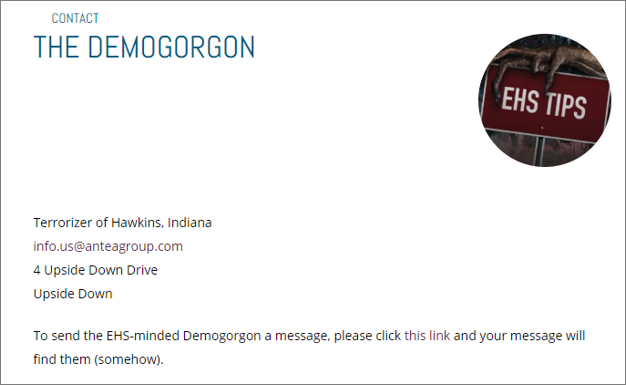
Here’s another company that seeks out personally relevant angles for otherwise straightforward subject matter. Antea Group is a global EHS and sustainability consulting firm, and often adds some pop culture flavor to blog posts in order to catch readers. For instance, an EHS overview has more pull when it’s full of inside jokes and memes from the comedy flick Office Space. And a writeup on safety compliance is much more fun when framed as a way to escape the nefarious Demogorgon from the Netflix show Stranger Things. The latter post even included a customized contact form for the fictional monster. Antea Group Stranger Things Marketing Example

#6 - Cisco

The global technology conglomerate has been around for more than 30 years and is still going strong, largely because of its foresight and propensity for staying ahead of the curve. Our topic at hand is the perfect example; Cisco’s VP of EMEA Marketing was espousing the importance of “human to human marketing” years ago. “Technology has been the enabler and supported how marketing has evolved and is now accomplished,” wrote Jeremy Bevan. “But has the outcome of marketing really changed? If we take away technology and go back to the fundamental basics – what are we as marketers really here to do? It is quite simply to be ‘human.’ ” Cisco has long prioritized corporate social responsibility initiatives and frequently highlights a deeper purpose through emotionally driven campaigns. Here’s a great example: “If you can imagine it, we’ll build a bridge to get you there.” Powerful stuff.

#7 - Zendesk

“It can be hard for B2B companies to find the balance between humor and professionalism on social media,” wrote Lindsay Kolowich in a post for Content Marketing Institute (CMI) last year. “But Zendesk is one of the B2B brands that's really nailed it.” Indeed, this has become a signature for the customer service software company. You can check out that CMI post for prime examples or just scroll through Zendesk’s Twitter feed to find plenty of casual and informal language that strikes a chord with everyday folks. For a taste of the brand’s humorous and edgy take on B2B campaigns, watch their classic “I like it when he gives me the business” ad from a years back:

No More Business as Usual

The days of companies talking to walls need to end. Whether B2C or B2B, if brands cannot strike an authentic and human tone with their audiences, they’re going to get shut out. When crafting your message, think always about the people at the businesses you’re marketing to, rather than the businesses themselves. This is a fundamental tenet for modern strategies, and central to our content marketing approach at TopRank Marketing. Get in touch if you’d like to learn more; we promise you won’t find yourself talking to a wall. [bctt tweet="The days of companies talking to walls need to end. Whether #B2C or #B2B, if brands cannot strike an authentic and human tone with their audiences, they’re going to get shut out. @NickNelsonMN" username="toprank"] Want more examples of brands engaging in customer-centric marketing? Check out these helpful posts: *Disclaimer: Slack, Antea Group, and DivvyHQ are TopRank Marketing clients.

The post Flipping the B2B Marketing Script: 7 Brands That Talk to Consumers, Not Companies appeared first on Online Marketing Blog - TopRank®.

Monday, December 3, 2018

A Taste of Social and Influencer Marketing: What B2B Can Learn from B2C #SMBMSP

B2B Influencer Marketing Takeways from B2C Influencers

B2B Influencer Marketing Takeways from B2C Influencers B2C brands pioneered the use of influential voices to boost their brand appeal, sales, and campaigns. And as more and more B2B brands and marketers dive into the world of influencer marketing, the question is: How can we leverage the knowledge, insights and tips B2C marketers have to share for our marketing efforts? Last week, a panel of foodie influencers and bloggers provided some insights that can help answer that question. My TopRank Marketing colleague Jack Fitzpatrick and I attended Social Media Breakfast - Minneapolis St. Paul’s (SMBMSP) panel moderated by Michele Phillips, a food blogger, writer, photographer and content creator, which included food personality Lindsay Greene, tweeting BBQ enthusiast The Product Poet, and Eat.Drink.Dish MPLS founder Golnaz Yamoutpour. The panel covered insights on finding and working with influencers along with a smattering of great social media marketing tips. Let’s see what they had to say.

Working With Influencers

Influencer Identification

Who better to tell you about approaching and identifying influencers than other influencers? Golanz has hired influencers herself and stressed looking for influencers who speak to specific audiences. The panel commented on the multiple tools available, but suggested starting with a look at who is interacting with your brand. If someone is already a fan, then you know they’re part of and understand your established audience. Although reach is a consideration for identifying influencers, a broad saturated reach may not capture your narrow or specific audience’s attention. However, micro-influencers often have great engagement and capture more engagement with your potential customers. The Big B2B Takeaway: Your existing audience or network is an influencer identification hot spot. Use social listening tactics and tools to uncover and engage with influencers who are already your fans. [bctt tweet="Your existing audience or network is an influencer identification hot spot. #InfluencerMarketing #SMBMSP" username="toprank"]

Influencer Nurturing

Relationships are key to the success of influencer marketing initiatives. Sending a cold email with a “Hey there!” greeting isn’t going to get your far. It’s important to warm up the relationship. The panel encouraged following potential influencers, so you understand who they are and what they discuss on social media. And, this will help with your vetting. But you shouldn’t stop at simply following a potential influencer on social media. You also need to engage with them. One audience member asked if the engagement had to be around their target subject. The answer? No. Any subject someone is talking about or sharing content around is fair game. In other words, start a conversation and foster a relationship. The panel agreed that the more personal the better, so when you have an engagement ask, it is not out-of-the-blue. The Product Poet illustrated the personal touch with a story about staying at and engaging with Hilton hotels. He learned Starwood, Hilton’s parent company, was taking notice. On a trip to Atlanta, he walked into his room to find a brilliantly written poem, which included personalized information, a gift certificate to a BBQ restaurant, an Uber gift card to get to the restaurant and a gift for his dog Charlie. Wow! The attention to detail blew him away. And, of course, he had to share the amazing gifts and story on his social channels. The Big B2B Takeaway: Work hard to develop real relationships with potential influencers. That means going beyond the social media surface to understand who they are, what excites them, and what motivates them. This will help you have more meaningful interactions from the beginning, and make collaboration more appealing when it comes time for the ask. [bctt tweet="Go beyond the #socialmedia surface to understand who #influencers are, what excites them, and what motivates them. #InfluencerMarketing #SMBMSP" username="toprank"]

Influencer Compensation & Collaboration

Perhaps the most uncomfortable part of influencer relations is discussing compensation for paid partnerships. How much should you propose? What’s reasonable? What can you actually afford? If you’re entering a paid partnership, ask influencers early on if they have a rate sheet or media kit. This will allow you to see if they fit into your budget from the outset or if negotiations are needed. The savvy negotiator gathers all the information first. Lindsay commented that a good paid influencer should share how they plan to promote your product and share an example of what you can expect. And, it should include analytics on how their posts perform. Remember, this is a relationship, so honest, open communication is a must. As part of a paid agreement, it is important to outline who owns the content and what is fair use. The Product Poet reminisced on a blog post he wrote about a restaurant. That restaurant re-posted his blog without permission. He would have given permission, but now he will not promote their food. The Big B2B Takeaway: Whether you’re paying influencers for their collaboration or not, define your scope and expectations early on to avoid slip ups later on. In addition, don’t be afraid to ask influencers for examples on how they’ve done thought leadership work in the past.

Maximizing Your Social Media Efforts

When you have a panel of social media stars, the audience wants to know how they make social work for them. The panel encouraged us to play with all types, but post more video on all of your channels. They believe the trend of video-centric algorithms is not going away anytime soon.
  • Your mobile device is a great video marketing tool. Lindsay reminded us that it’s easy to create great videos on your phone and make a few edits in iMovie or Adobe. She encouraged making a thumbnail cover photo that best represents your video for the still cover frame, and the FaceTune app is great for making that cover image look great.
  • Optimize your YouTube videos. YouTube video posts support a longer form video, because the audience is more prone to stay on a channel for more than 30 seconds. As a member of the Google family, search optimization comes into play. Lindsay said she researches the appropriate keywords, so her channel and videos rise to the top of the search.
  • Know your video options across platforms. The Product Poet says you might be surprised to know you can post up to a 10-minute video on Twitter, subject to file size, through the business video suite. But, on Instagram, you should stay to under 30 seconds.
  • Apply SEO knowledge to hashtags. An interesting tidbit in choosing hashtags also applies to Google keywords. You may be inclined to pick the hashtag with 1 million shares. But, consider choosing one that has fewer shares that might be more specific to your content - just like a long-tail keyword.
The Big B2B Takeaway: Video isn’t going anywhere anytime soon. So, if you haven’t dabbled yet, there’s no time like the present and the barrier to entry isn’t as high as you may think. In addition, when it comes to maximizing your video and content exposure know your platforms and don’t forget about SEO best practices.

B2B Marketers, Take the Lead from B2C

When it comes to working with influencers and achieving success on social media, B2C has had a jump start. But the good news is that B2B marketers can learn from the challenges and successes of B2C, which means you can take a step back and apply these well-honed insights into your own campaigns. My biggest takeaway? It’s all about building relationships. Whether you’re looking to work with influencers or you’re trying to get more visibility or engagement on social platforms, you need to be relevant if you want to resonate. Want more influencer marketing tips and insights? Check out these recent posts:

The post A Taste of Social and Influencer Marketing: What B2B Can Learn from B2C #SMBMSP appeared first on Online Marketing Blog - TopRank®.

Next-Gen Lead Gen: How to Refine Your Marketing to Get More B2B Leads

How to Refine Your Marketing to Get More Leads

How to Refine Your Marketing to Get More Leads A few days ago, I was watching a 2005 episode of Doctor Who with my nine-year-old. He saw a strange artifact in a character’s hand. “What’s that thing?” he asked. “An iPod,” I responded. “It’s like a smartphone, but it could only play music and had a black-and-white screen. No, no touchscreen. It held a LOT of music, though! Like hundreds of CDs! Okay, so a CD is…” The point being: You kids need to get off my lawn. Okay, the actual point being: Technology has changed fast in the past decade, and what used to be mind-blowing is now laughably obsolete. That’s doubly true in B2B marketing. We have the tools and tech to do amazing, iPhone-XS-Max-quality B2B lead generation. But a lot of us are getting iPod results instead. Ready to evolve past the monochrome screen and the click wheel? Here’s how.

How to Refine Your Marketing for Better B2B Lead Generation

#1: Get a Better Audience Match

The ability to target ads is more granular and sophisticated than ever. You can segment your audience on everything from demographics to pop culture preferences to shopping history. It’s easy to choose who you’re going to target — but first you have to know who is most valuable and why. That knowledge is at the heart of better content, smarter amplification, and ultimately more leads. If your lead gen efforts aren’t connecting, start by getting a more accurate picture of your buying audience. Use social listening. Ask them questions. Talk to sales and customer service to refine your personas. Keep in mind, too, that determining who is your best audience means determining who isn’t. Pursuing an irrelevant audience won’t do either of you any good.

#2: Boost Content Relevance

The next step is to bring your content strategy in line with your newly-redefined audience’s wants and needs. Creating best-answer content begins with SEO research. You have to know what your audience is looking for, and how they’re looking for it, to make something worth finding. Modern SEO research is less about pure search volume and more about topic clusters and searcher intent. For example, the phrase “financial management” can mean financial services like hedge fund management. Or it could mean the office of finance in a business, what accountants and CFOs do. If your business does the latter, it doesn’t help to pursue keywords for the former, regardless of search volume. As you plan your calendar, pay close attention to the magic convergence of your industry knowledge, your unique insights, and your audience’s needs. Be hyper-relevant and hyper-valuable with your content, and you’re far more likely to bring more leads into your nurturing track. [bctt tweet="Be hyper-relevant and hyper-valuable with your #content, and you’re far more likely to bring more leads into your nurturing track. @NiteWrites #B2BLeadGen" username="toprank"]

#3: Earn Attention with Next-Gen Content

How can you get people to notice and engage with your hyper-relevant content? B2B marketers need to think beyond standard eBooks, blogs and white papers. What I call next-generation content includes:
  • Interactivity
  • Strong visual interest
  • Multimedia elements
Case in point: This AI in Finance asset from our client, Prophix. You could get the same information across in a static eBook, of course. Example of Interactive Content from Prophix But we have found the interactive and multimedia elements have made people spend far more time with the asset. And they’ve been beating benchmarks for conversions, too. In fact, within the first 90 days after launch, we saw a 642% increase in asset engagement and a 10% conversion rate to the asset. Read: Interactive Content Marketing: Why B2B Marketers Should Take Their Content from Boring to Bold

#4: Get in Front of Your Audience

All of the above will get you some stellar content. But, of course, smart promotion and amplification is what turns it into actual marketing. Target your most relevant audience with amplification and you’ll be more likely to get the folks who will convert into leads. Part of amplification is organic — your social media feeds, your built-in SEO. Add in paid amplification to those highly targeted audience segments and you’ll make more of a splash. Our agency adds a third ingredient to the mix: Influencer marketing. We co-create content with influencers to make something they’re proud to help us share. That brings value to their audience, and builds credibility and trust that can help improve lead capture. As our CEO Lee Odden often says:
If you want your content to be great, ask influencers to participate.
Read: What B2B CMOs Need to Know About Successful Influencer Marketing

#5: Fill in Gaps in the Journey

Each piece of content should be the beginning of a journey that ends in a conversion. It’s important to have content at the ready for every stage of the funnel. Each piece should end with a next step that’s not only logical, but relevant. For example, there’s no value in sending an email subscriber links to content they’ve already read, or a gated asset they’ve already downloaded. The old days of a single newsletter for your entire mailing list are gone. It’s important to segment your subscriber list, and to build more complex nurturing tracks that feel more personal. [bctt tweet="Each piece of #content should be the beginning of a journey that ends in a conversion. @NiteWrites #B2BLeadGen" username="toprank"]

#6: Optimize for Conversion

When you have people digging your excellent content, taking next steps, staying engaged, the final step is to remove every potential obstacle to conversion. Reduce friction whenever and wherever you can:
  • Reduce the number of boxes on forms
  • Eliminate multiple form fills (if they download one gated asset, store the info for the next one)
  • Cut down copy on landing pages (replace with eye-catching visuals)
  • Tighten up your CTAs and be specific: (Read this / Watch this / Register now)
  • Add CTAs earlier in content
These are just a few ways to remove friction. A/B testing will yield further candidates for Conversion rate optimization. But it’s important to keep in mind that the actual conversion point is part of a much longer journey. You can make improvements here, and should. But the process of improving lead gen starts all the way back at defining your audience and continues throughout the journey. Read: How Can Marketers Create Stronger Customer Bonds? Focus on Convenience, According to Shep Hyken

Leads: The Next Generation

Lead generation isn’t really a separate discipline from the rest of what we do. It’s simply the culmination of all our marketing efforts. When you upgrade each component of the process, each improvement builds on the last. Level up your buyer audience identification, content creation, amplification, and optimize for conversion. Soon, you’ll marvel at how iPod-like your old tactics look compared to your new results. Looking for more insight on lead generation and lead nurturing? Check out these other helpful blog posts:

The post Next-Gen Lead Gen: How to Refine Your Marketing to Get More B2B Leads appeared first on Online Marketing Blog - TopRank®.